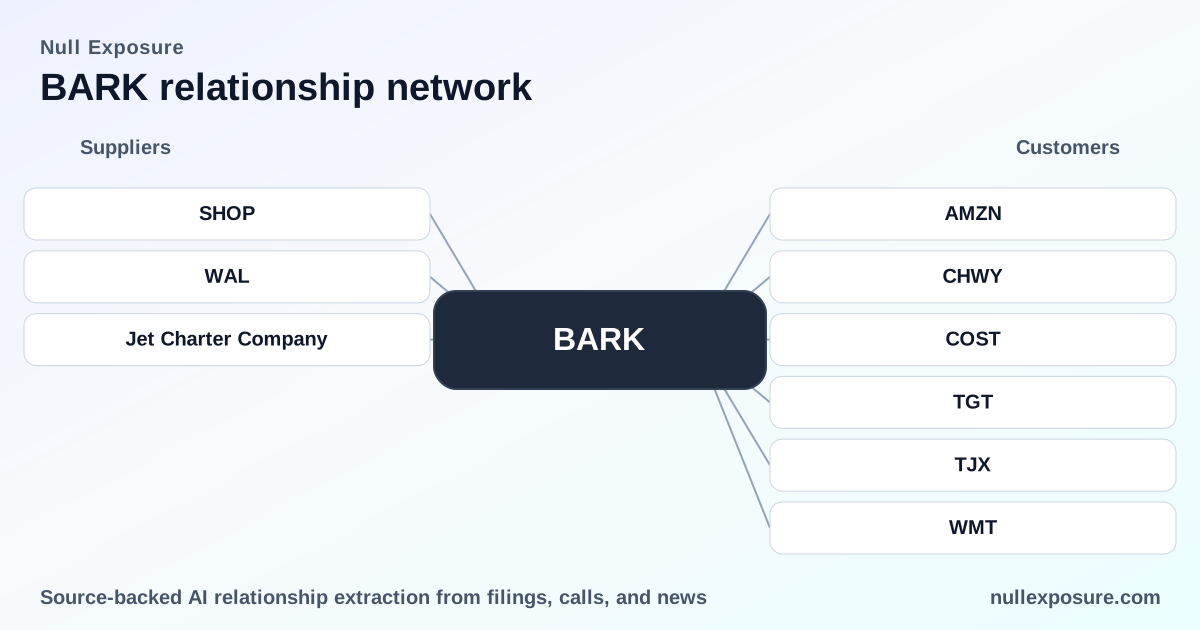
Bark, Inc. — Supplier Relationships and Operational Constraints Investors Need to Know
Bark, Inc. operates a direct-to-consumer pet products and services platform, monetizing through product sales, consumable subscriptions, and ancillary services sold via its online channels and partner integrations. Revenue concentration in consumables and an inventory model built on third‑party manufacturing and logistics create operating leverage but also supplier-driven risk. This note dissects Bark’s current supplier relationships and company-level constraints to clarify where operational execution and counterparty exposure are concentrated. For deeper supplier intelligence and historical tracing, visit https://nullexposure.com/.
How Bark sources and where value is captured
Bark purchases the bulk of its finished goods from third‑party manufacturers and uses global third‑party logistics providers to warehouse and distribute product domestically. The company captures margin through branded finished goods and recurring consumables, with consumables representing roughly one‑third of revenue as of fiscal 2025. This mix supports predictable recurring revenue while making Bark operationally dependent on a small set of large suppliers and a logistics backbone that is mature but externally managed.
- Longer contract tenors and mature vendor relationships support continuity of supply but create bilateral dependence on key counterparties.
- Geographic sourcing split between APAC for toys and North America for consumables influences tariff and supply‑chain sensitivity, and thereby cost inflation and margin volatility.
Explore supplier maps and concentration analysis at https://nullexposure.com/.
Supplier list: who Bark is working with (and why it matters)
Below are the relationships surfaced in recent reporting and market coverage. Each entry is summarized plainly with source context.
Shopify — platform transition to enhance D2C economics
Bark’s move to Shopify is positioned to lower customer acquisition cost and increase on‑site conversion, directly improving D2C revenue growth dynamics. According to Simply Wall St coverage (FY2025), this transition is framed as a strategic lever to boost direct margins by reducing reliance on higher‑cost channels. Source: Simply Wall St (FY2025), reported March 2026.
Western Alliance Bank — extended line of credit for liquidity and working capital
Bark extended its long‑standing line of credit with Western Alliance Bank, a move that sustains working capital flexibility and supports inventory financing needs through FY2026. A MarketScreener news item noted the extension and its role in ongoing corporate liquidity arrangements (reported Nov. 10, FY2026). Source: MarketScreener (Nov. 10, FY2026).
Jet Charter Company — consumer‑facing service partnership for BARK Air
Bark partnered with a Jet Charter Company to launch “BARK Air,” an ancillary service initiative announced in FY2025 intended to broaden premium service offerings to customers. Simply Wall St reported the partnership as part of Bark’s strategy to expand high-margin service lines beyond physical goods (FY2025). Source: Simply Wall St (FY2025), reported March 2026.
What the company disclosures say about supplier structure and constraints
Company disclosures and reporting highlight several structural constraints that shape Bark’s operating model. These are company‑level signals that investors should fold into valuation and operational risk assessments.
- Contracting posture: predominantly long‑term. Bark describes manufacturing and supplier contracts as generally multi‑year with termination rights for uncured material breaches. This supports continuity but increases concentration risk because multi‑year commitments amplify the impact if a supplier underperforms.
- Geographic sourcing split creates asymmetric risk. Toys are primarily sourced from Asia, exposing Bark to trade policy and tariff changes, while consumables are sourced almost entirely domestically, which provides partial insulation from geopolitical shocks.
- High supplier concentration is material. The company reports that, in fiscal years 2024 and 2025, two suppliers accounted for 40% of finished goods purchases and two other suppliers accounted for 31%, signaling meaningful counterparty concentration that can translate into supply fragility and bargaining imbalance.
- Role of partners: manufacturers and service providers. Bark purchases substantially all merchandise from third‑party manufacturers that produce to Bark’s specifications, and uses global third‑party logistics providers to warehouse and distribute product, indicating operational criticality of external partners for both product quality and delivery.
- Maturity of relationships reduces onboarding friction but raises switching costs. Management notes long‑standing vendor relationships that are “mutually satisfactory,” which supports reliable supply but increases the challenge and cost of changing suppliers in response to price or service deterioration.
These constraints collectively point to an operating model that is efficient in steady states but vulnerable to concentrated counterparty disruption and trade policy volatility. For actionable supplier risk scoring and portfolio mapping, see https://nullexposure.com/.
Investment implications and risk checklist
Bark’s supplier footprint leads to a simple set of investor theses:
- Upside pathway: Improving D2C economics via Shopify and expanding services like BARK Air can lift unit economics and recurring revenue share, supporting a higher terminal multiple if execution is clean.
- Primary downside: Supplier concentration and APAC exposure for toys create outsized operational and margin risk if tariffs, geopolitical events, or supplier failures occur.
- Liquidity mitigation: The extended line of credit with Western Alliance Bank reduces near‑term financing risk but does not eliminate longer‑term counterparty or cost inflation exposures.
Key items investors should monitor: supplier purchase concentration metrics each quarter, any tariff or trade updates affecting Asian‑sourced toys, and execution milestones on the Shopify migration and BARK Air roll‑outs.
Final takeaways and next steps
Bark’s model balances recurring revenue advantages against concentrated supplier exposures and geographic sourcing asymmetries. Operational continuity rests on a handful of large manufacturers and external logistics providers under multi‑year contracts; these are both a stabilizing force and a single point of failure. The strategic moves to optimize D2C and expand services are positive margin levers, but execution and supplier resilience will determine whether that upside is realized.
For a granular supplier exposure report and real‑time relationship tracking, visit https://nullexposure.com/. If you want tailored intelligence on Bark’s counterparty concentration and how it affects credit exposure, start an inquiry at https://nullexposure.com/ — we can map that risk to portfolio impact.
Sources referenced above include company reporting excerpts and market reporting: Simply Wall St coverage on platform and partnership moves (FY2025) and a MarketScreener item on the Western Alliance Bank line extension (reported Nov. 10, FY2026).