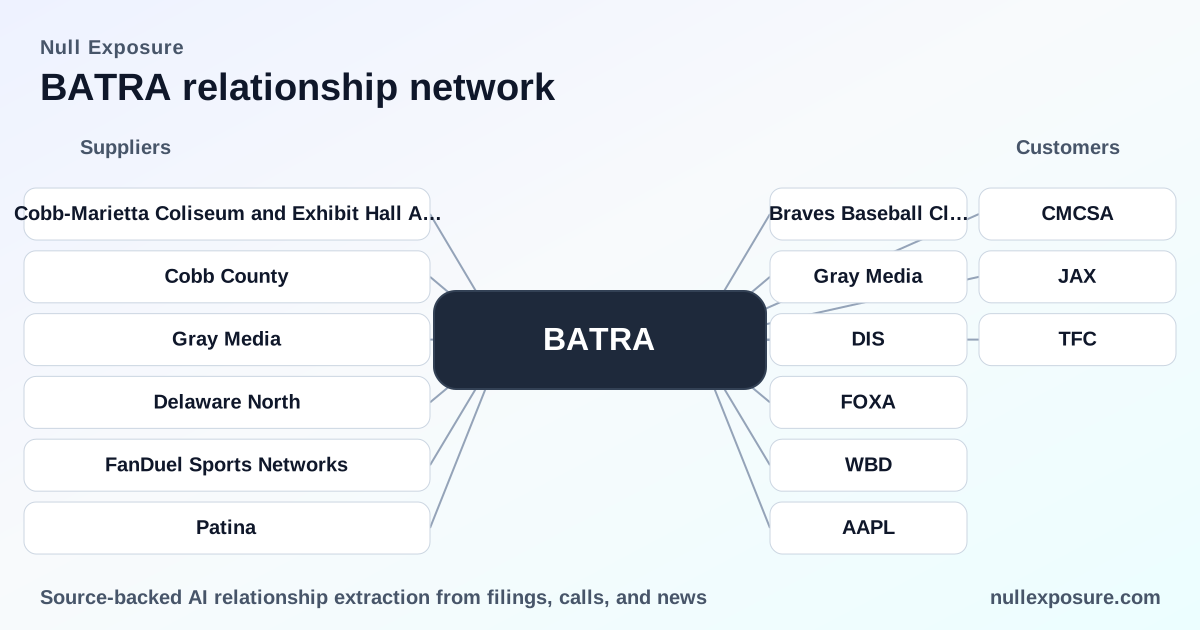
BATRA Supplier Map: how Atlanta Braves Holdings monetizes the stadium ecosystem
Atlanta Braves Holdings (BATRA) extracts value through a combination of sports operations, stadium licensing and adjacent real-estate commercialization: the club generates ticketing and premium-seat revenue, sells food & beverage and retail concessions at Truist Park, licenses the stadium and collects recurring fees from county lease arrangements, and expands broadcast and streaming distribution to capture media rights upside. The company’s supplier relationships are concentrated, long-dated and operationally critical — they are the plumbing that turns attendance and media distribution into cash flow. For a deeper view of supplier exposure and supplier-driven risk, visit https://nullexposure.com/.
How supplier relationships shape BATRA’s operating profile
BATRA runs as an asset-backed entertainment operator. Suppliers are not just vendors; they anchor revenue channels and deliver fan experiences that drive pricing power for premium seats and sponsorships. Company filings and recent earnings commentary reveal four company-level operating signals:
- Long-term contracting posture. Stadium rights and certain service contracts are multi-decade or multi-year commitments that stabilize revenue and expense planning. Company disclosures reference a Stadium Operating Agreement that expires in 2046 with extension options through 2051, and multiple long-term employment and player contract obligations that create predictable cash flow profiles for payroll and stadium operations.
- Capital structure and liquidity with near-term maturities. The business runs with revolver capacity and facility fund borrowings (TeamCo Revolver with $150 million commitments; MLB facility fund revolver availability and drawdowns noted), which creates refinancing and liquidity considerations into 2026–2029.
- Concentration and criticality. A small set of partners control critical pieces of the fan experience — the county/authority that owns the land and the concessionaire/broadcaster partners that deliver F&B and viewing distribution.
- Spend profile anchored by modest recurring fees. The stadium license structure includes semi-annual license fees (around $3.0m and $3.1m annually respectively), which is material as an operating line but not dominant relative to total revenue (BATRA revenue TTM roughly $732m).
These company-level constraints create an operating model that is predictable but sensitive to attendance, media monetization and the timing of large capital or refinancing events.
Supplier relationships that matter — the full list
Below I cover every supplier relationship identified in recent public results and earnings commentary, with a one- to two-sentence plain-English description and source reference.
Cobb-Marietta Coliseum and Exhibit Hall Authority
The Braves’ ballpark sits on property leased from the Cobb-Marietta Coliseum and Exhibit Hall Authority, making the Authority the landlord and a primary counterparty for stadium access rights. According to MarketScreener coverage of company filings, the lease relationship is an explicit part of the club’s stadium arrangements (reported March 2026). (https://www.marketscreener.com/news/atlanta-braves-holdings-insider-sold-shares-worth-789-180-according-to-a-recent-sec-filing-ce7d51d9d18df326)
Cobb County
Cobb County is identified as the public-sector owner/lessor for Truist Park; the county’s role anchors the Braves’ local real estate and long-term operational rights. MarketScreener noted that the ballpark is located in Cobb County and is leased from the county and the Cobb-Marietta Authority (March 2026). (https://www.marketscreener.com/news/earnings-flash-batra-atlanta-braves-holdings-inc-reports-q3-revenue-311-5m-vs-factset-est-of-ce7d5cdcde81ff22)
Gray Media
BATRA expanded broadcast distribution with Gray Media to increase market reach and viewership within the team’s territory, which supports local advertising and regional TV revenue. Management referenced the new arrangement with Gray Media as providing “enhanced broadcast opportunities” on the Q3 2025 earnings call (InsiderMonkey transcript, March 2026). (https://www.insidermonkey.com/blog/atlanta-braves-holdings-inc-nasdaqbatra-q3-2025-earnings-call-transcript-1641214/)
Delaware North
Delaware North is the incumbent food & beverage partner at Truist Park and the Battery Atlanta, and the Braves announced a contract extension for an additional 10 years beyond the current term, making Delaware North the primary concessions operator. Management explicitly cited a 10-year extension with Delaware North on the Q3 2025 call (InsiderMonkey transcript, March 2026). (https://www.insidermonkey.com/blog/atlanta-braves-holdings-inc-nasdaqbatra-q3-2025-earnings-call-transcript-1641214/)
FanDuel Sports Networks
BATRA extended its partnership with FanDuel Sports Networks to include the team’s first direct-to-consumer streaming offering, which opens a new monetization channel for media and fan engagement. Management announced the FanDuel extension and DTC initiative during the Q3 2025 earnings discussion (InsiderMonkey transcript, March 2026). (https://www.insidermonkey.com/blog/atlanta-braves-holdings-inc-nasdaqbatra-q3-2025-earnings-call-transcript-1641214/)
Patina (Delaware North’s premium division)
As part of the Delaware North renewal, the Braves will leverage Delaware North’s Patina restaurant and premium-experience division to elevate premium dining and hospitality offerings across the Battery Atlanta and Truist Park footprint. Management highlighted plans to “lean into” Patina for premium food options during the Q3 2025 call (InsiderMonkey transcript, March 2026). (https://www.insidermonkey.com/blog/atlanta-braves-holdings-inc-nasdaqbatra-q3-2025-earnings-call-transcript-1641214/)
What investors should watch next
BATRA’s supplier map points to a handful of measurable risk and opportunity vectors:
- Contract maturity concentration. Long lease terms and multi-year concessions limit upside from renegotiation in the near term, but also protect operating margins from churn; monitor any termination or extension clauses that could shift economics.
- Operational criticality of local government counterparties. The county and authority control stadium access — any changes to local lease terms, tax arrangements or development approvals would be high-impact.
- Media and distribution upside. The Gray Media and FanDuel extensions broaden reach and create direct-to-consumer revenue optionality; these deals will show their value through viewership trends and incremental media monetization.
- Leverage and liquidity timing. The TeamCo revolver and MLB facility fund commitments create refinancing milestones through 2026–2029; with BATRA trading at EV/EBITDA above 30x and currently showing negative EPS, refinancing terms will be a key sensitivity for investors.
Bold takeaway: supplier relationships are structurally long-term and strategic — they stabilize cash flows but increase exposure to a few counterparty and refinancing events. For comparative supplier risk and counterparty exposure analysis, go to https://nullexposure.com/.
Bottom line and recommended investor actions
Atlanta Braves Holdings operates a tightly coupled supplier ecosystem where a handful of partners — the county authority, a long-term concessionaire and expanding broadcast outlets — determine both the fan experience and recurring revenue streams. Investors should value BATRA not as a collection of vendors but as an integrated operator whose margins and free cash flow will track attendance, media distribution growth and the timing of near-term debt maturities. Monitor contract renewals, media viewership metrics, and the company’s public filings on revolver utilization.
If you want a concise supplier risk brief and ongoing monitoring for BATRA and other venue operators, start here: https://nullexposure.com/.