BigBear.ai (BBAI) — Supplier Relationship Review for Investors
BigBear.ai sells advanced AI and machine-learning solutions to defense, intelligence, border-security and selected commercial customers and monetizes through software licensing, services, and capability-adding acquisitions and partnerships that feed recurring contracts and program-level deployments. Recent activity shows management pursuing small strategic technology purchases and partner integrations to accelerate product features (cargo scanning, radar analytics, real‑time surveillance) rather than large bolt‑on revenue acquisitions. For investors and operators, the central question is whether these supplier relationships and technology buys translate into durable contract wins and margin expansion or simply increase integration and dilution risk.
For a full supplier-risk and exposure assessment, visit https://nullexposure.com/.
Quick financial context every supplier analyst needs
BigBear.ai is a small-cap technology firm with sharp growth expectations priced into its valuation, so supplier choices have outsized profit-and-loss consequences.
- Market capitalization: $1.88B.
- Revenue TTM: $127.7M; Gross profit TTM: $28.48M; TTM EPS: -$0.82.
- Profitability: Net and operating margins are negative; Price-to-sales: 14.73x, EV/Revenue: 13.38x — valuation implies strong future margin or revenue growth.
- Volatility and governance signals: Beta ~3.25 and active proxy/dilution reporting in early 2026 increase governance and capital structure scrutiny.
These numbers mean supplier relationships that materially affect contract timelines, product roadmaps, or customer certifications have immediate valuation impact.
Visit https://nullexposure.com/ for a deeper supplier exposure dashboard and governance signals.
Supplier relationships that change the product roadmap (and why they matter)
Below I cover each named relationship pulled from public news and filings. Each entry is short, plain-English, and sourced to the reporting that disclosed the tie.
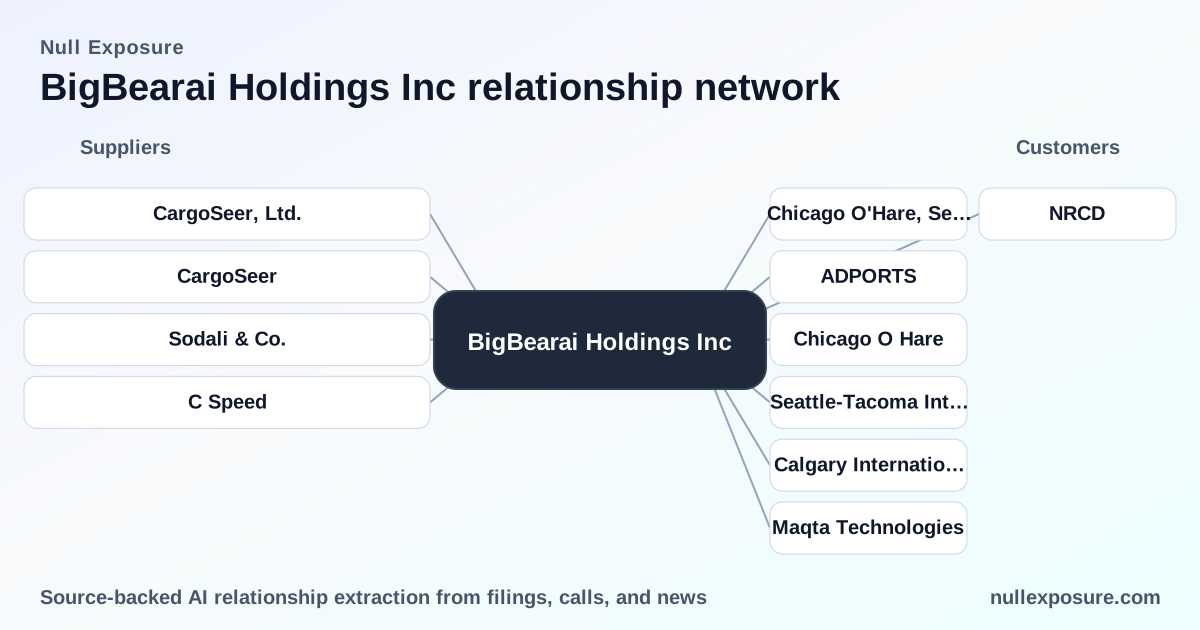
CargoSeer / CargoSeer, Ltd.
BigBear.ai purchased selected technologies from CargoSeer in early 2026 intended to strengthen cargo scanning, customs enforcement and trade‑risk management capabilities used at international ports and border facilities. News coverage describes the deal as an asset/technology purchase with undisclosed financial terms and positions the acquisition as tactical product enhancement rather than a revenue‑heavy acquisition (see Tech reporting and MarketScreener, Jan–Mar 2026).
Source: Tech news coverage on the acquisition (TS2 Tech, March 2026) and MarketScreener’s Jan. 21, 2026 earnings flash.
Sodali & Co.
Sodali & Co. is acting as the firm’s proxy solicitation agent, which is operationally important for the company’s shareholder votes tied to dilution and governance matters; this role increases the administrative and governance oversight around capital transactions. This relationship shows BigBear.ai is actively managing investor communications and proxy mechanics ahead of shareholder votes in early 2026.
Source: TS2 Tech reporting on proxy solicitation (March 2026).
C Speed
BigBear.ai entered a strategic partnership with C Speed that integrates BigBear.ai’s operational software with advanced radar systems to deliver AI‑enabled border surveillance and real‑time threat detection; the tie is positioned as a systems‑level integration to expand addressable markets in border and travel security. This partnership is described in coverage as a capability integration rather than an acquisition, enhancing ConductorOS‑style deployments in surveillance environments (TradingView/Zacks summary, early 2026).
Source: TradingView/Zacks coverage referencing the partnership (reported March 2026).
How these supplier ties actually constrain operations and strategy
BigBear.ai’s public filings and news coverage create a coherent company‑level set of constraints that investors should treat as operating signals:
- Contracting posture: The company relies on third‑party technology providers and integrations to accelerate product capability rather than developing everything in house; that creates execution dependency on suppliers and partners.
- Concentration and criticality: Selected technology buys (CargoSeer) and integrations (C Speed) target verticals where certification, accuracy, and operational continuity matter; failure of these third‑party components would have outsized impact on specific contracts.
- Maturity and substitution risk: Management’s pattern of small targeted acquisitions and partnerships signals a build-fast, buy-small posture — rapid capability addition but with integration risk and limited revenue transfer until products are fielded and contracted.
- Governance and capital posture: Active proxy work and shareholder votes tied to dilution highlight capital constraints and governance sensitivity around financing supplier-driven growth.
Company filings explicitly warn that “a failure to maintain our relationships with our third‑party providers (or obtain adequate replacements), and to receive services from such providers that do not contain any material errors or defects, could adversely affect our ability to deliver effective products and solutions…” — treat that as a primary operational risk to model and monitor.
Investment implications: what operators and investors should watch
- Milestone-driven value realization. Given the high valuation multiples, the market will reward supplier relationships only if they drive contract awards, certification, or measurable ARR growth; monitor contract wins and pilot-to-production conversions tied to CargoSeer and C Speed integrations.
- Integration and calendar risk. Small technology purchases reduce headline dilution but increase near‑term integration spend and potential schedule slippage; that is especially important given BigBear.ai’s negative operating margins.
- Governance and capital risk. Proxy solicitation activity (Sodali) and public dilution votes are catalysts; outcomes will affect the company’s balance sheet flexibility for future supplier spending.
- Operational dependency. The company-level warning about third‑party provider reliance is actionable: track vendor continuity, replacement options, and performance SLAs in major contracts.
If you want an operational supplier map and governance tracker for BigBear.ai’s counterparty exposure, get a focused supplier risk brief at https://nullexposure.com/.
Bottom line for investors and operators
BigBear.ai is executing a capability-adding, partnership-driven growth play that can expand its addressable defense and border-security markets if integrations convert to contracts. The company’s small acquisitions and systems partnerships are material to product roadmaps, but they also increase integration workload and supplier dependency. With a stretched valuation, the path to upside requires visible contractization of these supplier-led features and clear governance outcomes around capital structure.
For a structured review of supplier contracts, proxy catalysts, and integration delivery timelines, see the supplier intelligence hub at https://nullexposure.com/.