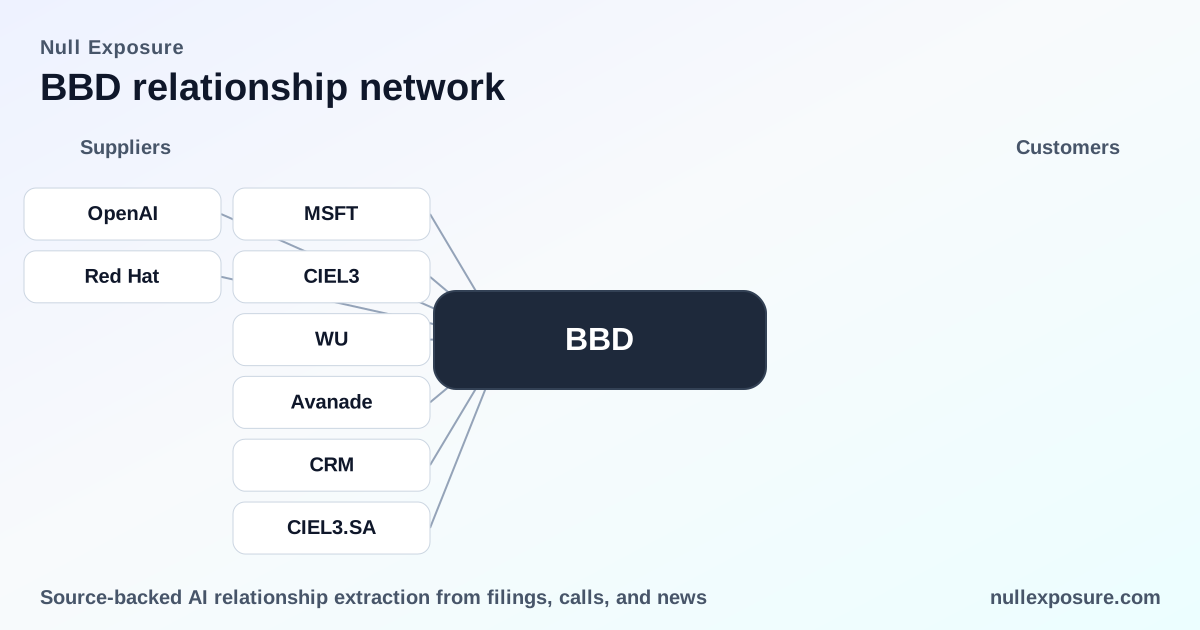
Banco Bradesco (BBD) — supplier relationships that shape product delivery and technology risk
Banco Bradesco monetizes its retail and corporate banking franchise by combining traditional banking products with technology-enabled distribution and payment services. Revenue is driven by lending, fee income from payments and merchant services, and cross-sell of digital banking products; strategic supplier partnerships accelerate product launches, lower time-to-market, and internalize operating leverage. For investors, supplier links are not peripheral — they are direct levers on cost, product availability, and regulatory surface area. Learn how Bradesco’s supplier roster informs commercial resilience and technology concentration at https://nullexposure.com/.
Why the supplier map matters to shareholders
Bradesco runs an enterprise-scale bank in Brazil with a large retail base and significant merchant-facing operations. Supplier relationships here are transactional and strategic: some partners are co-developers of core digital platforms while others provide payments rails and compliance tooling. That mix governs execution speed and operational tail risk. Key takeaways up front:
- Technology partnerships accelerate product development (AI agents, cloud infrastructure, CRM).
- Payments partners connect Bradesco to merchant flows and fee income, and related-party arrangements can affect governance and concentration.
- Third-party platforms expand cross-border and real-time capabilities, directly affecting revenue capture on transactions.
If you want a structured supplier risk view or supplier intelligence, visit https://nullexposure.com/ for more detailed signals and relationship tracking.
What each supplier provides — concise investor-facing summaries
Microsoft
Bradesco partnered with Microsoft to co-develop the Bridge platform, a multi-agent generative AI solution built on Azure and Foundry models; Microsoft supplies cloud infrastructure and AI tooling that enable document processing, intelligent agents, and real-time support. This is documented in a Microsoft customer case study published March 2026: https://www.microsoft.com/en/customers/story/25660-banco-bradesco-sa-azure-ai-foundry.
Avanade
Avanade collaborated alongside Microsoft on the Bridge platform, contributing implementation and systems integration capabilities for the AI rollout. The Microsoft case study describes Avanade as a co-developer on the initiative (March 2026): https://www.microsoft.com/en/customers/story/25660-banco-bradesco-sa-azure-ai-foundry.
OpenAI
Bradesco leverages Microsoft Azure OpenAI (Foundry Models) as part of its intelligent-agent stack to handle inquiries and document processing, embedding large-model capabilities into customer workflows. This usage is detailed in the March 2026 Microsoft customer story: https://www.microsoft.com/en/customers/story/25660-banco-bradesco-sa-azure-ai-foundry.
Red Hat
For security and compliance governance, Bradesco standardized on Azure Red Hat OpenShift to manage containerized workloads and policy controls — an enterprise-grade choice that signals a mature, platformized architecture. The Red Hat/OpenShift reference appears in the company’s Microsoft case study (March 2026): https://www.microsoft.com/en/customers/story/25660-banco-bradesco-sa-azure-ai-foundry.
Cielo
Bradesco renewed an agreement with payments processor Cielo covering merchant acquisition and services that support merchant retention and accreditation inside Cielo’s system; management referenced tap-on-phone and same-day receivables discount features during recent earnings remarks. Cielo is described during Bradesco’s Q4 2025 earnings call (posted March 2026) and in coverage of the renewal (TS2 Tech, March 2026): https://www.insidermonkey.com/blog/banco-bradesco-s-a-nysebbd-q4-2025-earnings-call-transcript-1692565/ and https://ts2.tech/en/bradesco-stock-price-hovers-near-a-52-week-high-as-brazil-rate-decision-nears-earnings-next-week/.
Western Union
Bradesco offers international remittance services through a partnership with Western Union, extending cross-border payment capabilities to retail customers and remitters. A description of the relationship and service offering is available via remessaonline’s overview of Bradesco/Western Union remittances (March 2026): https://www.remessaonline.com.br/blog/transferencias-internacionais-com-o-bradesco/.
Salesforce
Bradesco deployed Salesforce for the company (corporate) segment in 2024 to manage relationships and sales workflows, signaling formal CRM adoption to scale commercial efforts and customer segmentation. Management referenced the Salesforce deployment during the Q4 2025 earnings call (published March 2026): https://www.insidermonkey.com/blog/banco-bradesco-s-a-nysebbd-q4-2025-earnings-call-transcript-1692565/.
Operational posture and company-level signals
The provided materials show no explicit supplier constraints reported separately; instead, the relationship evidence signals a coherent operating model:
- Contracting posture: Bradesco pursues strategic, long-term partnerships (co-development with Microsoft/Avanade) and standard enterprise licensing (Salesforce, Red Hat), indicating preference for managed vendor relationships that transfer implementation risk while keeping control of customer experience.
- Concentration: Supplier mix spans global cloud/AI vendors, domestic payments processors, and remittance rails — a diversified set of critical suppliers that still concentrates risk in a few large technology platforms (Microsoft/Azure).
- Criticality: Technology partners (Microsoft/Avanade/OpenAI/Red Hat) are functionally critical to Bradesco’s AI-driven customer services and platform governance; payments partners (Cielo, Western Union) are critical to fee generation and merchant flows.
- Maturity and governance: Use of enterprise platforms (Azure Red Hat OpenShift, Salesforce) and formal co-development agreements indicates a mature procurement and integration posture that prioritizes regulatory compliance and scalability.
If you want a concise supplier risk scorecard or continuous monitoring, check https://nullexposure.com/ for subscription options and relationship intelligence.
Investment implications — what to watch and why it matters
- Execution leverage from AI and cloud is material. The Microsoft/Avanade/OpenAI stack directly supports customer-facing automation and cost reduction; investors should monitor implementation milestones and cost-to-income impact in upcoming quarters.
- Payments partnerships drive fee income but introduce governance scrutiny. The Cielo renewal labeled as a related-party transaction requires attention to disclosure and governance, as merchant-acquisition economics feed materially into fee revenue.
- Third-party platform concentration is a double-edged sword. Dependence on a single cloud/AI vendor concentrates operational risk but accelerates capability build-out; track SLA, data residency, and compliance commitments in filings and investor presentations.
- Cross-border rails expand addressable market. The Western Union tie extends remittance reach and supports retail deposit flows from remitters, which can sustain fee income during rate cycles.
Monitor upcoming earnings and investor materials for milestones tied to the Bridge AI platform, merchant-acquisition KPIs with Cielo, and any contract renewals or governance disclosures.
For a deeper supplier risk assessment or to track how these relationships evolve against regulatory and market events, visit https://nullexposure.com/ for continuous coverage.
Bradesco’s supplier network is strategically organized to scale digital products and payments; investors should treat these relationships as active components of revenue delivery and operational risk rather than background infrastructure. For on-demand reports and supplier monitoring tailored to financial analysis, explore the services at https://nullexposure.com/.