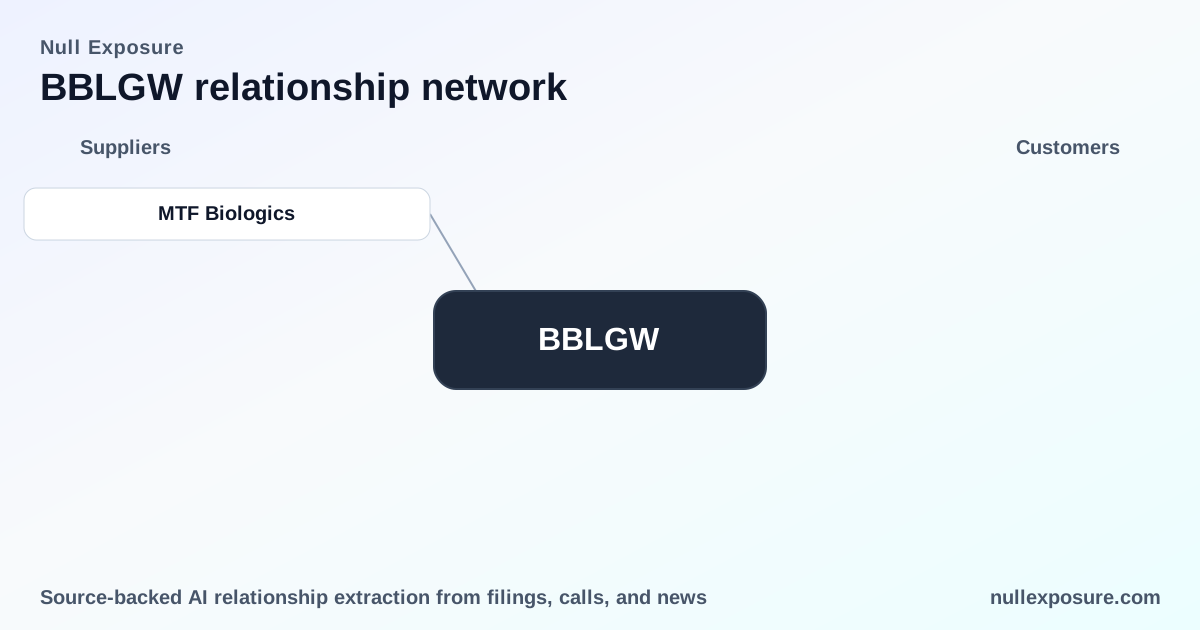
BBLGW (Bone Biologics Corp Warrants): supplier map and commercial implications for investors
Bone Biologics develops a recombinant human protein (NELL‑1) bone regeneration platform and is commercializing the NB1 bone graft device through a combination of technology licensing and third‑party manufacturing and clinical outsourcing. The company monetizes through future product sales and license-related royalties; today it generates no reported revenue while advancing a multicenter pilot clinical study that has triggered milestone payments and will determine near‑term de‑risking. For investors, the value pathway is driven by clinical readouts, third‑party manufacturing scale, and the cost/royalty structure embedded in existing licenses. Learn more about supplier exposure and risk monitoring at https://nullexposure.com/.
The quick thesis: what drives value and vendor dependence
Bone Biologics operates an asset‑light commercialization model: it holds licensed IP (notably an amended license with UCLA Technology Development Group), outsources manufacturing of key raw materials and DBM putty, and relies on CROs and CDMOs to run clinical work and produce investigational material. This structure concentrates execution risk off‑balance‑sheet — the company’s ability to commercialize is tightly coupled to supplier quality, regulatory approvals, and milestone delivery. Financially the company reports zero trailing revenue and negative earnings per share (EPS -0.144), underlining that supplier relationships are catalytic to any future revenue realization.
What the filings disclose about suppliers (the complete list from public results)
Below are the supplier and licensing relationships disclosed in the public materials and the plain‑English takeaways investors should track.
MTF Biologics — third‑party manufacturer and material source
Bone Biologics states that it is “focused on bone regeneration in lumbar spinal fusion using NELL‑1 in combination with DBM, a demineralized bone matrix from MTF Biologics (MTF).” This confirms MTF supplies DBM putty used in the NB1 device and is therefore a critical materials partner for the program. According to the company’s FY2024 10‑K filing, MTF is the source of DBM used in clinical work and cleared products. (Source: Bone Biologics FY2024 10‑K filing, bblgw-2024-12-31)
UCLA Technology Development Group (UCLA TDG) — licensor of core IP
Bone Biologics has an Amended and Restated Exclusive License Agreement with UCLA TDG (effective April 9, 2019), under which the company pays a $10,000 annual maintenance fee plus royalties at 3.0% of net sales on licensed products or methods. This license creates a recurring cost and a structural royalty that will compress gross margins once product sales begin. (Source: company licensing disclosure in filings)
How the constraint signals explain the operating model and commercial posture
The company disclosures and inferred constraints frame a clear operating profile that affects supplier counterparty risk and investor focus:
- Contracting posture — licensing plus outsourcing. The explicit Amended License Agreement and royalty obligations show Bone Biologics is a licensee/owner of IP with obligations; concurrently the firm relies on CMOs/CROs and third‑party manufacturers for materials and clinical production, indicating an outsourcing‑first commercialization strategy (company filing language and agreement excerpts).
- Concentration and criticality of suppliers. The DBM material from MTF is singled out in the filings; with DBM integral to the product formulation, a single supplier relationship is commercially critical until alternate qualified sources are established. The company also notes reliance on multiple CMOs/CROs for manufacturing and trials, spreading operational exposure but increasing vendor management complexity.
- Maturity — pilot stage. The program is in a multicenter, randomized pilot clinical study (first patients treated in 2024), which positions the business at a de‑risking inflection where supplier performance directly influences clinical timelines and milestone payments.
- Geographic footprint. Clinical activity and study conduct extend to APAC (Australia) in addition to North America, creating cross‑border regulatory and logistics complexity for suppliers and logistics partners (evidence of Australia study and U.S. figures in filings).
- Financial scale of supplier commitments. Spend evidence shows milestone payments in the $100k–$1m band (initial $100k feasibility milestone) and smaller recurring license fees (annual $10k), indicating early‑stage but material supplier and license cash flows relative to current zero revenue.
- Operational risk beyond supply — vendor cybersecurity and quality. The company explicitly warns that internal systems and those of CROs, CDMOs and other vendors are exposed to cyber and operational disruption, raising another vector of supplier dependency that can affect trial integrity.
If you want structured, searchable supplier analytics for more supplier relationships and constraint signals, visit https://nullexposure.com/ to see how these elements map across other healthcare suppliers.
Risk map — what investors and operators should prioritize
- Supply concentration risk: DBM from MTF is a functional dependency until the company qualifies alternative sources or secures long‑term supply covenants. Failure to replace or supplement a single supplier would delay regulatory filings and commercialization.
- Margin pressure from IP economics: The 3% royalty to UCLA TDG is structural; investors should model royalties into gross margins and scenario test commercialization sensitivity to pricing and uptake.
- Execution risk in clinical outsourcing: CRO/CDMO performance, batch release timing, and cross‑border logistics for APAC trials determine cash burn and milestone timing; the pilot stage makes these determinative for near‑term valuation inflection points.
- Regulatory and quality cadence: DBM and biologic device combinations face regulatory scrutiny; supplier quality systems and documented GMP compliance for CDMOs are core gating items.
- Vendor cyber/operational resiliency: The filing highlights susceptibility of vendor IT systems to disruption; operational continuity plans and contractual SLAs with remedies are essential.
Specific, practical investor actions
- Track clinical milestones and vendor qualification updates in SEC filings and company press releases; the first‑patient milestone already triggered a $100k payment and is a leading indicator of program momentum.
- Ask management about dual‑sourcing plans for DBM, the duration and terms of manufacturing agreements with CMOs, and the presence of supply‑chain SLAs that include quality, delivery and contingency provisions.
- Model royalties (3% net sales) into long‑range gross margin scenarios and stress test commercialization economics under conservative pricing and uptake assumptions.
- Monitor geographic trial exposure (Australia + U.S.) for regulatory timelines and potential logistics friction that could extend milestone schedules.
For a deeper supplier risk view and transaction‑level exposure across healthcare vendors, explore the platform at https://nullexposure.com/.
Closing recommendation
Bone Biologics is a technology‑driven clinical‑stage company where supplier relationships — licensing, DBM supply, and contract manufacturing — are the central operational levers that will determine commercial viability. Investors should treat supplier qualification and IP/licensing economics as first‑order variables when valuing the company. For ongoing monitoring of these supplier relationships and constraint signals, visit https://nullexposure.com/ for a consolidated view aligned to investment due diligence.