Bath & Body Works (BBWI): supplier relationships and what they mean for investors
Bath & Body Works is a specialty retailer that monetizes an emotional consumer brand through a blend of high-margin private-label personal care and home fragrance products, an extensive physical store footprint, and an increasingly efficient e-commerce channel. The company drives revenue with seasonal marketing and co-branded assortments that stimulate repeat purchases and create high customer lifetime value; profit generation is supported by tightly managed inventory flows and third‑party logistics that push scale economics across North America. If you evaluate supplier risk or strategic upside for BBWI, focus on its manufacturing concentration, logistics dependencies, and the commercial value of seasonal partnerships. For a deeper look at counterparties and supplier signals, visit https://nullexposure.com/.
A single visible supplier tie-in — a consumer co-brand that sells seasonal lift
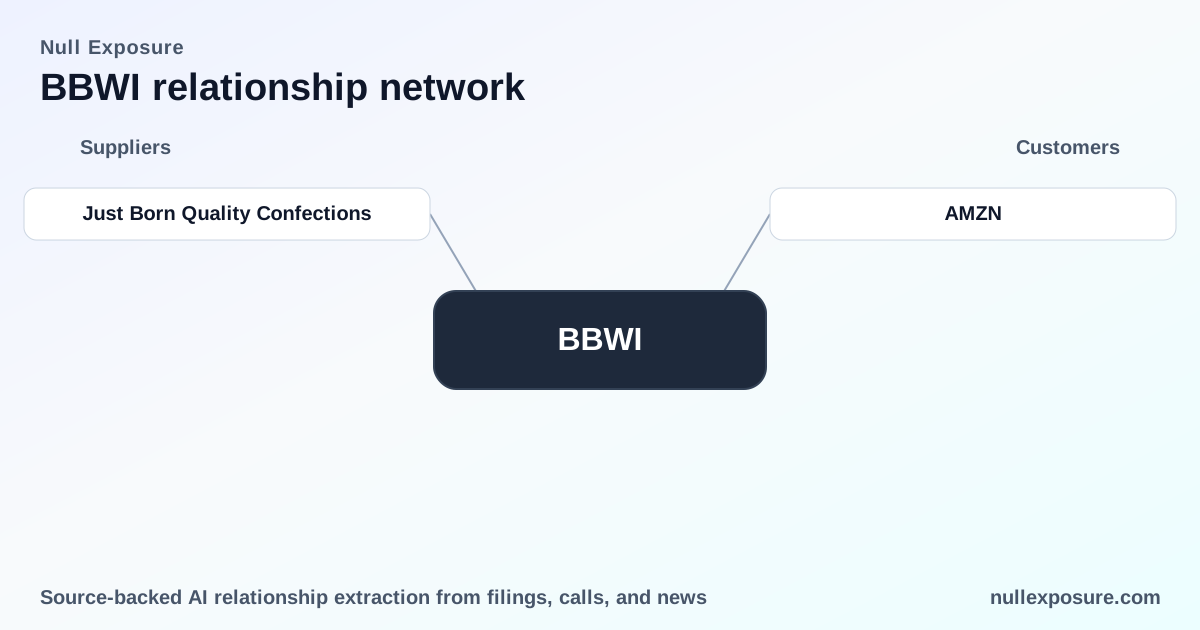
Just Born Quality Confections partnered with Bath & Body Works on an Easter-themed collaboration that translated the confectioner’s iconic product into fragrances and giftables for the retailer. According to a news article on StockTitan (published March 9, 2026), Just Born described the partnership as a way to reimagine its Marshmallow Peeps beyond the candy aisle into playful, feel‑good fragrances that support seasonal sell‑through.
What that relationship looks like in plain English
Just Born and Bath & Body Works executed a seasonal co‑brand where the confectioner’s brand equity was licensed into Bath & Body Works’ fragrance and gift assortment to drive short‑term traffic and merchandising buzz (StockTitan, Mar 2026). This is a marketing-driven supplier/collaboration rather than a core manufacturing vendor for Bath & Body Works’ everyday assortment.
How supplier signals from filings shape the operating picture
Company disclosures and the extracted constraint evidence outline a clear operating posture that is constructive for scale but carries observable concentration and logistics exposure.
- Company filings state that BBWI procured merchandise from roughly 100 vendors, primarily located in the U.S. during 2024, indicating a North American‑centric vendor base and lower geographic supply dispersion. This is a company-level signal that supports quick replenishment but concentrates country/regional risk.
- Filings also note the use of third‑party logistics providers to warehouse and distribute product throughout North America, and the presence of third‑party distribution centers positioned to place inventory closer to customers. Those statements point to a reliance on outsourced logistics and distribution as a core operational lever.
- The business reports production concentration around Beauty Park, a business park near Columbus, Ohio, where several key vendors operate in proximity to BBWI distribution centers — a manufacturing cluster that delivers efficiency but increases systemic risk if the local node is disrupted.
- Finally, the company monitors credit exposures with major financial institutions and maintains derivative contracts, which signals mature treasury practices and engagement with large enterprise counterparties for cash and hedging operations.
Taken together, these are company-level constraints that define how BBWI sources, stores, and moves inventory: concentrated manufacturing geography, North American vendor orientation, outsourced logistics relationships, and financial exposure managed with major banks.
Why these constraints matter to investors and operators
- Contracting posture and maturity: The use of established financial counterparties and third‑party logistics providers reflects a company that contracts with mature, large enterprises to scale distribution and treasury functions. That reduces operational startup risk but increases dependency on contract performance and counterparty credit stability.
- Concentration risk: The manufacturing cluster near Columbus and a vendor base heavily weighted to the U.S. concentrate operational risk geographically. A regional disruption — labor strike, severe weather, or supply‑chain incident — would propagate quickly because inventory flows and production are locally clustered.
- Strategic criticality: Seasonal co‑brands like the Just Born collaboration are commercially critical for top‑line acceleration in holiday and seasonal windows; they are not operationally critical for day‑to‑day product supply but are vital to marketing-driven sales spikes.
- Outsourced distribution dependency: Third‑party logistics and distribution centers are central to BBWI’s omnichannel promise; any sustained underperformance by logistics partners would impair fulfillment economics and customer experience.
Full relationship roster (as surfaced)
Just Born Quality Confections — Bath & Body Works launched an Easter-themed partnership translating the confectioner’s Marshmallow Peeps into fragrances and gifts designed to capture seasonal shoppers and social buzz, a marketing‑led co‑branding executed in FY2026 (StockTitan, Mar 9, 2026).
Investment and operational implications — what to watch
- Monitor regional concentration indicators: payroll, local vendor uptime, and logistics throughput around Columbus/Beauty Park; interruptions there have outsized impact relative to their share of procurement.
- Track third‑party logistics performance metrics: warehouse capacity commitments, delivery SLA adherence, and transportation cost pass‑throughs. Rising logistics costs or service degradation will pressure margins faster than broad merchandising mix shifts.
- Evaluate the quality and cadence of seasonal partnerships: co‑brand activations drive short windows of higher margin sales, so frequency and brand fit of these deals are a meaningful lever for revenue volatility and marketing ROI.
- Watch counterparty credit posture with large financial institutions and hedging counterparties; while treasury practices are mature, counterparty stress amplifies liquidity and hedging execution risk.
If you want a structured way to monitor these supplier signals and their financial impact, start with a focused supplier map and disruption scenario analysis on https://nullexposure.com/.
Practical next steps for investors and operators
- For investors: incorporate a scenario where a regional supply disruption reduces near‑term gross margin by modeling increased expedited shipping and temporary out‑of‑stocks, then stress test valuation multiples accordingly.
- For procurement/operations teams: prioritize contingency planning for the Columbus cluster and negotiate stronger SLAs with third‑party logistics partners to protect seasonal peaks.
- For commercial teams: continue to quantify the incremental lifetime value and traffic lift from co‑brand partnerships like the Just Born collaboration to price future deals appropriately.
For an in-depth supplier risk profile and ongoing monitoring tools, visit https://nullexposure.com/.
Conclusion — concise take
Bath & Body Works runs a capital‑efficient, brand‑driven retail model that successfully monetizes seasonal excitement and loyal repeat buying, while relying on a North American supplier network, clustered manufacturing, and outsourced logistics. Those structural choices create attractive operating leverage but require active mitigation for concentration and logistics dependencies. Investors and operators should calibrate engagement around the company’s manufacturing geography and third‑party logistics arrangements, and treat seasonal co‑brands as valuable tactical levers rather than long‑term supply anchors. For continuous tracking and supplier intelligence, see https://nullexposure.com/.