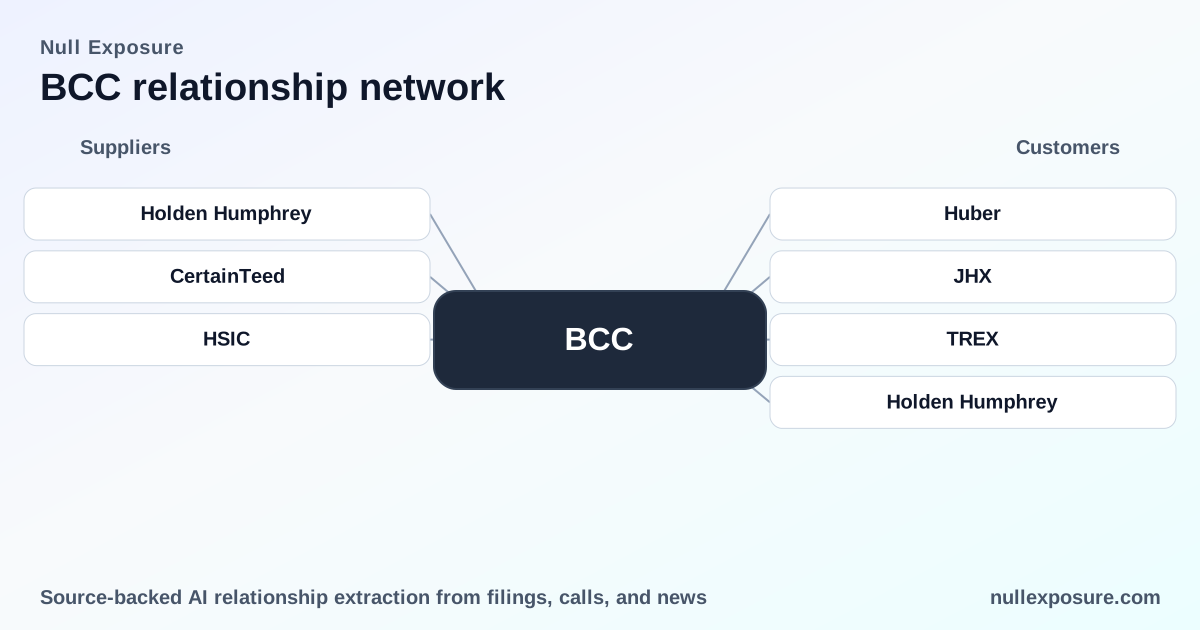
Boise Cascade (BCC) — supplier relationships that shape the lumber franchise
Boise Cascade monetizes a vertically integrated lumber and building-materials franchise: it manufactures engineered wood products (LVL, I‑joists, laminated beams) and distributes building materials through a broad vendor network, collecting margin both from manufacturing and from distribution services. Recent M&A and partnership activity is explicitly being used to extend distribution reach and tighten product channels in the Northeast, while long‑term raw‑material commitments keep mills fed and production predictable. For deeper supplier intelligence on BCC and comparable names, visit https://nullexposure.com/.
The strategic logic behind supplier moves
Boise Cascade’s operating model blends manufacturing and distribution in a way that makes supplier relationships both revenue drivers and potential constraints. The company manufactures a large portion of its engineered wood products internally while sourcing the remainder from third‑party vendors that range from major manufacturers to regional suppliers. That configuration gives Boise Cascade control over margin on core products while also requiring active management of a diverse supplier base.
Three company‑level signals matter for investors evaluating supplier exposure:
- Long‑term log supply contracts underpin production stability and reduce spot volatility for raw materials. The company reported existing long‑term agreements for log supply.
- Material contractual spend is already committed: Boise Cascade disclosed approximately $124 million of obligations for log purchases as of December 31, 2024—an explicit, high‑confidence spending band that is meaningful relative to free cash flow.
- Mixed counterparty profile — suppliers run the gamut from large enterprises to small regional producers, which reduces single‑counterparty concentration but increases operational complexity in procurement and logistics.
Those signals indicate a procurement posture that is deliberately committed and diversified: contracted supply reduces near‑term price risk but increases fixed obligations and execution risk across many vendor relationships.
How procurement posture affects investors
Long‑term contracts reduce earnings volatility from input price spikes, but contractual obligations of the magnitude disclosed mean Boise Cascade carries pronounced fixed‑cost exposure if housing starts or construction demand decelerates. Investors should price both the stabilization benefits of contracted logs and the downside from committed spend in cyclical downturns.
For a practical view of counterparties and their operational implications, see ongoing supplier intelligence at https://nullexposure.com/.
What the recent disclosures reveal about counterparties
Boise Cascade’s public disclosures and commentary in investor materials list specific partners tied to a recent expansion in the Northeast. Each relationship below is described plainly with the originating source.
Holden Humphrey — Boise Cascade welcomed the Holden Humphrey team following an acquisition that expands the company’s distribution footprint in the Northeast; the firm referenced the new team directly in its Q4 2025 earnings call. (Q4 2025 earnings call, discussed March 2026.)
CertainTeed — Boise Cascade’s acquisition of Holden Humphrey is expected to strengthen distribution partnerships with CertainTeed, reinforcing joint go‑to‑market channels for building‑materials distribution in the affected region, according to a company press release reported by The Globe and Mail in March 2026. (The Globe and Mail, press release coverage, March 2026.)
Henry — The same transaction is described as strengthening the company’s relationship with Henry (ticker HSIC), signaling deeper channel alignment with specialty manufacturers for weatherproofing and related materials in the Northeast distribution network, according to reporting tied to the acquisition announcement. (The Globe and Mail, press release coverage, March 2026.)
Why each named relationship matters operationally
-
Holden Humphrey: The acquisition brings local distribution expertise and customer relationships in a strategic geography, translating into faster revenue ramp for Boise Cascade’s distribution segment and higher shelf‑space for its own products. (Earnings call, Q4 2025; noted March 7, 2026.)
-
CertainTeed: Deepening distribution ties with CertainTeed strengthens product breadth at point of sale and supports cross‑selling opportunities where Boise Cascade’s engineered wood and CertainTeed’s roofing/insulation products are complementary. (Press coverage of acquisition, The Globe and Mail, March 9, 2026.)
-
Henry (HSIC): Closer alignment with Henry amplifies Boise Cascade’s access to specialty building products that pair with its structural materials, improving the integrated offering to contractors and distributors in the Northeast. (Press coverage of acquisition, The Globe and Mail, March 9, 2026.)
Operational constraints and what they imply for risk and upside
The disclosed constraints provide a clear lens into Boise Cascade’s supplier economics:
-
Contracting posture: long‑term log supply agreements are in place. That is a structural hedge against short‑term raw‑material dislocations but locks the company into fixed or indexed commitments that are material to cash flow.
-
Spend concentration: a company‑level obligation of roughly $124 million for log purchases positions raw‑material spend in the high‑tens to low‑hundreds of millions—this is not a trivial line item against reported TTM revenue (
$6.4 billion) and EBITDA ($338 million), and it shapes working capital and margin sensitivity. -
Supplier mix: Boise Cascade sources from both large enterprises and small regional producers, which lowers single‑vendor counterparty risk but heightens execution complexity and logistics overhead.
-
Manufacturing role: Boise Cascade is itself a manufacturer of engineered wood products, meaning supplier relationships are both inputs into production and commercial partners for distribution. That dual role increases the strategic value of acquisitions that expand distribution reach (Holden Humphrey) and partnerships with complementary manufacturers (CertainTeed, Henry).
Together, these constraints imply a company that is operationally mature and capital‑intensive: stability in supply and distribution is being bought with committed spend and integration risk.
If you track supplier exposure across the building‑materials sector, you will find value in structured visibility—explore comparative supplier maps and risk scoring at https://nullexposure.com/.
Bottom line for investors and operators
Boise Cascade is executing a clear playbook: lock in raw materials via long‑term contracts, produce value‑added engineered wood in‑house, and extend distribution through targeted acquisitions and partner alignments. That strategy stabilizes supply and expands market access but carries near‑term cash commitments and integration execution risk. For investors, the interplay between committed log spend (~$124 million) and distribution synergies (Holden Humphrey, CertainTeed, Henry) is the primary lens for both upside and downside.
For ongoing monitoring of supplier relationships and their financial implications, visit https://nullexposure.com/ to get supplier‑level intelligence and alerts.