BioCardia (BCDA): supplier relationships, operational constraints, and investor implications
BioCardia is a clinical-stage regenerative medicine company that develops cardiovascular therapies and the CardiAMP autologous cell processing platform; the company currently monetizes prospectively—value will be realized through regulatory approvals and commercialization of device and therapeutic offerings, while near-term operations are funded through capital markets and milestone-driven partnerships. Supplier and service relationships are central to BioCardia’s ability to execute clinical programs and to deliver a commercial product once approved. If you evaluate BCDA as an investor or an operator, prioritize supplier concentration, outsourced manufacturing posture, and CRO dependency as drivers of execution risk. For more supplier intelligence and primary-sourced analysis, visit https://nullexposure.com/.
How BioCardia structures work with third parties and why it matters
BioCardia outsources significant functional work to third parties: contract research organizations (CROs) run clinical trial activities and clinical sites, contract manufacturing organizations produce trial materials, and at least one named partner manufactures the CardiAMP platform components. These supplier relationships are not peripheral—they are material to the company’s clinical timelines and cost structure. According to company disclosures from the 2024 fiscal year, termination or disruption of a CRO or a limited supplier relationship would likely delay clinical timelines and increase expenses, because switching providers requires qualification time and additional costs.
Operationally, the company combines limited internal manufacturing with reliance on external vendors for key components and sub-assemblies, and it uses third parties for storage and distribution in clinical programs. These are company-level signals drawn directly from BioCardia’s filings and financial disclosures through the latest quarter (2025-09-30), which also show no reported revenue TTM and negative operating metrics—underlining that supplier execution is a gating factor before commercialization can begin.
Named partners and documented relationships you can act on
- Biomet Biologics, LLC: BioCardia states that the CardiAMP autologous cell processing platform is manufactured for the company by Biomet Biologics; this is an explicit manufacturing partner named in company filings discussing production of platform components and sub-assemblies (company filings, annual disclosures covering 2024).
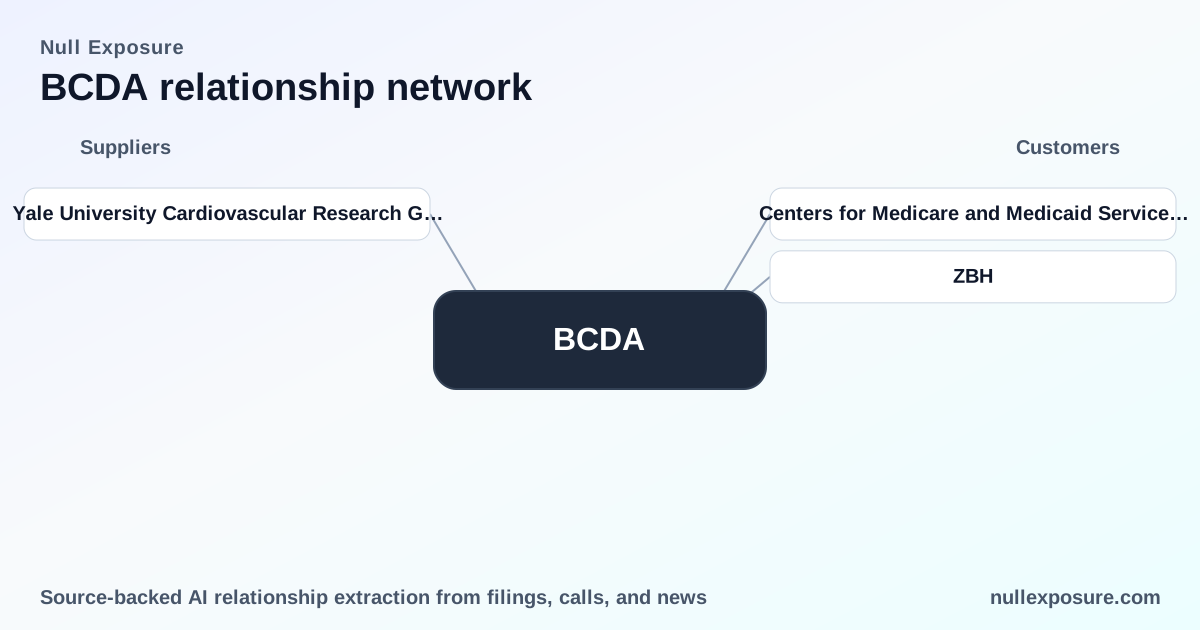
- Yale University Cardiovascular Research Group: Echocardiography outcomes for recent trials were measured by the blinded echocardiography core laboratory at Yale University Cardiovascular Research Group, as reported in external coverage in March 2026 (news report, March 9, 2026). See the coverage for trial result context: https://www.stocktitan.net/news/BCDA/bio-cardia-late-breaking-echocardiography-clinical-results-from-579hqko70zqg.html.
Every relationship disclosed in the public results (plain-English summaries)
Yale University Cardiovascular Research Group — The company used Yale’s blinded echo core laboratory to measure echocardiography outcomes for recent clinical work, giving clinical-read credibility and independent adjudication to imaging endpoints (news coverage, March 9, 2026).
Biomet Biologics, LLC — BioCardia identifies Biomet Biologics as the contract manufacturer of the CardiAMP cell-processing platform components, making Biomet a direct production partner for a product that will be central to commercialization (company filing excerpts, 2024).
Constraints and what they signal about BCDA’s operating model
Company disclosures articulate several constraints that define the supplier risk profile:
- Material concentration risk: BioCardia warns that some key components and sub-assemblies come from a single supplier or a small number of suppliers, and that inventory buffers are limited—this is a material operational constraint that increases the probability of manufacturing delays and cost overruns if supply interruptions occur (company filings, 2024).
- CRO dependency and service-provider posture: The company relies on CROs to conduct research and clinical trial activities and third parties for clinical storage and distribution; this means trial timelines are heavily dependent on external execution, and transitioning vendors creates measurable delay risk (company filings, 2024).
- Outsourced manufacturing model: With the CardiAMP platform manufactured by Biomet Biologics and other components produced externally, BioCardia is positioned as a design-and-development company that depends on contract manufacturers for production scale-up; this lowers fixed-cost exposure but elevates supplier concentration and qualification risk (company filings, 2024).
These constraints are company-level signals drawn from BioCardia’s public filings and financial notes describing R&D spend and vendor arrangements. Investors should treat them as structural characteristics rather than episodic issues.
For deeper due diligence and supplier mapping, see https://nullexposure.com/.
Financial and governance context that amplifies supplier risk
BioCardia’s public financial snapshot through the latest quarter (2025-09-30) reinforces supplier risk as a core investment consideration: market capitalization is roughly $13.5M, trailing revenue is $0, EBITDA is negative, and the company recorded R&D expense pressure in 2024. With limited institutional ownership and a significant insider share percentage, access to capital and governance choices around supplier selection are important governance variables for investors. These financial realities mean that supplier disputes, unexpected costs from switching vendors, or extended qualification timelines could materially affect cash burn and dilution outcomes.
Practical implications for investors and operators
- Prioritize supplier resilience when modeling timelines: allow extra months for vendor transitions and regulatory device validation; BioCardia’s own disclosures flag that switching providers has a natural transition period that causes delays (company filings, 2024).
- Treat the Biomet relationship as a critical node: because Biomet manufactures the CardiAMP platform, any quality or capacity issue at that single named supplier would directly affect launch timing and initial commercial capacity (company filings, 2024).
- Expect outsourced cost volatility: reliance on CROs and contract manufacturers converts fixed internal spend into variable supplier expense, but also creates exposure to per-unit cost swings and qualification expenses that will affect margins post-approval.
Bottom line and recommended next steps
BioCardia is a small, clinical-stage company whose path to revenue is gated by supplier execution—supplier concentration, CRO dependency, and an outsourced manufacturing posture are the dominant operational risks. Investors should underwrite scenarios where supplier transitions add meaningful time and cost to clinical programs and should monitor named partners (like Biomet Biologics) and independent clinical adjudicators (such as Yale’s echo core lab) as signals of clinical credibility and potential bottlenecks.
If you’re evaluating BCDA for a portfolio or partnership decision, take two immediate actions: review the company’s most recent annual and quarterly filings for updated supplier language, and map counterparty resilience for named manufacturers and CROs. For a concise supplier intelligence briefing and relationship mapping, visit https://nullexposure.com/.
Key takeaway: execution of BioCardia’s clinical and commercial plan is supply-chain dependent—investors must price in supplier concentration and CRO risk when assessing valuation and time to commercialization. For tailored supplier analysis and monitoring, see https://nullexposure.com/.