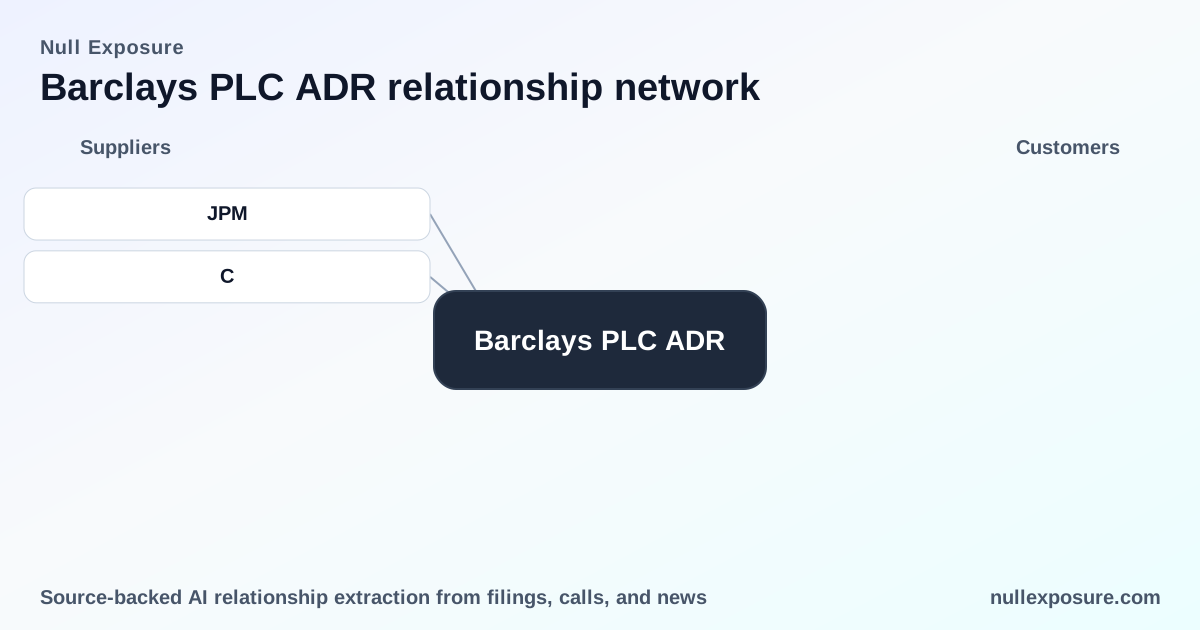
Barclays PLC (BCS) — Supplier relationships you need to know
Barclays PLC operates as a global diversified bank, monetizing through retail and corporate banking, investment banking, wealth management and capital markets activities across multiple regions. As a supplier to capital markets workflows — execution, custody and liquidity services — Barclays uses tier‑1 counterparties to execute balance‑sheet actions such as share buybacks and capital management. The bank’s supplier posture is transaction‑driven, depends on large brokerage partners for trade execution, and is managed through a small set of global counterparties rather than a broad vendor base. For a concise vendor-risk snapshot and ongoing monitoring, visit https://nullexposure.com/.
Why these broker relationships matter for investors
Barclays’ choice of execution counterparties for its buy‑back programme signals how management runs capital deployment and liquidity control: using major global dealers reduces execution risk and preserves market access, while also concentrating settlement and counterparty exposure in a few institutions. Buybacks executed through J.P. Morgan and Citigroup are routine capital‑management activity but are execution‑sensitive — they affect share count, per‑share earnings and investor perception.
What the public results show — every relationship in the record
J.P. Morgan Securities (transaction reported on Mar 9, 2026)
Barclays disclosed that it executed a cancellation purchase of 4.21 million shares on 20 February 2026 via J.P. Morgan Securities, at prices between 470.55 pence and 478.35 pence. This is an explicit execution relationship for buy‑back trades. Reported by bez‑kabli.pl (first seen Mar 9, 2026).
J.P. Morgan Securities plc (LSE execution notice, Feb 19, 2026)
In a separate filing referenced in press coverage, Barclays confirmed purchases for cancellation of ordinary shares on the London Stock Exchange executed from J.P. Morgan Securities plc as part of the buy‑back announced on 10 February 2026, reinforcing JPMorgan’s role as a principal execution agent. Reported via Stockopedia/Reuters coverage (Feb 19, 2026).
Citigroup Global Markets Limited (trade on Jan 28, 2026)
Barclays repurchased 3,509,109 ordinary shares on 28 January 2026 on the LSE from Citigroup Global Markets Limited, at prices between 480.65p and 490.30p and a volume‑weighted average price of 484.4534p; this confirms Citigroup as an active execution counterparty in the buy‑back programme. Reported by TipRanks (first seen Mar 9, 2026).
What these specific relationships imply for supplier risk and strategy
- Execution concentration but across multiple tier‑1 banks. Barclays is using well‑capitalized, global brokers (J.P. Morgan and Citigroup) for buy‑back execution rather than smaller, regional firms; that reduces execution risk while centralizing counterparty and settlement exposures.
- Contracting posture: transactional and event‑based. The public items are single‑purpose trade executions tied to a buy‑back programme rather than multi‑year managed‑services contracts; Barclays engages brokers on an as‑needed basis for market access.
- Criticality: high for short‑term capital management, low for core operating continuity. Execution partners are critical when the bank is actively repurchasing shares, since timing and price affect shareholder value; however, these relationships are not operationally critical in the same way as payment systems or core IT vendors.
- Maturity and predictability: mature capital‑markets arrangements. Using the same global dealers for consecutive executions indicates a stable, well‑understood supplier set and predictable execution patterns.
For investors who want continuous visibility into how counterparties affect capital‑management outcomes, explore our platform at https://nullexposure.com/ — it’s the fastest way to correlate counterparty activity with corporate actions.
Practical investor takeaways
- Capital management is active and being executed through top dealers. The presence of J.P. Morgan and Citigroup on buy‑back trades confirms Barclays’ preference for liquid, reputable execution partners, which supports orderly repurchases and reduces visible market impact.
- Concentration exists but is manageable. While counterparties are concentrated at the top tier, that concentration is a deliberate tradeoff: lower execution risk at the cost of counterparty exposure that is straightforward to monitor.
- Operational risk profile is modest for these relationships. These are transactional capital‑markets engagements rather than strategic outsourcing arrangements, so counterparty failure would create execution delay and potential price slippage, not a long‑term operational outage.
Key actions for investors:
- Watch subsequent filings for changes in broker mix or sudden shifts in execution volumes; persistent reliance on one counterparty would meaningfully increase concentration risk.
- Track buy‑back cadence versus reported volumes from these brokers to assess management’s pace of capital return.
Closing assessment and next steps
Barclays’ use of J.P. Morgan and Citigroup to execute material portions of its FY2026 buy‑back demonstrates a conservative execution approach: top‑tier brokers for high‑visibility capital actions. That choice reduces immediate execution risk and supports orderly market behavior, while concentrating settlement exposure in a small set of counterparties that investors should monitor. For a deeper look at counterparties, filings and continuous updates on supplier activity, visit https://nullexposure.com/ and sign up for alerts.
Bold takeaway: Barclays runs a disciplined buy‑back programme executed through established dealers — a tactical supplier posture that supports shareholder returns while remaining straightforward to monitor from a counterparty‑risk perspective.