BCTXL supplier map and what it means for investors
BriaCell Therapeutics (BCTXL is a warrant instrument tied to BriaCell) is an early-stage oncology developer that generates no product revenue today and funds operations through equity instruments and financing activity while running a pivotal Phase 3 program for its lead candidate, Bria‑IMT. The company's operating model is built around outsourced clinical and manufacturing partners, short-term facility commitments in North America, and milestone-driven clinical spend — a profile that creates concentrated third‑party dependency and elevated supplier criticality for service providers and contract manufacturers.
Explore the firm’s supplier footprint and sourcing signals at https://nullexposure.com/ — track contracts, counterparty roles, and operational constraints to gauge supplier risk and negotiation leverage.
Quick read: why suppliers matter for BCTXL holders
- No revenue; heavy clinical spending. The company reported $13.5 million in Phase 3 study costs for FY2025, signaling meaningful ongoing payments to CROs, vendors, and clinical sites. (FY2025 company filing, July 31, 2025).
- Outsourced manufacturing and clinical delivery. BriaCell explicitly relies on third‑party manufacturers and investigators rather than owning facilities, which makes supplier continuity a strategic capability rather than a commodity.
- Short-term real estate commitments. Month‑to‑month leases for lab and office space in Philadelphia indicate operational flexibility but also limited landlord cost visibility and potential relocation risk.
- Framework contracting exists alongside transactional spend. The filings reference existing master agreements with service partners, suggesting a mix of long-form supplier relationships and opportunistic short-term buys.
If you’re evaluating counterparty exposure or preparing supplier engagement, start with the supplier inventory at https://nullexposure.com/ for documented contracts and filings that matter to underwriting and vendor risk teams.
Supplier relationship inventory — what we found
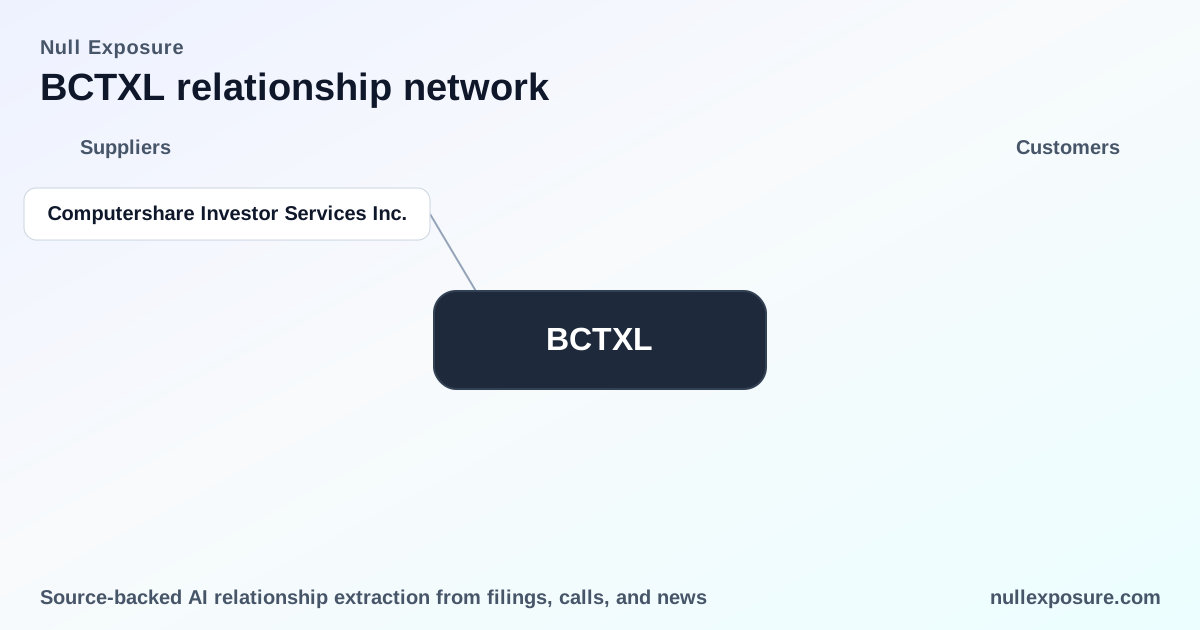
Computershare Investor Services Inc.
Computershare is identified as BriaCell’s transfer agent, responsible for administering letters of transmittal to shareholders for the share exchange process effective as of the announced Effective Date. This is an administrative, fiduciary‑type relationship focused on corporate actions rather than clinical operations. (News report, StockTitan, March 9, 2026 — https://www.stocktitan.net/news/BCTX/bria-cell-announces-proposed-effective-date-of-share-7lw1f6ehxmgw.html)
(That completes the full coverage of relationships surfaced in the supplier-scope results for BCTXL.)
What the filing excerpts and constraints tell investors about the operating model
The collection of constraint signals from BriaCell’s filings and disclosures creates a coherent portrait of how the company contracts and spends:
-
Framework contracts exist with strategic vendors. The company references a Master Services Agreement with KBI Biopharma, Inc. (dated March 17, 2017), which is a classic indicator of a standing supplier relationship used for recurring clinical or manufacturing services rather than one-off procurement. Framework agreements increase predictability for both parties but also concentrate execution risk if the counterparty is single-source. (Company filing incorporated by reference to Form F‑1, 2019).
-
A mix of short‑term leases and month‑to‑month commitments. As of July 31, 2025, BriaCell reported month‑to‑month office and lab space commitments in Philadelphia (~$38k–$43k per month). Short-term real estate posture gives the sponsor flexibility but reduces landlord leverage and can increase relocation and operational disruption risk if space is terminated or re-negotiated quickly. (FY2025 filing, July 31, 2025).
-
Third‑party manufacturing dependency is explicit. BriaCell discloses it does not own manufacturing facilities and depends on contract manufacturers for raw materials, API, and finished product for trials. That places manufacturing partners in a critical role for clinical continuity and commercialization readiness. (FY2025 filing).
-
Service provider model for clinical delivery. The company relies on CROs, clinical investigators, and contract labs to run trials, with prepaid expenses tied to pivotal Phase 3 activity. Operational control is therefore exercised through vendor management rather than in‑house capacity. (FY2025 filing).
-
Active stage and material spend. Filing excerpts show the pivotal Phase 3 study is active and that FY2025 clinical costs were $13.5M (a spend band the model classifies between $10M–$100M). That level of ongoing spend makes the trial program the primary short‑term driver of vendor cash flows and procurement demand. (FY2025 financial notes).
Taken together, these signals create the following contractual and supplier-management implications for investors and counterparties:
- Concentration risk is real: critical capabilities (manufacturing, clinical operations) are outsourced and potentially single- or limited‑source; contract continuity and quality control are material to the program’s value realization.
- Negotiation leverage is asymmetric during active trials: vendors providing essential clinical or GMP services have higher bargaining power because substitution is costly and time‑consuming.
- Maturity of relationships varies: the presence of a Master Services Agreement suggests established supplier ties for some providers, but month‑to‑month leases and transactional vendor spend point to tactical, short-term relationships elsewhere.
Learn how to layer supplier intelligence into investment due diligence at https://nullexposure.com/ — the portal consolidates filings, counterparty names, and contract signals relevant to underwriters and portfolio managers.
Operational and financial implications for operators and counterparties
For potential suppliers or strategic partners evaluating engagement with BriaCell:
- Contract design should reflect clinical criticality. Give priority to service continuity clauses, clear acceptance criteria, and contingency plans for lot failures or site changes.
- Payment terms will be governed by clinical cash burn and financings. With the company presently pre‑revenue and posting negative EBITDA, suppliers should anticipate equity‑driven cash flow cycles and structure milestones to align with drawdowns and financing tranches.
- Onshoring and redundancy options add value. Providers offering geographic redundancy, rapid scale capacity, or integrated supply‑chain transparency will be more attractive and can command premium pricing.
Bottom line for investors
BriaCell’s supplier profile is that of a clinical‑stage biotech with concentrated third‑party reliance and meaningful active spend tied to a pivotal Phase 3 program. The critical suppliers are contract manufacturers and CROs operating under a mixture of framework agreements and transactional engagements; real estate posture is short‑term and flexible. The dominant risk for holders of BCTXL (and holders of BriaCell equity) is operational continuity at key vendors and the company’s ability to fund ongoing clinical milestones.
For a deeper look at contract-level signals, counterparty names, and the implications for procurement and credit, visit https://nullexposure.com/ to access supplier intelligence and the primary source documents that drive these conclusions.