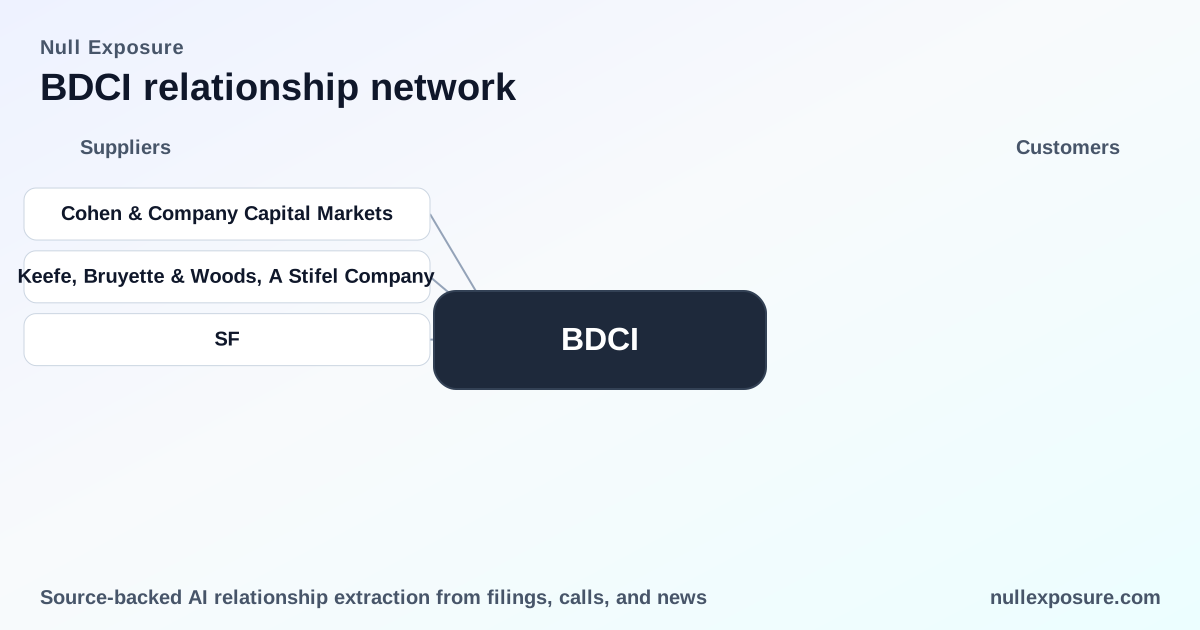
BDCI supplier relationships: what underwriters reveal about capital access and vendor posture
BDCI conducts capital-market activity through public unit offerings and relies on third‑party broker‑dealers to execute sales and underwriting. The company monetizes by bringing units to market and by leveraging book‑running managers to place capital with public investors, so the choice and structure of those broker relationships directly influence deal economics, timing, and access to liquidity for holders.
If you evaluate sponsor or issuer exposure to execution risk and counterparty concentration, this supplier map is material. For a concise, business‑focused view of BDCI’s counterparties and what they signal about the firm’s operating posture, read on — and if you want to track supplier relationships across filings and press coverage, visit https://nullexposure.com/ for deeper supplier intelligence.
What the underwriting roster says about BDCI’s execution model
BDCI’s public filings and press coverage show an execution model typical of issuers bringing a sizable offering to market: the company engages joint book‑running managers rather than a single lead underwriter. This structure spreads placement risk and gives the issuer access to different distribution networks and institutional channels. That model is execution‑oriented, transaction‑driven and not indicative of long‑term vendor lock‑in — underwriters are engaged per deal and replaced or repriced across offerings.
At the same time, working with established broker‑dealers signals a priority on distribution reach and market credibility. For investors, the key takeaway is that capital access is a function of market relationships and timing; changes in those relationships will materially affect deal pricing and execution velocity.
Who BDCI is working with (the full relationship list)
Cohen & Company Capital Markets
Cohen & Company Capital Markets is one of the joint book‑running managers listed for BDCI’s public offering, acting through its broker‑dealer arm to place units with investors and manage the order book. This engagement is reported in the issuer’s March 9, 2026 coverage of the offering (StockTitan; QuiverQuant replicated the release). (See: https://www.stocktitan.net/news/BDCIU/btc-development-corp-announces-pricing-of-220-000-000-initial-public-mymr0zmio1cj.html and https://www.quiverquant.com/news/BTC+Development+Corp+Announces+Pricing+of+Initial+Public+Offering+of+22+Million+Units+on+Nasdaq, March 9, 2026.)
Keefe, Bruyette & Woods, A Stifel Company
Keefe, Bruyette & Woods, identified in coverage as a Stifel company, is the other joint book‑running manager for the same issuance, providing complementary distribution capacity and institutional placement services. The firm’s role is documented in the same March 9, 2026 offering announcement and carried by both StockTitan and QuiverQuant. (See: https://www.stocktitan.net/news/BDCIU/btc-development-corp-announces-pricing-of-220-000-000-initial-public-mymr0zmio1cj.html and https://www.quiverquant.com/news/BTC+Development+Corp+Announces+Pricing+of+Initial+Public+Offering+of+22+Million+Units+on+Nasdaq, March 9, 2026.)
How these supplier choices translate into operational constraints and business signals
There are no explicit contract constraints returned for BDCI in the available supplier coverage, which is itself an operational signal: the relationship model is deal‑level rather than vendor‑contract heavy. From that company‑level signal we can infer several business model characteristics:
- Contracting posture: transactional and market‑timed. Underwriters are engaged per offering cycle, giving BDCI flexibility to change counterparties based on terms and distribution needs.
- Concentration: with two joint book‑running managers disclosed, concentration on a small underwriting roster is in effect for this offering, which compresses execution risk into a narrow set of counterparties.
- Criticality: underwriting relationships are highly critical for BDCI’s ability to raise capital at scale and on schedule; disruptions here directly limit liquidity events.
- Maturity and repeatability: the structure resembles a standard capital markets engagement rather than an ongoing vendor partnership, indicating mature deal mechanics but limited long‑term vendor lock‑in.
These signals are company‑level and do not assign constraints to any single relationship beyond what the public notices declare.
Principal investment risks and operational considerations
Investors and operators should focus on these realities when assessing exposure:
- Deal economics are mediated by underwriter selection. Choice between boutique or national distributors affects price talk, institutional reach, and aftermarket stability.
- Concentration introduces execution risk. Two joint book‑running managers can be effective for distribution but create single‑event points of failure if market sentiment or regulatory issues touch either firm.
- Timing and market conditions drive outcomes. Underwriters can delay or repriced offerings; for BDCI this directly affects the company’s monetization schedule and potential dilution dynamics.
- Reputational alignment matters. The credibility and sector expertise of underwriters influence investor appetite for the issuance and post‑listing performance.
These are practical, actionable assessment points — ensure diligence on underwriting agreements, fee schedules, and the underwriters’ recent deal performance before underwriting BDCI exposure.
For ongoing monitoring and supplier‑level intelligence that tracks these dynamics across offerings, see https://nullexposure.com/ — the platform aggregates relationship signals that investors use to model capital access scenarios.
What investors should do next
- Request and review the offering prospectus and underwriting agreement to confirm fee structure and any forward‑looking commitments that affect dilution and governance. Public coverage establishes the roster but not the contractual economics, so get the deal documents.
- Model sensitivity to underwriting disruptions: stress test financing needs if distribution windows tighten or underwriters renegotiate terms.
- Maintain active dialogue with investor relations and counsel to confirm replacement options for underwriters in subsequent offerings.
If you need direct access to a monitored supplier map and alerts for changes in underwriter rosters, go to https://nullexposure.com/ and set up targeted tracking for BDCI.
Final read: a concise verdict
BDCI executes capital raises through conventional underwriting channels and uses joint book‑running managers to maximize distribution. That posture prioritizes transactional flexibility and market reach but concentrates execution risk into the underwriting roster. For investors, the underwriter list is not a peripheral disclosure — it is a primary determinant of short‑term capital access and a material input to valuation and liquidity planning. The public coverage from March 9, 2026 (StockTitan; QuiverQuant) confirms Cohen & Company Capital Markets and Keefe, Bruyette & Woods, A Stifel Company as the active book‑runners for the cited offering, and investors should treat that roster as a key operational variable in any valuation or risk assessment.