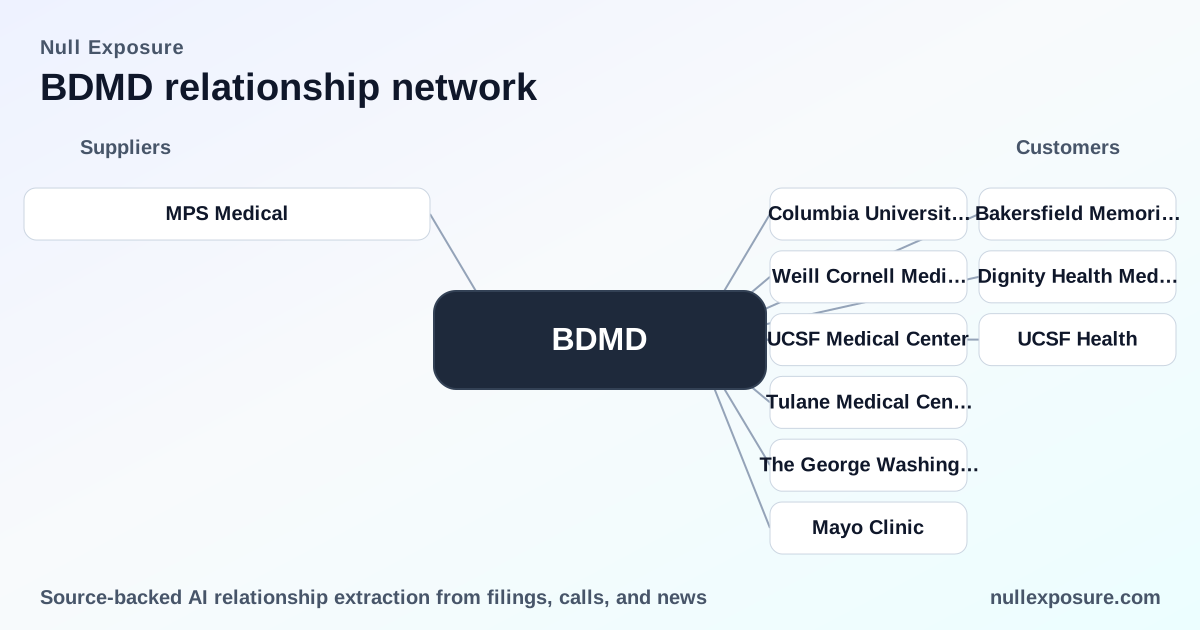
Baird Medical (BDMD) supplier snapshot: what MPS Medical means for growth and risk
Baird Medical operates by developing proprietary medical technologies and scaling commercial availability through a mix of direct sales, licensing and outsourced manufacturing partnerships; the company monetizes by selling devices and licensing technologies while relying on third‑party production hubs to service global demand. The strategic choice to outsource manufacturing is central to BDMD’s go‑to‑market model — it lowers capital intensity and accelerates market penetration but concentrates execution risk in a small set of partners. For investors evaluating BDMD, the single most material supplier relationship in public reporting is the partnership with California‑based MPS Medical. Learn more or track other supplier signals at https://nullexposure.com/.
Supplier roster investors should know: MPS Medical
- MPS Medical — Baird Medical has partnered with California‑based MPS Medical to establish a centralized production hub designed to supply its advanced proprietary technologies to global markets. According to a CityBiz report published March 9, 2026, the facility is intended to support Baird Medical’s international footprint and ensure supply chain efficiency and quality standards for expanding clients (CityBiz, March 2026). An industry news summary in FY2026 echoed those terms and emphasized the hub’s role in global distribution (Intellectia.ai, FY2026).
Why this manufacturing tie‑up matters to investors
The MPS Medical relationship is a clear execution lever for BDMD’s growth plan. Outsourced manufacturing enables Baird Medical to scale sales without large upfront capital investment in production facilities, which preserves cash and lets management allocate capital toward R&D and commercial efforts. At the same time, concentration of manufacturing in a centralized hub raises operational risk: any disruption at MPS Medical would have outsized implications for BDMD revenue delivery and timing.
From an investor’s perspective, the partnership provides both upside — faster international rollouts and standardized quality control — and downside exposure tied to a single production node. CityBiz’s reporting frames the arrangement as a strategic enabler for global supply; that framing converts directly into a performance dependency investors should monitor (CityBiz, March 2026).
Visit https://nullexposure.com/ for ongoing relationship monitoring and updated supplier intelligence.
Plain‑English relationship summary (single line for quick review)
MPS Medical — a contract manufacturing partner in California that will operate a centralized production hub supplying Baird Medical’s proprietary technologies globally (CityBiz, March 9, 2026; Intellectia.ai, FY2026).
Operating model constraints and what they signal about BDMD
The data payload contains no supplier‑specific contractual constraints. That absence is itself a company‑level signal: BDMD’s public supplier reporting does not include detailed, named contractual limits, termination clauses, or exclusivity terms in the sources provided. Treat that omission as informative in four dimensions:
- Contracting posture: Public disclosures emphasize partnership and capacity rather than the fine print of supply contracts; investors should assume BDMD’s approach is to secure manufacturing capacity through cooperative commercial agreements rather than long‑term, highly restrictive contracts.
- Concentration: The available reporting identifies a single core manufacturing partner, implying elevated supplier concentration relative to a diversified network.
- Criticality: Manufacturing is a critical node for product delivery; centralizing production at MPS Medical converts that partner into a putative single point of failure for near‑term execution.
- Maturity of supplier relationships: The relationship is described as a strategic new facility to support international expansion, which signals a formative but operationally significant stage rather than an ancillary vendor role.
These signals are company‑level observations; they are not tied to contractual excerpts because no such excerpts were provided.
Risk implications and monitoring checklist for investors
Investors should treat the MPS relationship as both an operational growth enabler and a concentration risk to be monitored continuously. Key items to track:
- Operational continuity at MPS Medical (production starts, ramp milestones, quality audits).
- Any disclosure of exclusivity, minimum purchase commitments, or termination rights that would affect BDMD’s flexibility.
- Regulatory inspections or recalls tied to products manufactured at the hub.
- Expansion of the supplier base — evidence BDMD is adding capacity partners to reduce concentration.
Bottom line: the MPS Medical hub materially improves BDMD’s ability to serve international markets, but it also centralizes manufacturing risk; the net effect on valuation depends on execution discipline and subsequent diversification of production sources.
Mid‑article reminder: if you want systematic updates on supplier moves and how they change BDMD’s risk profile, see https://nullexposure.com/ for subscription options and relationship intelligence.
Portfolio positioning and action items
For investors with exposure to BDMD, recommended actions are straightforward:
- Re‑weight operational risk into your model by stress‑testing revenue under a 30–90 day production disruption at the MPS facility.
- Demand regular supplier‑specific disclosures in investor calls: ramp timelines, quality certifications, and contingency plans.
- Monitor for signs of supplier diversification that would materially lower concentration premium/discount.
If BDMD executes on the MPS partnership and follows with complementary manufacturing relationships, the company will sustain faster global rollouts while lowering execution risk; until then, the partnership is a high‑value but concentrated dependency.
Closing: where to get ongoing supplier intelligence
The MPS Medical arrangement is the primary supplier signal in the reporting available today and will be a critical driver of BDMD’s near‑term execution profile. For continuous, investor‑grade tracking of supplier relationships and how they affect BDMD’s operational and valuation risk, visit https://nullexposure.com/.
If you want targeted alerts or a supplier risk brief for BDMD, go to https://nullexposure.com/ and subscribe to supplier monitoring and analysis.