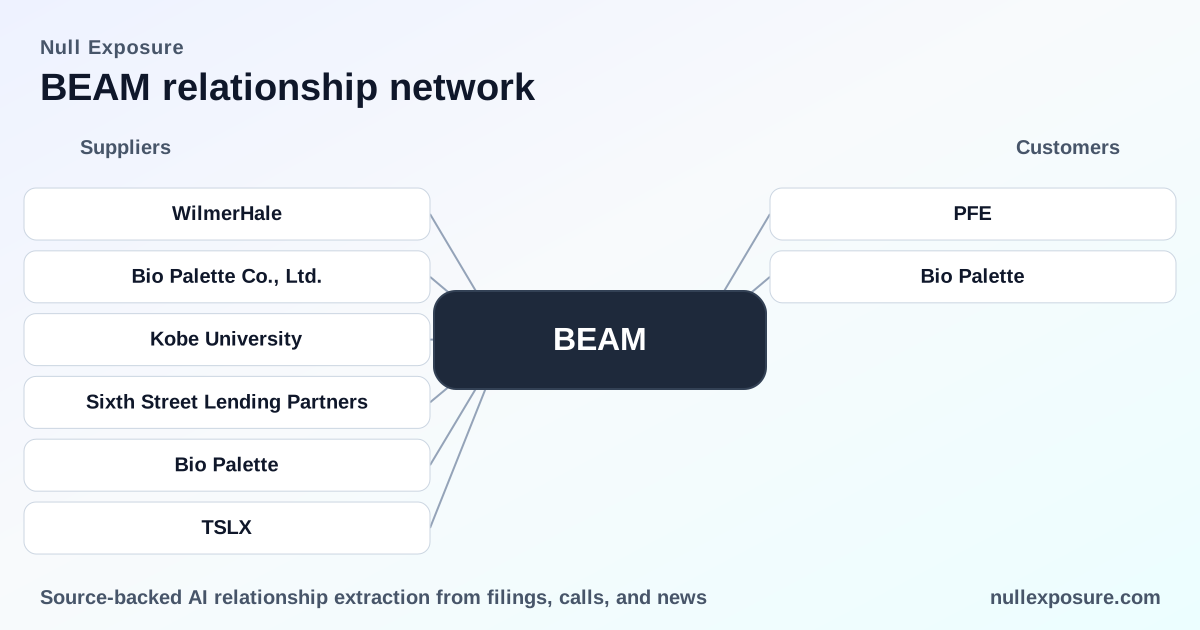
Beam Therapeutics: supplier and advisor relationships that shape commercialization risk
Beam Therapeutics develops precision genetic medicines using base editing and monetizes through the development and eventual commercialization of proprietary therapies, strategic licensing of IP, and milestone or royalty arrangements; recent activity adds a layer of non‑dilutive, secured financing to bridge late‑stage development to launch. For investors and operator partners, the immediate takeaway is straightforward: Beam is engineering capital and IP continuity around a single commercialization pathway (risto‑cel for SCD) while depending on external legal, financing and IP licensors and manufacturing/service providers to execute. Learn more about supplier risk and counterparty concentration at https://nullexposure.com/.
Capital first: a $500 million financing to underwrite launch economics
Beam secured a senior secured term loan facility of up to $500 million with Sixth Street to fund the potential launch of ristoglogene autogetemcel (risto‑cel) in sickle cell disease, with an initial draw of $100 million and conditional additional draws up to $400 million. This structure delivers non‑dilutive capital and places Sixth Street as a senior creditor, which changes the capital stack dynamics relative to equity financing and could affect recovery priorities in downside scenarios (GlobeNewswire, Feb 24, 2026; WilmerHale announcement, Feb 25, 2026).
Legal advisors and transaction counsel play a visible role: WilmerHale advised Beam on the financing, and Mintz served as counsel to Sixth Street. These advisory engagements are standard for large secured financings and provide comfort that the transaction reflects market mechanics and customary covenants (WilmerHale press release, Feb 25, 2026; Mintz press release, 2026).
Patent access: securing the intellectual property runway
Beam executed a standby license agreement with Kobe University and Bio Palette Co., Ltd. to secure continued access to certain gene‑editing patents originally licensed by Bio Palette from Kobe University. That standby license protects Beam’s freedom to operate around key base‑editing patents that underpin its therapeutic platform, reducing single‑point IP risk ahead of commercialization (Globe and Mail press release, Mar 2026; SimplyWallSt coverage, Mar 2026).
Maintaining licenses to foundational IP is a strategic priority for companies in base editing; this arrangement reduces the probability of abrupt loss of rights during transition periods and supports commercialization planning.
Line‑by‑line: every reported supplier and advisor relationship
WilmerHale
WilmerHale acted as legal advisor to Beam in connection with the $500 million strategic financing facility, providing transaction counsel on documentation and execution. According to WilmerHale’s firm announcement, the firm advised Beam on that financing (WilmerHale insight, Feb 25, 2026).
Sixth Street / Sixth Street Lending Partners
Sixth Street provided a senior secured term loan facility up to $500 million to fund the potential launch of risto‑cel, with an initial $100 million draw and contingent incremental draws, positioning Sixth Street as Beam’s principal non‑dilutive capital partner for commercialization (Sixth Street announcement; GlobeNewswire press release, Feb 24, 2026).
Mintz
Mintz advised Sixth Street on the $500 million financing transaction, acting as counsel to the lender and reflecting standard market practice for a secured credit facility of this size (Mintz press release, 2026).
Bio Palette / Bio Palette Co., Ltd.
Beam signed a standby license agreement with Bio Palette to maintain access to certain gene‑editing patents that Bio Palette previously licensed from Kobe University, protecting key IP rights necessary for base‑editing product development (Globe and Mail press release; SimplyWallSt summary, Mar 2026).
Kobe University
Kobe University is the original patent owner in the licensing chain; Beam’s standby license with Kobe (and Bio Palette) secures continued access to the patents that are material to Beam’s platform and future products (Globe and Mail press release, Feb 9, 2026 disclosure).
(Each of the above relationships is documented in Beam’s public announcements and partner press releases in early 2026; see the cited firm and press release items for original text.)
What the relationship map signals about how Beam operates
Beam’s supplier and advisor map points to several operating model characteristics that investors and operators should factor into valuation and contracting strategy:
- Contracting posture: Beam uses a mixture of long‑term and short‑term contracts. Public filings and lease language indicate long‑term real estate commitments (a lease with a multi‑year term) while R&D and manufacturing engagements with CROs/CMOs are normally cancelable or short‑term on notice, giving Beam flexibility for clinical development but increasing supplier churn risk.
- Concentration and criticality: The company signals material dependence on third‑party manufacturing and service providers for both development and potential commercialization, elevating supplier criticality. Maintaining IP licenses is equally critical given the technology’s foundation in licensed patents.
- Maturity: Beam is transitioning from clinical‑stage development toward commercialization readiness—evidenced by the build‑out of a 100,000 sq ft cGMP manufacturing facility in Research Triangle Park and the arrangement of launch financing—indicating mid‑stage maturity with ramp requirements across supply chain and IP governance.
- Spend profile: Public disclosures show modest recurring payments in the $100k–$1M band for some advisory and founder consulting services; operational spend on CRO/CMO relationships will scale materially as commercialization progresses.
These are company‑level signals derived from public disclosures and contract excerpts; no single supplier is assigned a constraint unless explicitly named in the relevant excerpt.
Strategic implications for investors and operators
- Capital structure: The Sixth Street facility is a pragmatic move to defer equity dilution while financing launch, but investors must account for the senior secured claim and any covenants that could restrict strategic flexibility. WilmerHale and Mintz involvement signals transaction standardization.
- IP continuity: The standby license with Kobe and Bio Palette is a decisive operational hedge; loss of these patent rights would be value‑destructive, so contract enforceability and term triggers require monitoring.
- Manufacturing and service risk: Beam’s reliance on third‑party CMOs/CROs and its own scaling of cGMP capacity make supplier management a core execution risk; manufacturing continuity and quality control are value drivers for launch economics.
- Negotiation posture for partners: Suppliers and potential contract manufacturers should expect conditional, milestone‑linked engagements and the ability for Beam to terminate on notice in many R&D contracts; conversely, major lenders like Sixth Street will demand seniority and protective covenants.
Explore our supplier‑risk intelligence and deal playbooks to assess counterparties and contractual exposure at https://nullexposure.com/.
Bottom line and next steps for due diligence
Beam has aligned capital, legal counsel, and IP safeguards in direct support of a single commercialization mission—launching risto‑cel—while preserving flexibility through short‑notice R&D contracts. For investors and operator partners, the critical focus areas are secured financing terms, IP license durability, and third‑party manufacturing continuity. These elements will determine whether the company’s commercialization path realizes projected revenue potential or faces operational bottlenecks.
For a deeper read on counterparty exposure and actionable contracting language to protect launch economics, visit https://nullexposure.com/.