Bel Fuse B (BELFB): Supplier map and operational implications for investors
Bel Fuse B Inc. designs and sells electronic components for networking, telecommunications, aerospace, defense and consumer electronics, monetizing through product sales across multiple end markets and strategic tuck‑in acquisitions that broaden its high‑speed data and broadband portfolio. The company generates recurring revenue from component manufacturing and aftermarket sales, supports margins with vertical integration and selective M&A (notably the acquisition of dataMate), and returns capital via a modest dividend; Bel Fuse’s financial profile shows $675m revenue TTM, a 16% operating margin and $2.6bn market cap, placing supplier continuity and input cost control squarely in the driver’s seat for near‑term performance. For a broader look at supplier exposure for underwriting and operational diligence, see Null Exposure’s supplier intelligence hub: https://nullexposure.com/.
How to read Bel Fuse’s supplier signals — what matters for investors
Bel Fuse operates in a component manufacturing model where supplier relationships translate directly into manufacturing continuity and margin stability. The public record indicates the company uses multiple suppliers for most raw materials and maintains contractual arrangements (framework agreements) where feasible to secure critical inputs, a contracting posture that reduces single‑source vulnerability but does not eliminate concentration risk.
Two company‑level constraints matter for investor diligence:
- Spend concentration and liquidity commitment: disclosures show outstanding purchase orders for raw materials of $82.2 million at December 31, 2024, and capital expenditure purchase orders of $4.6 million, signaling multi‑tens of millions in committed spend that can become stranded or delayed in supply shocks. This level of committed spend places supplier disruptions in the $10m–$100m spend band for raw materials and $1m–$10m for capex. (Referenced to company filings and related disclosures around FY2024/FY2025.)
- Geographic and strategic risk: management recorded an impairment tied to trade restrictions with a large supplier in the PRC during an October 1, 2024 testing date, highlighting APAC counterparty exposure to trade policy and logistics risk. The company identifies counterparties in the large‑enterprise class, which amplifies systemic risk when trade frictions occur.
These signals imply operational priorities: preserve diversified sourcing (framework contracts where possible), monitor committed POs as a liquidity and delivery risk, and stress‑test margins for APAC disruption scenarios.
Mid‑article action: for a structured supplier risk report tailored to BELFB, request Nillexposure’s supplier review at https://nullexposure.com/.
Relationship catalog — the counterparties surfaced in the public record
Below are the supplier and related counterparties found in the results set; each entry contains a concise description and a source reference.
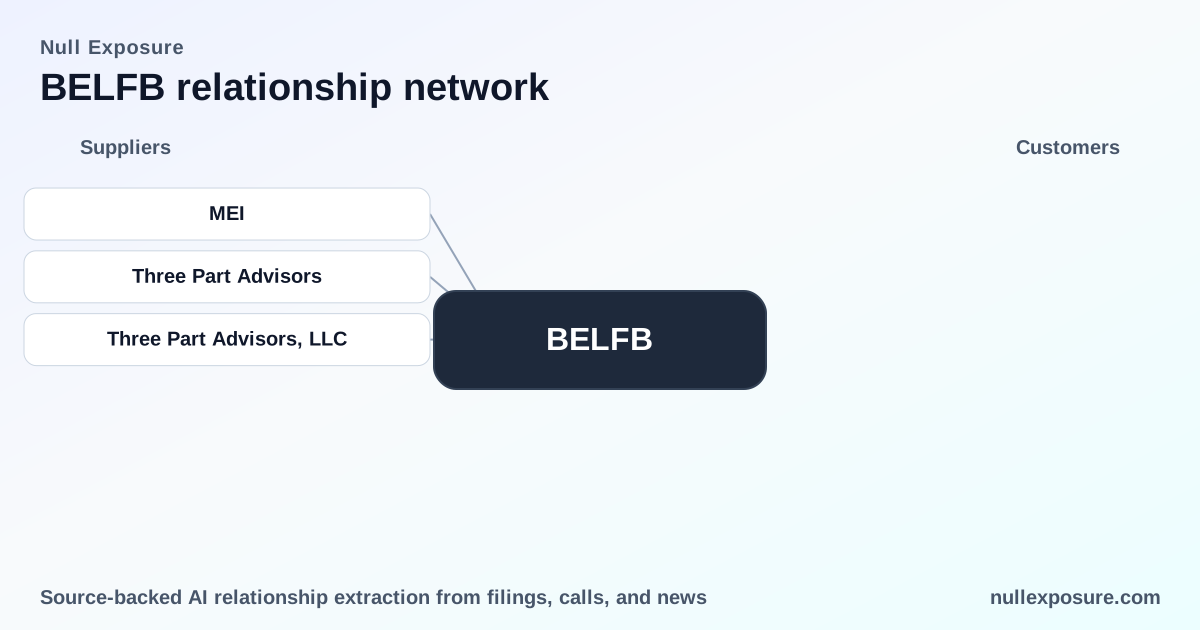
Methode Electronics Inc (MEI)
Bel Fuse announced the acquisition of dataMate, an advanced Ethernet and broadband business, from Methode Electronics, expanding Bel’s high‑speed data product suite and addressing end‑market demand in networking and broadband equipment. The transaction and related commentary were reported across filings and news outlets in early 2026, including a GlobeNewswire release and subsequent market coverage. (See GlobeNewswire, Feb 20, 2026; supporting news items on StockTitan and Finviz, March 2026.)
Sources: GlobeNewswire press release (Feb 20, 2026) and related March 2026 market coverage (StockTitan, Finviz).
Three Part Advisors / Three Part Advisors, LLC
Three Part Advisors is listed in Bel Fuse press materials as the investor relations contact for media and investor inquiries, supplying communications and IR services to support investor outreach and disclosures. This contact detail appears in company press releases from 2025 and earlier investor communications. (See GlobeNewswire release announcing executive appointments, May 20, 2025, which includes investor contact details for Three Part Advisors.)
Source: GlobeNewswire press release (May 20, 2025).
What these relationships imply for sourcing and integration risk
The acquisition of dataMate from Methode represents both an accretion to product capability and a short‑term integration and supplier interface challenge: integrating a purchased supply chain, aligning supplier contracts, and reconciling purchase orders for components into Bel’s procurement cadence. Public reporting around the deal indicates market focus on revenue synergies rather than wholesale re‑sourcing, but the presence of outstanding POs and APAC exposure increases the chance that integration will require active supplier management and contingency sourcing.
Separately, the investor relations relationship with Three Part Advisors is operationally non‑critical for manufacturing but important for message discipline; investor communications shape market reaction to supplier disruptions and acquisition outcomes.
Operational constraints and business model characteristics investors should price in
Translate the constraint excerpts into practical underwriting considerations:
- Contracting posture: Bel uses framework agreements where possible to secure critical components. That lowers single‑shipment risk but requires active management of framework performance and enforcement.
- Concentration and criticality: The company disclosed an impairment tied to trade restrictions with a large PRC supplier, signaling that some critical inputs have limited global redundancy and that large counterparties can create outsized operational risk.
- Maturity and spend vintage: Outstanding raw materials POs of $82.2m suggest multi‑quarter procurement commitments; capex POs of $4.6m indicate medium‑term production investment. These are not trivial and can generate balance‑sheet or delivery pressure if supplier relationships degrade.
- Geographic exposure: APAC sourcing is material to operations—policy, tariffs, or logistics shocks in the region will transmit directly to production and margins.
Investors should therefore treat supplier risk not as theoretical but as a measurable driver of near‑term margin variability and potential goodwill/impairment outcomes.
Risk checklist for operational due diligence
- Validate the status and terms of framework agreements for critical components.
- Confirm the chain of custody and secondary sources for the $82.2m of raw‑material POs.
- Assess integration milestones and supplier transition plans tied to the dataMate acquisition from Methode.
- Model APAC disruption scenarios, including the potential for additional impairments or production delays if trade restrictions re‑emerge.
Bottom line and investor action points
Bel Fuse’s supplier disclosure profile reveals a company that uses contractual frameworks and diversified sourcing where feasible, but still carries material committed purchase orders and APAC counterparty exposure that translate into measurable operational risk. The dataMate acquisition from Methode is strategically sensible for product expansion, but it increases the importance of supplier integration and PO reconciliation. For active investors, the right next steps are targeted supplier diligence on the $82m PO base, confirmation of alternative sourcing for APAC‑sourced critical inputs, and monitoring IR messaging to detect any escalation in supplier‑related impairments.
For an on‑demand supplier risk brief on BELFB and comparable component manufacturers, visit Null Exposure and request a tailored report: https://nullexposure.com/. If you want an executive summary sent to your team, start here: https://nullexposure.com/.
Key takeaway: Bel Fuse is a solid engineering‑led components business with clear revenue drivers, but supplier commitments and APAC exposure are the principal operational levers investors must underwrite.