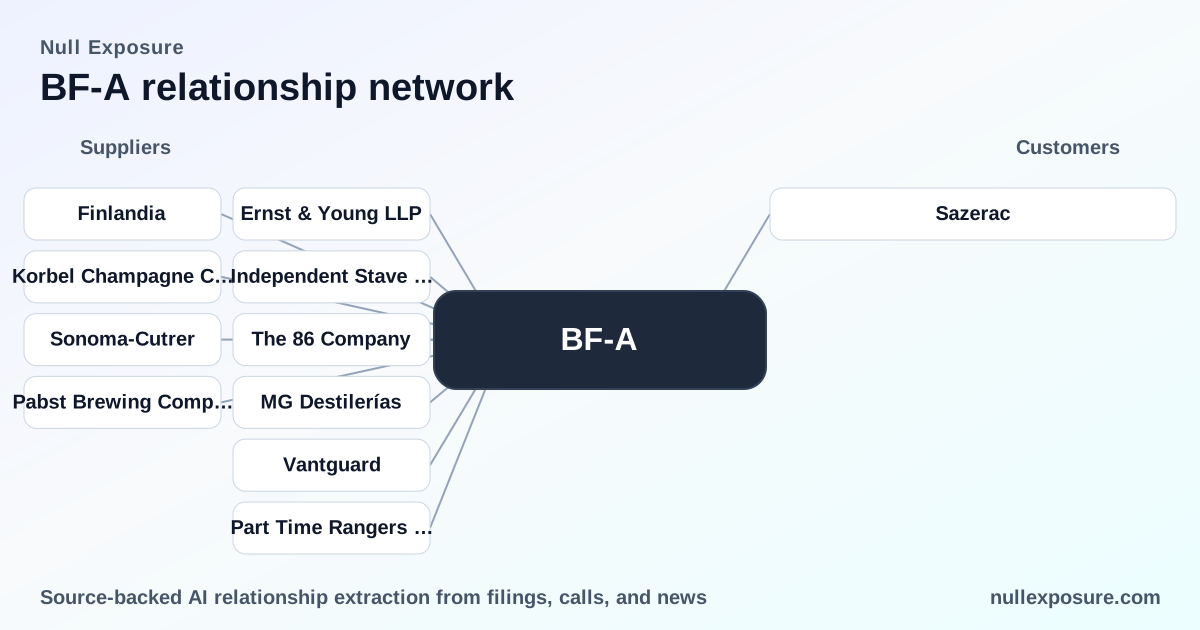
Brown‑Forman (BF‑A) — supplier relationships that shape margin visibility and brand control
Brown‑Forman operates and monetizes as a premium spirits house: it acquires and develops global beverage brands, controls upstream supply where brand quality matters (barrels, botanicals, aging), and sells finished products through a mix of direct distribution and trade partners, collecting resilient margins from iconic names such as Jack Daniel’s and Woodford Reserve. Investor focus should be on how Brown‑Forman converts brand ownership and tightly managed supplier relationships into predictable cash flow and margin durability. Learn more about supplier intelligence at https://nullexposure.com/.
How Brown‑Forman organizes its supply footprint and why it matters to investors
Brown‑Forman’s commercial model blends strategic acquisitions with contractual supply commitments and commodity management. The company acquires brands (and related supplier arrangements), secures multi‑year production or supply agreements for critical inputs, and uses forward purchase contracts for agricultural commodities to stabilize input costs. That combination produces higher margin visibility on core brands while concentrating operational risk around a small number of critical supplier relationships (barrels, botanicals, and specialized distillation partners).
From the evidence provided:
- Brown‑Forman negotiates long‑term supply agreements tied to acquisitions, giving the company control over brand supply chains for an extended horizon. This is a company‑level signal about contracting posture rather than a relationship‑specific attribution.
- The company uses forward purchase contracts for corn to protect against raw material volatility, a procurement posture that prioritizes predictability in production cost.
Together these behaviors indicate a purchasing strategy that is mature and centralized, with critical supplier dependencies that can materially affect reported net sales when relationships start or end.
The relationships investors should track now
Below I list every supplier/partner mentioned in the supplied results, with concise takeaways and source references.
Ernst & Young LLP
Brown‑Forman’s stockholders ratified Ernst & Young LLP as the independent registered public accounting firm for fiscal year 2026, underlining continuity in external audit oversight. (Brown‑Forman press release, FY2025) https://www.brown-forman.com/article/brown-forman-stockholders-elect-directors-farrer-named-chairman-board-approves-cash
Independent Stave Company
Brown‑Forman sold its Alabama cooperage in Trinity to Independent Stave Company, which has continued to supply barrels to Jack Daniel’s, preserving an essential input stream for the brand. (Local reporting on operable cooperage sale, FY2025) https://www.decaturdaily.com/business/jack-daniels-parent-brown-forman-is-cutting-its-workforce/article_114a24a6-d2ac-11ef-aaf0-770e60984893.html
The 86 Company
Brown‑Forman completed the purchase of The 86 Company (Ford’s Gin) as part of its brand acquisition strategy, extending product portfolio and distribution leverage. (Brown‑Forman acquisition announcement, FY2019) https://www.brown-forman.com/article/brown-forman-acquire-fords-gin
MG Destilerías
Brown‑Forman acquired the Gin Mare brands from MG Destilerías (among others), embedding the gin’s supply and production heritage into its portfolio. (Brown‑Forman press release on Gin Mare acquisition, FY2022) https://www.brown-forman.com/article/brown-forman-purchase-gin-mare-brands-september-6-2022
Vantguard
Vantguard was a co‑seller in the Gin Mare transaction; Brown‑Forman assumed brand ownership and the related supply rights through the purchase. (Brown‑Forman press release on Gin Mare acquisition, FY2022) https://www.brown-forman.com/article/brown-forman-purchase-gin-mare-brands-september-6-2022
Part Time Rangers Holdings Limited
Brown‑Forman acquired Part Time Rangers Holdings Limited (New Zealand), broadening its international gin footprint and supply relationships tied to that brand. (Brown‑Forman acquisition announcement, FY2019) https://www.brown-forman.com/article/brown-forman-acquire-fords-gin
Finlandia
The reported sales commentary indicates the absence of prior‑year transition services for Finlandia affected comparatives, signaling that the company had previously relied on transitional supplier or service arrangements connected to this brand. (Earnings recap, FY2025) https://www.fredminnick.com/2025/12/23/brown-forman-reports-financial-results-2/
Korbel Champagne Cellars
Brown‑Forman’s FY2025 net sales were materially influenced by the conclusion of the Korbel relationship, which removed a revenue stream and illustrates the top‑line sensitivity that follows contract terminations. (Earnings recap, FY2025) https://www.fredminnick.com/2025/12/23/brown-forman-reports-financial-results-2/
Sonoma‑Cutrer
The end of a prior‑year Transition Services Agreement (TSA) with Sonoma‑Cutrer was cited as a factor in comparable sales, highlighting that TSAs and similar temporary supplier arrangements can inflate near‑term comparatives when they end. (Earnings recap, FY2025) https://www.fredminnick.com/2025/12/23/brown-forman-reports-financial-results-2/
Pabst Brewing Company
Brown‑Forman and Pabst agreed to conclude their partnership for flavored malt beverages in the U.S., removing a co‑branded or co‑produced revenue line and simplifying the company’s portfolio exposure to beverage categories outside its core spirits focus. (Industry reporting, FY2025) https://www.stocktitan.net/overview/BF/
(If you want a consolidated supplier risk scorecard or transaction timeline, visit https://nullexposure.com/ for tailored supplier analysis.)
What these relationships signal for valuation and risk
- Contracting posture: Brown‑Forman uses long‑term agreements tied to acquisitions and continues to work through transition arrangements—this elevates near‑term visibility but creates step‑changes when agreements end.
- Concentration and criticality: Key inputs—cooperages/barrels and brand‑specific production partners—are critical. The sale of the Trinity cooperage shows the company will monetize assets while preserving supply through third‑party providers; that preserves flexibility but increases third‑party dependence.
- Maturity of contracting: The presence of multi‑year supply agreements for acquired brands and the use of TSAs indicate a mature approach to integrating acquisitions and stabilizing supply during transitions.
- Earnings sensitivity: The FY2025 commentary around Korbel and Sonoma‑Cutrer demonstrates that revenue comparables can swing materially from the start or end of supplier or service relationships, making adjusted growth metrics essential for valuation.
Investment implications and final view
Brown‑Forman’s supplier strategy is deliberate: acquire brands, lock down supply through multi‑year arrangements when necessary, hedge agricultural inputs, and outsource non‑core production while keeping control of quality‑critical inputs. For investors this translates into durable margin profiles on core brands but discrete event risk when supplier or TSA relationships terminate. Monitoring barrel supply arrangements, TSAs, and post‑acquisition supply contracts is the most direct way to anticipate revenue inflection points.
If you want a concise supplier risk brief for Brown‑Forman or comparable coverages, start here: https://nullexposure.com/. For portfolio managers tracking counterparty exposure tied to brand supply chains, a targeted supplier report will surface the exact contract maturities and dependence metrics that move the stock.
Close tracking of these partnerships—particularly cooperage suppliers and acquired‑brand supply agreements—delivers the clearest early signals for revenue momentum and margin stability.