Butterfly Network (BFLY): supplier relationships, concentration risks, and why Butterfly Garden changes the supplier calculus
Butterfly Network builds and sells semiconductor-based handheld ultrasound systems and captures revenue through device sales, software and services (Butterfly Garden marketplace and Compass AI enterprise tools), and licensing/co-development agreements for its P4.3 imaging chip. The firm combines hardware margins with recurring software and third‑party app monetization, but the operating model is characterized by concentrated manufacturing and short-term supply obligations that make supplier relationships a central investment risk and a leverage point for growth. For a fast read on counterparty exposures and partner momentum, visit the NullExposure homepage: https://nullexposure.com/.
How Butterfly monetizes and why suppliers matter
Butterfly sells imaging hardware (Butterfly iQ series), licenses semiconductor designs and co-develops chips, and operates an app marketplace—Butterfly Garden—where third-party clinical and training apps monetize on top of Butterfly’s installed base. Financially, Butterfly reported roughly $97.6 million in trailing revenue with negative EBITDA and a market capitalization near $1.0 billion, underscoring a growth-focused business that relies on partner-driven software adoption to improve lifetime value per device.
Supplier relationships are not peripheral; they are structural. Butterfly has intentionally centralized production and some critical components, which compresses supplier negotiation complexity but amplifies operational concentration. For investors and operators, the implication is simple: execution against a narrow supplier set determines both unit economics and the company’s ability to scale enterprise software revenues.
Key contract and sourcing characteristics investors should track
- Short-term purchasing posture: Butterfly disclosed fixed purchase obligations of $3.8 million payable within 12 months, signaling inventory commitments that are material in magnitude but not long‑dated. This generates flexibility in supplier switching but concentrates near-term cash flow exposure.
- Concentration risk is material: The company has chosen a single supplier for a key semiconductor component, which creates single‑point supply risk for the P4.3 chip architecture that underpins the iQ3 platform.
- Manufacturer dependence: A single contract manufacturer handles testing, assembly, and supply of finished products, making manufacturing continuity a critical operational lever.
- Moderate spend band: Public filings place inventory purchase obligations in the $1–$10 million band, indicating meaningful but not outsized annual vendor spend relative to the company’s size.
- Active relationships and operational maturity: Long-term leases and active vendor arrangements indicate established operational footprint while third‑party vendor risk assessments reflect routine cybersecurity controls.
If you want a structured view of counterparties and how each affects risk/reward, see our homepage summary: https://nullexposure.com/.
Supplier and partner inventory — one-line takes for due diligence
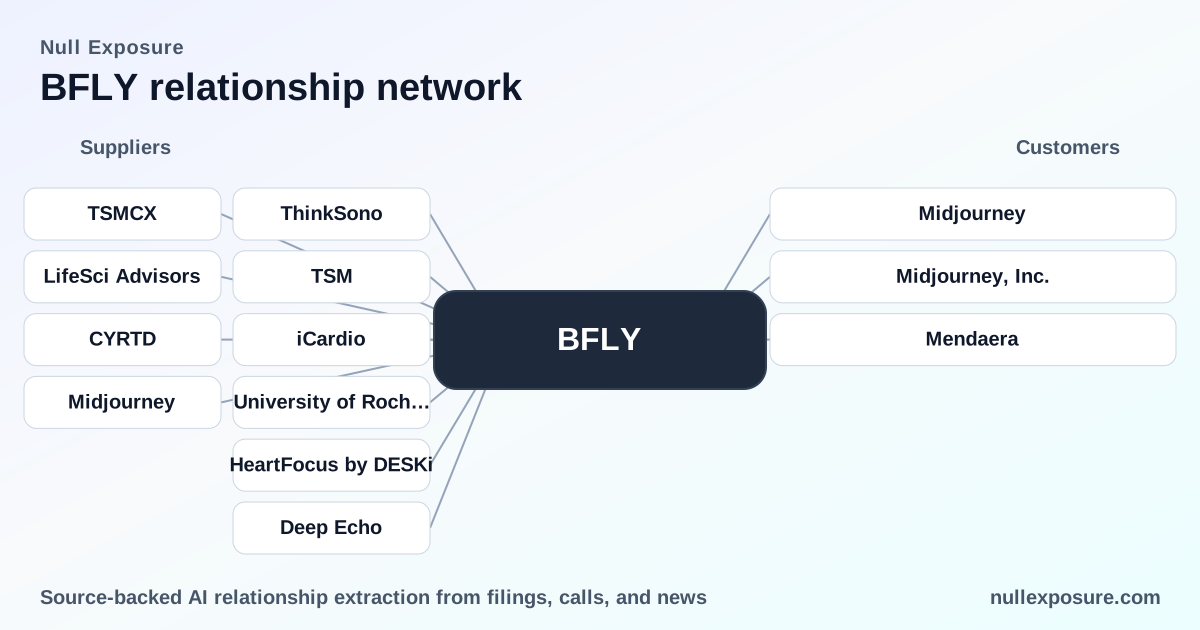
Below are plain-English summaries of every supplier or partner mentioned in available reporting and press coverage.
-
ThinkSono — ThinkSono’s AI Training iOS app was added to Butterfly Garden, enabling existing iOS users to purchase a DVT point‑of‑care ultrasound training application directly through Butterfly’s marketplace. This expands Butterfly’s training and software monetization channels (Newswire, March 2026).
-
TSMC / Taiwan Semiconductor Manufacturing Company — Butterfly cites a single‑supplier relationship with TSMC for a custom P4.3 semiconductor that underpins the Butterfly iQ3; the company has stated this concentration and the development of the P4.3 chip with TSMC is foundational to its hardware platform (company 10‑K FY2024; DiCardiology coverage, FY2024; TradingView summary, FY2026).
-
iCardio — iCardio is one of the third‑party AI clinical partners that received FDA clearance and joined Butterfly Garden, positioning clinical diagnostics apps to drive additional software usage on installed devices (BusinessWire Q2 2025 report).
-
University of Rochester Medical Center — The University of Rochester launched MSK VUE, an AI‑powered musculoskeletal ultrasound training app for Butterfly devices distributed through Butterfly Garden, strengthening the training and clinical adoption funnel (BusinessWire Q2 2025).
-
HeartFocus by DESKi — HeartFocus was highlighted as the first FDA‑cleared third‑party app on Butterfly Garden, enabling AI‑guided echo exams to be delivered to Butterfly users and demonstrating regulatory progress for third‑party clinical workflows (StockTitan and BusinessWire Q2 2025).
-
Deep Echo — Deep Echo is another AI clinical partner that obtained FDA clearance and is part of the Butterfly Garden portfolio, further validating the marketplace approach to clinical workflow expansion (BusinessWire Q2 2025).
-
LifeSci Advisors — LifeSci Advisors is listed as an investor relations contact for Butterfly, indicating the company’s external IR support line and communications channel for institutional investors (Yahoo Finance preliminary release, FY2026).
-
Benchmark — Benchmark is identified in Butterfly’s 10‑K as the contract manufacturer responsible for testing, assembly, and supply of finished products, making it the focal point for manufacturing continuity and quality control (company 10‑K FY2024).
-
Midjourney — Butterfly announced a co‑development and licensing agreement with Midjourney tied to semiconductor‑based ultrasound technology and referenced the launch of Compass AI, signaling strategic moves to extend software and IP licensing beyond strict device sales (SahmCapital coverage, December 2025).
What these relationships imply for valuation and operational risk
- Concentration risk is a valuation discount: A single supplier for a core semiconductor component (TSMC) and reliance on a single contract manufacturer (Benchmark) both translate into elevated operational risk—this justifies conservative multiple assumptions until multi‑sourcing or inventory cushions are demonstrably in place. The 10‑K explicitly frames the single‑supplier decision as deliberate and a material risk.
- Marketplace and regulatory validation de‑risk software monetization: FDA clearances for multiple third‑party apps (iCardio, HeartFocus, Deep Echo) and new training apps through Butterfly Garden convert device units into recurring software spend opportunities, improving lifetime value and investor optionality.
- Short-term obligations reduce long-term lock‑in but raise near-term cash sensitivity: The $3.8 million of fixed purchase obligations due within a year indicate manageable but immediate cash flow commitments that investors should correlate against working capital and cash runway.
If you want a quick consult on how these supplier dynamics affect portfolio exposure, start with our homepage: https://nullexposure.com/.
Practical monitoring checklist for investors and operators
- Track any announcements of dual‑sourcing for the P4.3 chip or the addition of secondary contract manufacturers to reduce single‑point failure risk.
- Monitor FDA clearances and commercial launches from Butterfly Garden partners as a read on software monetization momentum.
- Watch quarterly disclosures on purchase obligations and inventory levels to understand near‑term cash commitments.
- Confirm continuity plans and performance metrics from Benchmark and TSMC in supplier updates or earnings calls.
Bottom line
Butterfly’s business model is hardware-led with an increasingly important software and marketplace revenue stream, but it operates with material supplier concentration and short-term purchasing commitments that increase execution risk. The expansion of Butterfly Garden and multiple FDA‑cleared third‑party apps improve the company’s path to recurring revenue, yet investors should price in single‑supplier and contract‑manufacturing risks until supply diversification and larger recurring revenue contributions are evident.
For a tailored counterparty risk report or to compare BFLY exposure across similar healthcare devices, visit NullExposure: https://nullexposure.com/.