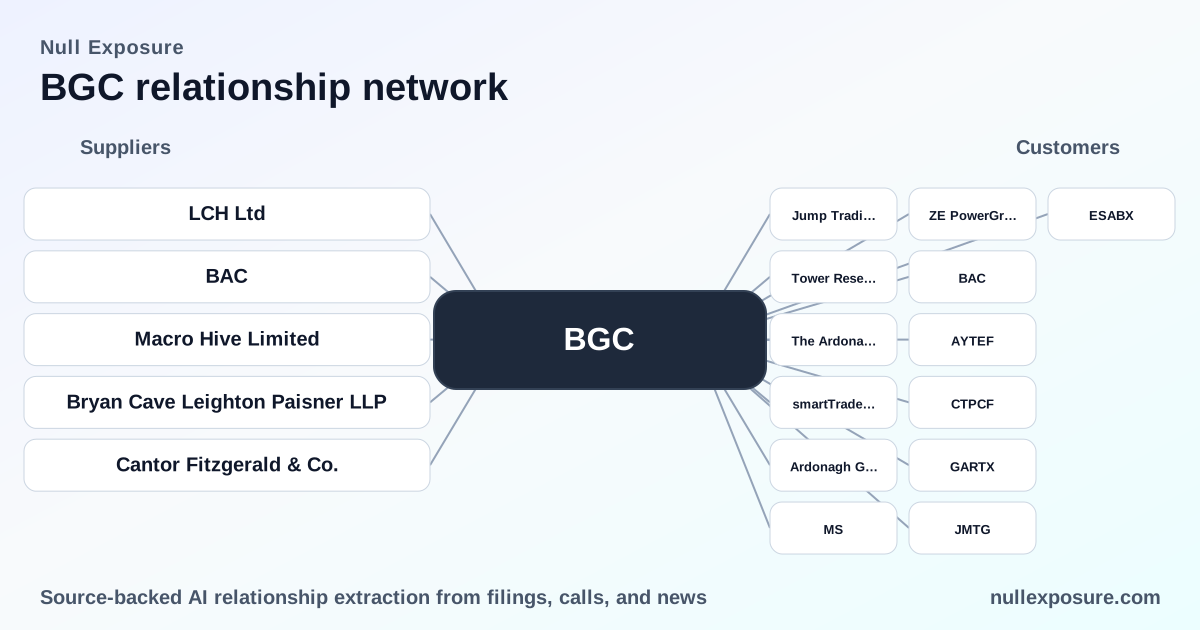
BGC Group Inc. — supplier relationships that shape the business model
BGC Group is a global brokerage and financial-technology operator that monetizes marketplace access, execution services and data-driven trading tools across fixed income, FX and derivatives. Revenue derives from trading commissions, platform fees and advisory/transactional services; capital structure includes significant long-dated debt and a committed revolver that together shape supplier and counterparty posture. For investors and operators reviewing BGC as a counterparty, the supplier relationships described below reveal a mix of critical service vendors, strategic acquisitions and long-term financing counterparts that materially influence operating flexibility. For a consolidated view of supplier exposure and relationship reporting, visit https://nullexposure.com/.
Quick executive snapshot — what matters to investors
- Business scale and institutional ownership: Market cap ~$4.57bn with 83% institutional ownership, indicating a professionally followed company and concentrated investor base.
- Revenue and margins: Trailing revenue ~$2.82bn with thin net margin (~5.5%) and operating margin pressure reflected in recent TTM data.
- Leverage and liquidity posture: Material long-term commitments include the BGC Group 6.600% Senior Notes (carrying value ~$495.5m) and a revolver with ~$195.8m outstanding at year-end, which establishes a long-term contracting profile for financing and treasury suppliers.
- Supplier concentration signal: Cantor Fitzgerald & Co. is a large recurring service provider, billed in excess of $100m per year for administrative and staffing services — a clear concentration and criticality factor for operations.
Supplier relationships in focus — the deal list you need
Below are all supplier and advisor relationships surfaced in public reporting and press coverage. Each entry is a concise, plain-English description with the cited source.
LCH Ltd — clearing services counterparty
BGC executed a Clearing Services Agreement with LCH Ltd, positioning LCH as a central clearing counterparty for new marketplace execution products and reducing bilateral credit exposure on cleared flows. According to an FXNewsGroup report describing the agreement (FY2021), this formal clearing link supports BGC’s inter-dealer broking and platform expansion: https://fxnewsgroup.com/forex-news/institutional/bgc-partners-launches-fenics-market-xchange-fmx/.
Bank of America — financial adviser on divestiture
Bank of America served as a financial advisor to BGC in the transaction to sell the insurance brokerage business, reflecting BGC’s use of large banking houses for strategic M&A and capital markets work. This advisory role is reported in the company announcement on the sale (FY2021) via PR Newswire: https://www.prnewswire.com/news-releases/bgc-announces-agreement-to-sell-its-insurance-brokerage-business-to-the-ardonagh-group-for-500-million-301299809.html.
Macro Hive Limited — strategic product acquisition
BGC acquired Macro Hive Limited, a provider of global macro analytics and AI-driven strategy tools focused on rates and FX, augmenting BGC’s data and analytics capabilities that underlay execution and client products. The acquisition is described in market overviews for FY2025: https://www.stocktitan.net/overview/BGC/.
Bryan Cave Leighton Paisner LLP — legal counsel on M&A
Bryan Cave Leighton Paisner acted as legal counsel to BGC in the insurance brokerage divestiture, indicating reliance on international law firms for transactional and regulatory work. The PR Newswire release describing the sale lists Bryan Cave as counsel (FY2021): https://www.prnewswire.com/news-releases/bgc-announces-agreement-to-sell-its-insurance-brokerage-business-to-the-ardonagh-group-for-500-million-301299809.html.
Cantor Fitzgerald & Co. — large operational service provider and historical lender
Cantor Fitzgerald and affiliates provide administrative services, staffing and support to BGC for which the company is charged well into the nine figures annually; Cantor also served as an intragroup credit source with borrowings that were later repaid. Public filings and the company announcement record Cantor’s ongoing administrative role and the historical credit activity (FY2021): https://www.prnewswire.com/news-releases/bgc-announces-agreement-to-sell-its-insurance-brokerage-business-to-the-ardonagh-group-for-500-million-301299809.html.
What the public constraints tell investors about BGC’s operating model
The consolidated constraints extracted from filings and disclosures reveal the following business-model characteristics that affect supplier risk and negotiating posture.
-
Contract tenor and maturity profile are long-dated. Company-level filings show senior notes maturing in 2029 and a revolver extended to 2027, establishing a long-term financing runway and creating predictable creditor relationships. This supports longer supplier contract tenors for treasury, legal and capital markets services while concentrating refinancing risk into defined windows.
-
High spend concentration on a single service provider. Quantified charges to Cantor exceeded $100m per year (2022–2024 figures), indicating material dependence on one operations/administrative partner; that creates operational concentration risk and negotiating leverage for Cantor. The same filings explicitly name Cantor as a service provider and record both recurring charges and past short-term borrowing activity from Cantor.
-
Mixed relationship stages: active and historically terminated credit facilities. The company reports active borrowings under its revolver (~$195.8m outstanding at year‑end) while also documenting that a separate credit arrangement with Cantor was borrowed and repaid during the year, signaling active treasury management and episodic use of ad hoc bilateral facilities.
-
Service-provider role is well-defined and formalized. Public language confirms the use of third parties for cybersecurity and administrative support; this is not ad hoc outsourcing but an embedded supplier model where vendors perform operationally critical functions.
-
Scale and institutional oversight reduce counterparty opacity. With ~83% institutional ownership and analyst coverage, supplier relationships and material contracts receive market scrutiny and are reflected in periodic filings, improving transparency for counterparties and investors assessing operational risk.
Operational implications for suppliers and operators
- For suppliers: If you provide platform, clearing or staffing services to BGC, recognize the potential for multi-year engagements and concentrated spend but also expect rigorous performance and contract terms tied to capital constraints.
- For operators at BGC: The reliance on Cantor for staffing/administration and the presence of long-dated debt instruments require disciplined vendor governance and contingency plans to manage concentration and refinancing windows.
If you want a deeper, structured supplier exposure report or to track changes in these relationships over time, start here: https://nullexposure.com/.
Investor takeaways and recommended next steps
- BGC’s supplier mix blends critical service providers (Cantor), strategic technology acquisitions (Macro Hive) and capital markets counterparties (LCH, banks) — all of which materially affect execution risk and cost structure.
- Concentration on one large service provider and defined refinancing dates for debt are the two primary operational risks that investors and counterparties should prioritize in due diligence.
- Monitor filings around the revolver and senior note maturities and track any renegotiation or replacement of Cantor-provided services.
For a full supplier-risk assessment and continuing monitoring, visit https://nullexposure.com/ to subscribe for updates and alerts.