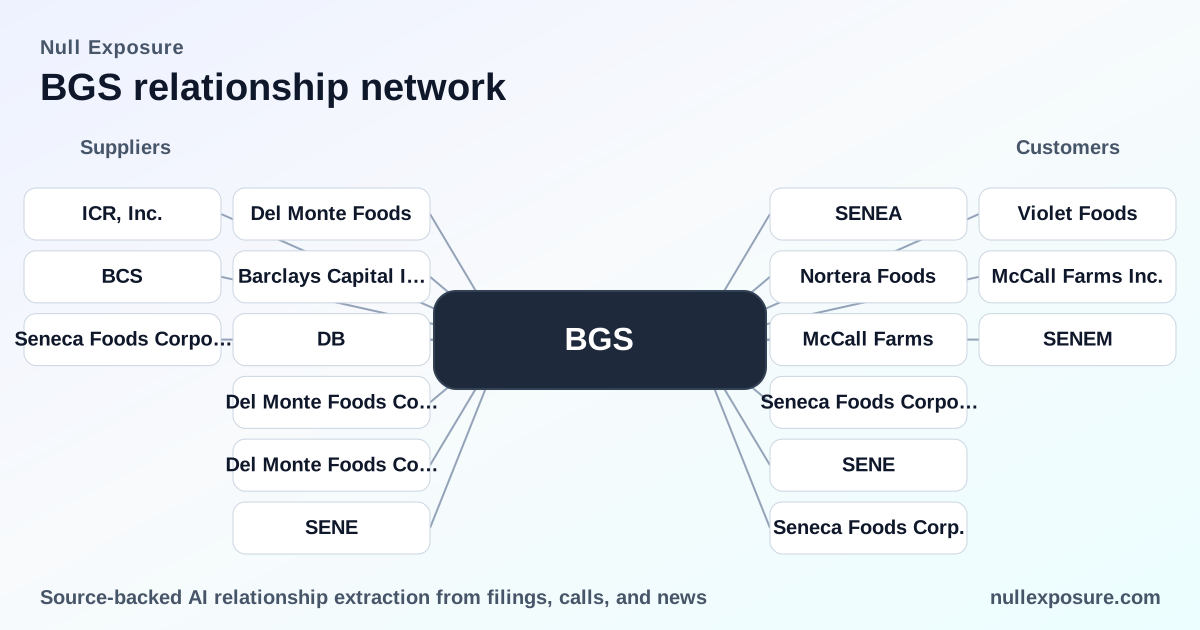
B&G Foods (BGS) — Supplier relationships and what they mean for investors
B&G Foods operates, acquires and trims a portfolio of branded frozen and non‑perishable food and household products and monetizes through retail and foodservice shelf sales, third‑party co‑packing, and active M&A that shifts mix and margins. The company generates revenue from branded product sales (Revenue TTM ~$1.83bn, EBITDA ~$260m) while using disposals and bolt‑on buys to reallocate capital toward higher‑return categories and to manage working capital. For investors evaluating supplier and counterparty exposure, the current newsflow shows a simultaneous tightening of the frozen manufacturing footprint and an additive move in broth and stock brands — a deliberate repositioning of the business. Explore a structured supplier risk view at https://nullexposure.com/ to compare counterparties and contract posture.
Recent deal activity that changes supplier and manufacturing relationships
B&G executed two complementary moves in early 2026: it sold parts of the Green Giant frozen U.S. product line and signed an acquisition to buy Del Monte’s broth and stock business. These transactions recast B&G as a focused branded foods consolidator that outsources portions of frozen manufacture while adding adjacent pantry brands.
- In March 2026 B&G agreed to buy the College Inn and Kitchen Basics broth and stock business from Del Monte for roughly $110 million in cash, subject to inventory adjustments and certain liabilities, acquired through a bankruptcy sale process. According to TradingView and multiple press reports, the purchase closed via an asset purchase agreement announced in FY2026.
- Simultaneously, B&G sold its Green Giant U.S. frozen product line to Seneca Foods and retained frozen manufacturing in Irapuato, Mexico while signing a co‑pack agreement with Seneca for certain Green Giant items, per company notices and media coverage in FY2026.
These moves were supported by financial advisory work from Barclays Capital Inc. and Deutsche Bank Securities Inc., which acted as advisors in the Green Giant transaction (FY2026 reporting).
If you track counterparty exposure or need a supplier risk matrix for B&G’s shifting footprint, review comparative profiles at https://nullexposure.com/.
How B&G runs its supplier and operations model — key constraints and characteristics
B&G’s operating model blends outsourced production, third‑party distribution, and short‑cycle raw material purchases, producing a distinct supplier risk profile:
- Contracting posture: The company buys certain agricultural raw materials under short‑term supply contracts, which creates price exposure that flows quickly to margins during commodity cycles.
- Lease and site tenure: Facilities and property lease terms range one to seven years with extension options, signaling a flexible but not ephemeral real‑estate posture that supports tactical footprint shifts.
- Geographic sourcing: B&G has meaningful North American sourcing exposure; for example, a significant majority of maple syrup is purchased from Québec (transactions denominated in CAD), while other foreign purchases are mostly USD‑denominated with some peso exposure in Mexico.
- Distribution and manufacturing model: The frozen distribution network is run by third‑party logistics providers across seven primary U.S./Canada centers, and a large share of finished goods are produced under co‑packing agreements with third parties. These characteristics reduce fixed overhead but increase counterparty concentration and operational criticality of co‑packers and 3PLs.
These are company‑level operational signals derived from management disclosures and filings and should be treated as structural constraints on sourcing, cost pass‑through and margin volatility.
Relationship inventory — who B&G is transacting with now
Below are the relationships surfaced in FY2025–FY2026 reporting and press coverage; each entry includes the plain‑English takeaway and a source reference.
Del Monte Foods
B&G purchased Del Monte’s broth and stock business — including College Inn and Kitchen Basics brands — for about $110 million in cash, acquired through a bankruptcy auction process and subject to inventory and liability adjustments. This transaction closes an M&A gap and adds branded pantry volume to B&G’s portfolio (news coverage, March 2026). Source: TradingView and Just‑Food reporting in March 2026.
Del Monte Foods Corporation II Inc.
Del Monte Foods Corporation II Inc. received court approval to sell multiple core assets, one of which transferred the broth & stock business to B&G Foods as a going‑concern sale, confirming the legal runway for B&G’s acquisition in FY2026. Source: Finviz coverage of the court approval, March 2026.
Del Monte Foods Corp.
Press and trade outlets reiterated that the broth and stocks assets were sold to B&G in January and discussed the strategic rationale for the carve‑outs as part of Del Monte’s broader sale process (industry reporting, FY2026). Source: Food Business News and Just‑Food coverage, March 2026.
Seneca Foods / Seneca Foods Corporation
Seneca Foods acquired B&G’s U.S. Green Giant frozen product line and entered a co‑pack agreement to produce certain items, while B&G retained Mexican frozen manufacturing operations in Irapuato; this creates a long‑term manufacturing partner relationship for frozen SKU supply under contract. Source: NJB Magazine and Just‑Food reporting on the Green Giant divestiture, March 2026.
Barclays Capital Inc.
Barclays served as a financial advisor to B&G Foods on the Green Giant transaction and related strategic disposals, providing sell‑side or transaction advisory services in FY2026. Source: NJB Magazine and StockTitan coverage, March 2026.
Deutsche Bank Securities Inc.
Deutsche Bank also acted as a financial advisor alongside Barclays for B&G’s transaction activity around the Green Giant sale, positioning the firm as a key deal adviser in B&G’s 2026 strategic program. Source: NJB Magazine and StockTitan coverage, March 2026.
ICR, Inc.
ICR, Inc. appears as B&G Foods’ investor relations and media relations provider (contact references appeared in FY2025–FY2026 press releases), serving as the communications intermediary for earnings and transaction announcements. Source: Company press contact listings on StockTitan (FY2025–FY2026).
Investment implications and risk checklist for operators and buyers
- M&A‑led turnover is central to the monetization strategy. B&G buys established pantry brands and sells/outsources lower‑return frozen lines to reshape margins and capital intensity.
- Counterparty concentration is consequential. Heavy reliance on third‑party co‑packers and 3PLs across a seven‑center frozen distribution network creates operational single points of failure and negotiation leverage for counterparties.
- Commodity and FX pass‑through is asymmetric. Short‑term raw material buying and Canadian sourcing for maple syrup expose gross margins to quick commodity moves and FX volatility; leases and manufacturing site choices provide some operational flexibility but not immediate repricing power.
- Advisory and communications partners are engaged. The use of major investment banks for transaction advisory and ICR for investor communications underscores a professionalized, deal‑oriented operating cadence.
Key takeaway: B&G’s model is deliberately modular — lower fixed cost through outsourcing and targeted brand M&A — which supports nimble portfolio rebalancing but increases operational reliance on co‑packers, 3PLs and short‑term commodity markets. For a supplier‑focused diligence program, prioritize co‑packer continuity plans, commodity hedging practices, and FX exposure limits.
For a deeper counterparty risk comparison and supplier mapping for food sector operators, visit https://nullexposure.com/.
If you need a tailored supplier risk brief for B&G Foods or comparable packaged‑foods companies, review our platform at https://nullexposure.com/ or contact us for a bespoke analysis.