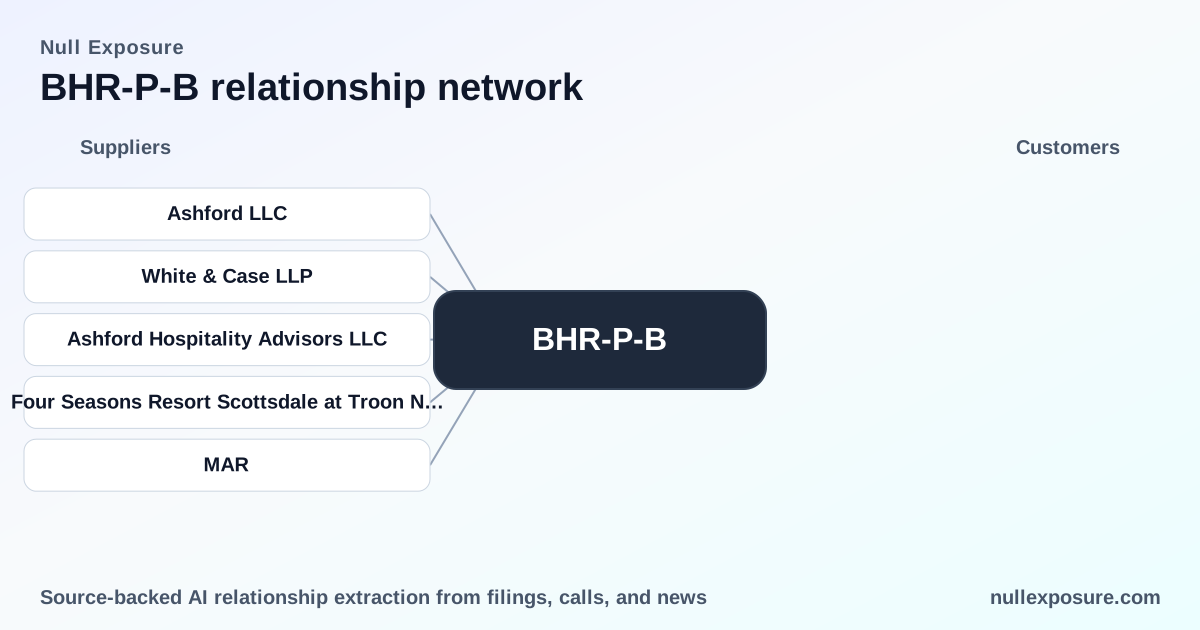
BHR-P-B: supplier relationships that determine dividend durability and conversion optionality
Braemar Hotels & Resorts’ 5.50% Series B cumulative convertible preferred (BHR-P-B) pays a fixed coupon while offering conversion upside tied to the equity; the underlying economics are driven less by paper metrics and more by operational execution across externally managed hotels, brand partnerships and asset-level acquisitions. For investors and operators evaluating BHR-P-B, the creditworthiness of the preferred hinges on third-party operators and advisors who control day-to-day performance and capital programs — not just on headline yields. Learn more about supplier exposure and governance at NullExposure.
How Braemar monetizes and who runs the hotels
Braemar monetizes ownership of premium hotels through room revenue, F&B and ancillary services, plus asset appreciation from selective capex and rebranding. The company outsources core operating functions and advisory roles, which concentrates operational control in a small set of external partners and makes supplier relationships a primary driver of cashflow stability and asset value creation.
- Contracting posture: outsourced operating model — asset management and advisory are delegated to Ashford entities, placing execution risk off balance sheet.
- Concentration: high — multiple recent filings note Ashford-group firms in both asset management and advisory roles, creating single-counterparty dependence.
- Criticality: material — asset managers and brand partners directly influence RevPAR, capex cadence and repositioning outcomes that fund the preferred dividend.
- Maturity: mixed — the portfolio shows both mature repositioning wins (brand upgrades) and new-acquisition integration work (Four Seasons purchase) that carry different cashflow profiles.
No supplier-level contractual constraints were captured in the source feed; this is a company-level signal indicating limited public visibility into contractual covenants, termination rights, and fee schedules that materially affect operating leverage.
Supplier relationships that are shaping credit and growth outcomes
Ashford LLC — the asset manager running the properties
All hotel properties in Braemar’s portfolio are asset-managed by Ashford LLC, meaning day-to-day operating decisions, capital projects and profitability improvement programs flow through this single manager. According to MarketScreener coverage dated March 9, 2026, Ashford LLC is the named asset manager for Braemar’s hotels. Key takeaway: Ashford’s execution quality is directly tied to dividend coverage and asset value. (MarketScreener, Mar 9, 2026).
Ashford Hospitality Advisors LLC — external advisor delivering strategy and asset management muscle
Braemar is externally advised by Ashford Hospitality Advisors LLC, which provides industry expertise and disciplined asset-management strategy intended to drive outperformance. Yahoo Finance reporting in March 2026 repeatedly cites Ashford Hospitality Advisors in company announcements about monthly dividends and investor communications. Key takeaway: advisory advice is central to capital allocation and renovation programs that fund preferred payouts. (Yahoo Finance, Mar 2026).
White & Case LLP — legal representation in shareholder activism litigation
A multi-practice White & Case team handled Braemar’s representation in a shareholder activism dispute, reflecting active governance engagement and potential boardroom-level risk. White & Case’s press release (FY2025) documents the firm’s role in that matter. Key takeaway: high-quality external counsel indicates the company is prepared for complex governance battles that can affect strategic outcomes and liquidity. (White & Case press release, FY2025).
Four Seasons Resort Scottsdale at Troon North — a high-end acquisition in the portfolio
Braemar entered a definitive agreement to acquire the 210-room Four Seasons Resort Scottsdale at Troon North, an asset-level acquisition announced in a PR Newswire release in FY2022. This purchase is illustrative of Braemar’s strategy to add premium, high-RevPAR resorts. Key takeaway: marquee acquisitions expand upside but also raise integration, financing and capex demands that affect cash available for preferred dividends. (PR Newswire, FY2022).
Marriott — brand upgrades and capex-led repositioning
Braemar executed brand upgrades including moving two Courtyard-branded hotels into Marriott’s Autograph Collection, a transformation highlighted in a 2019 REIT.com feature on capex paybacks. These rebrands demonstrate the company’s playbook of using targeted investments to push ADR and occupancy. Key takeaway: brand partnerships are proven value drivers but require capital and successful execution to realize returns. (REIT.com video, FY2019).
Mid-article assessment: what the supplier picture implies for BHR-P-B holders
Braemar’s supplier map shows a concentrated, outsourced operating model where a small set of external firms control revenue generation and capital deployment. That structure creates a trade-off: operating leverage and expert execution can amplify returns, but reliance on a handful of third parties creates single-point operational risk. For preferred stock investors, the income stream is therefore as much a function of counterparty performance and governance as it is of macro travel demand.
If you are evaluating exposure to BHR-P-B, prioritize due diligence on third-party contracts, asset-management fee schedules, termination rights and the timeline for capex projects tied to rebrands — items that are not visible in the public relationship feed but materially affect cashflow. For a centralized resource on supplier risk in financial instruments, visit NullExposure.
Investment implications: income reliability, conversion optionality and operational risk
- Dividend durability: conditional on external operators meeting RevPAR and margin assumptions; missed targets or capex overruns reduce free cash available for preferred dividends despite the cumulative dividend feature.
- Upside through conversion: tied to successful asset repositioning and accretive acquisitions, such as the Four Seasons purchase and Marriott upgrades.
- Governance and legal risk: active shareholder disputes and high-end counsel involvement signal potential volatility in strategic direction or capital decisions.
- Visibility gap: absence of captured supplier constraints is a red flag for modelers; assume limited transparency into fees, break clauses and service-level guarantees.
Practical next steps for investors and operators
- Request copies of asset management and advisory agreements or detailed fee schedules as part of credit diligence; prioritize termination clauses and performance-based fee mechanics.
- Monitor project timelines for the Four Seasons integration and recent Autograph upgrades; capex schedules directly affect near-term cashflow.
- Track governance outcomes from the White & Case engagement for potential balance-sheet or strategic shifts.
For deeper supplier intelligence and to map counterparty concentration across financial instruments, check NullExposure homepage. If you are preparing a credit memo or counterparty risk review, start with supplier contract transparency and historical execution on rebrands and acquisitions — learn how at NullExposure.
Conclusion — Braemar’s preferred is a yield-plus-conversion story funded by operational execution that is largely outsourced. The primary risk vectors are counterparty concentration, capex execution and governance disputes; your underwriting should focus on the legal agreements and performance history of Ashford entities and the success of recent asset-level initiatives.