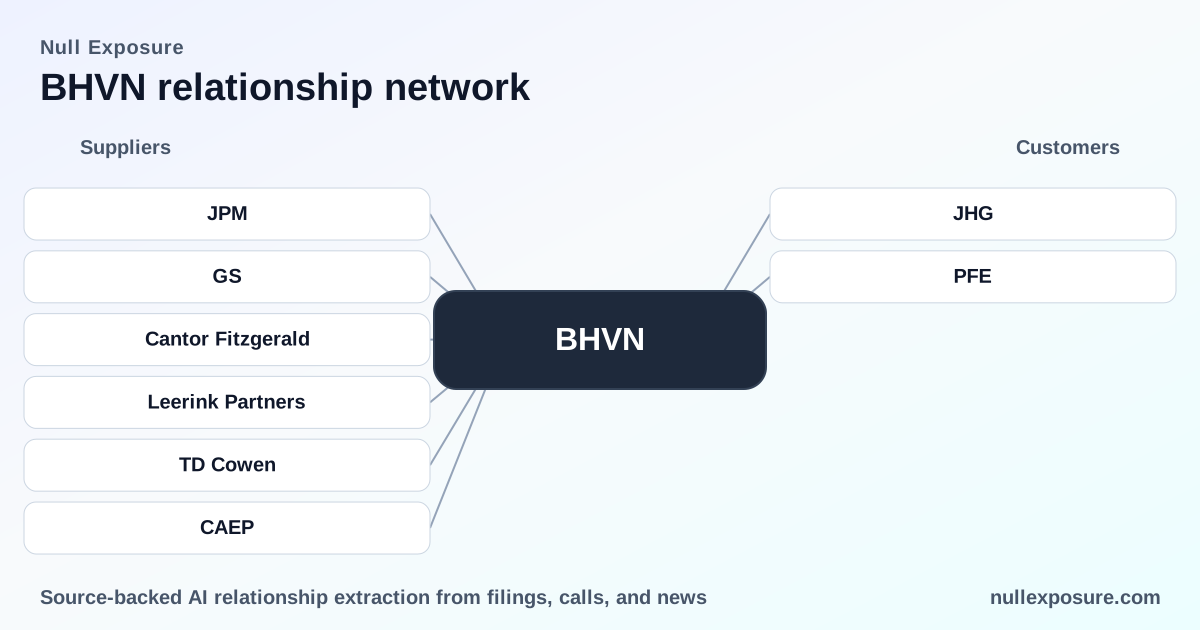
Biohaven (BHVN) — Underwriters, Partners and the supplier posture investors must price in
Biohaven is a clinical-stage biopharmaceutical company that develops and commercializes neurological and rare-disease therapeutics and monetizes through a combination of product commercialization, exclusive licensing arrangements, and periodic equity raises to fund R&D and manufacturing scale-up. Recent activity shows Biohaven is actively using the capital markets and third‑party commercial partners to underwrite growth while retaining a licensing-heavy operating model that both creates optionality and concentrates execution risk. For a closer look at counterparties and what they imply for counterparty risk and capital strategy, visit https://nullexposure.com/.
Why the March offering matters to suppliers and investors
Biohaven completed an upsized public offering that generated roughly $200 million in gross proceeds, and the transaction names provide a short list of counterparty relationships that matter for distribution, underwriting and future capital access. That raising is both a liquidity event and a signal: Biohaven will rely on third parties for clinical development, manufacturing and distribution while using capital markets to fund near-term programs.
J.P. Morgan — lead underwriter and book-runner
J.P. Morgan acted as a book-running manager on Biohaven’s upsized public offering, participating in the underwriting syndicate that completed the transaction. According to a PR Newswire release dated March 9, 2026, J.P. Morgan was listed along with other major banks as a book-running manager for the offering. (PR Newswire, March 2026)
Goldman Sachs & Co. LLC — co-book-runner and syndicate participant
Goldman Sachs served as one of the book-running managers on the offering, joining J.P. Morgan and others to place the upsized equity issuance that generated approximately $200 million in gross proceeds. (PR Newswire, March 2026)
Cantor Fitzgerald — syndicate member named in market coverage
Cantor Fitzgerald was identified among the banks managing the offering; market reporting on the offering names Cantor Fitzgerald in the underwriting lineup alongside J.P. Morgan and Goldman Sachs. (Intellectia.ai report on offering pricing, March 2026)
Leerink Partners — specialty capital markets role
Leerink Partners participated as one of the book‑running managers on the offering, reflecting the deal’s need for both bulge‑bracket and specialty biopharma distribution capabilities. (PR Newswire, March 2026)
TD Cowen — healthcare-focused underwriting support
TD Cowen joined the syndicate as a book‑running manager, providing healthcare sector distribution and investor reach for the equity placement. (PR Newswire, March 2026)
Cantor (listed as CAEP in one filing) — named in the closing release
A PR Newswire release lists “Cantor” (noted with CAEP in the market metadata) among book-running managers that closed the upsized offering and the exercise of the underwriters’ option to purchase additional shares. (PR Newswire, March 2026)
The operating constraints that shape supplier relationships
Biohaven’s supplier and partner posture is defined by several company-level signals that matter to procurement, risk and investor teams:
-
Licensing-centric model: Biohaven routinely enters exclusive worldwide license agreements—examples include arrangements with Yale (MoDE platform), BMS (taldefgrobep alfa transfer), Highlightll (TYK2/JAK1 program) and GeneQuantum/Aimed Bio (FGFR3 ADC program). This makes licensing both a growth engine and a source of IP exposure. (Company filings; licensing excerpts)
-
Global supply footprint and single-source risk: The company discloses that some APIs and materials are available only from a limited number of domestic or foreign suppliers and that certain finished products are made by a small number of contract manufacturers—a concentration that elevates supplier criticality. (Company risk disclosures)
-
Third-party reliance for development and manufacturing: Biohaven contracts CROs for trials and CMOs for manufacturing, positioning these suppliers as operationally critical service providers and distributors for clinical and commercial supplies. (Company risk disclosures)
-
Dual role as licensor and licensee: Biohaven’s agreements show it both grants and receives licenses, which creates a complex contracting posture where counterparty rights, milestones and royalties can materially influence cash flow and project timelines. (Licensing excerpts)
-
Material finance interactions in the $10M–$100M band: Public disclosures include a non-cash settlement valued at $66.0 million to a counterparty, indicating material one-off spend or settlement activity consistent with mid‑to‑high‑single-digit tens of millions exposure levels. (May 30, 2024 disclosure)
These constraints produce a company profile that is capital-intensive, partner-dependent, and exposed to supplier concentration risk—factors investors should price in when evaluating counterparty credit and operational resilience.
For a supplier risk scoring playbook and deeper counterparty mapping, check out https://nullexposure.com/.
What the bank syndicate tells investors about market access and dilution
The syndicate composition—bulge‑bracket banks plus specialty healthcare firms—signals that Biohaven needed broad distribution and healthcare investor expertise to execute the raise efficiently. Large banks bring balance-sheet capacity and placement reach; specialty houses bring targeted healthcare relationships. The full exercise of the underwriters’ option to purchase additional shares (the “greenshoe”) and the upsized close together indicate strong broker support for liquidity, but also dilution and the need for ongoing access to capital as R&D and manufacturing continue.
Key takeaways for investors and operators:
- Counterparty concentration risk is real: reliance on CROs/CMOs and limited-source APIs creates single‑point vulnerabilities.
- Licensing deals drive future revenue optionality: exclusive licenses both expand the pipeline and embed milestone/royalty structures that can be high‑leverage value drivers.
- Capital markets remain a primary funding lever: the March 2026 offering demonstrates Biohaven will continue to access equity markets to fund operations rather than relying solely on non‑dilutive partner payments.
Practical next steps for investors and procurement teams
- Conduct targeted counterparty diligence on named CRO/CMO partners and the specific suppliers of critical APIs to quantify single-source exposures.
- Review license agreements for milestone schedules and royalty obligations to model downside and upside cash flow scenarios.
- Monitor bank syndicate follow‑through—underwriter placements and aftermarket behavior provide leading signals on secondary liquidity.
Recommended actions:
- Engage procurement to map alternative API and CMO sources and assess switch costs.
- Re-run capital‑structure stress tests using the $200 million raise and potential further dilution scenarios.
If you want a tailored counterparty heatmap that integrates these relationships and constraints, start here: https://nullexposure.com/.
Bottom line
Biohaven operates a licensing-forward, partner-reliant business model supported by periodic equity raises. The March 2026 underwriting syndicate—J.P. Morgan, Goldman Sachs, Leerink Partners, TD Cowen, Cantor Fitzgerald and Cantor (CAEP)—executed an upsized offering that materially improves liquidity while simultaneously exposing the company to dilution and third‑party execution risk. Investors should value Biohaven not only on its pipeline potential but on its supplier concentration, contractual structure, and ongoing capital‑markets reliance.
For deeper counterparty profiles and to map supplier criticality across Biohaven’s agreements, visit https://nullexposure.com/.