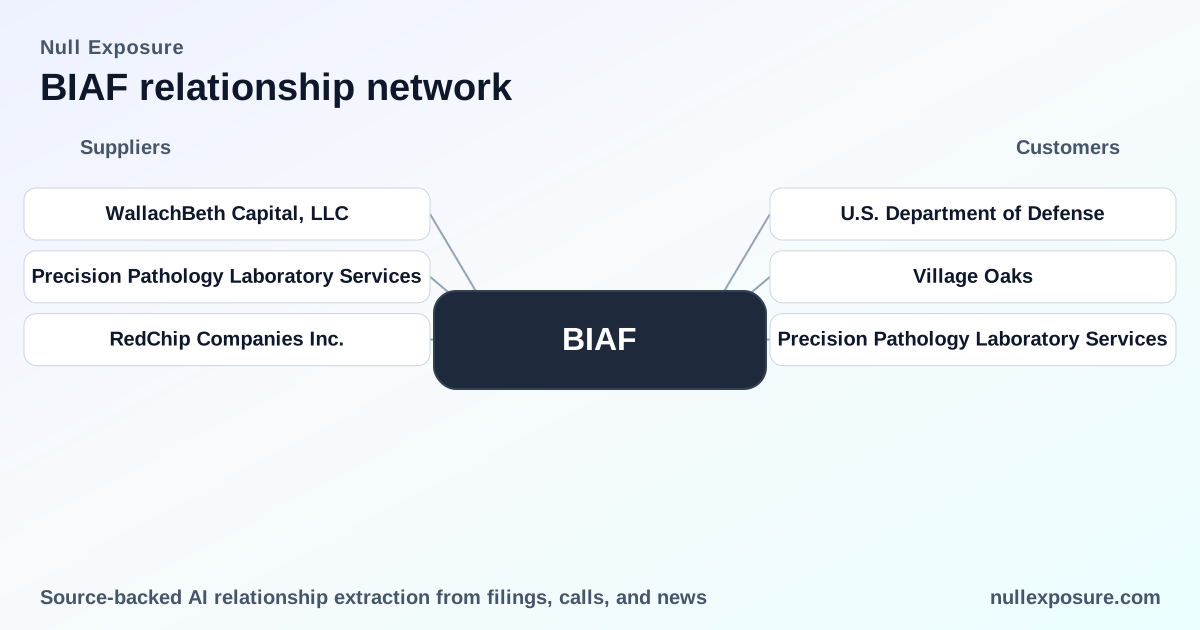
bioAffinity Technologies (BIAF) — supplier relationships and operational implications for investors
bioAffinity Technologies develops non‑invasive cancer diagnostics and monetizes through commercialization of its CyPath® Lung test as a Laboratory Developed Test (LDT) via an owned laboratory subsidiary, direct kit distribution, and occasional capital raises to fund operations and IP development. For investors and operators evaluating supplier exposure, the picture is one of single‑product revenue concentration, outsourced fulfillment, spot procurement for reagents, and reliance on external capital markets to bridge cash requirements. For a focused supplier risk review, see how the company structures external relationships and where operational fragility lives. Visit https://nullexposure.com/ for merchant-grade supplier intelligence and monitoring.
How bioAffinity makes money and why supplier relationships matter
bioAffinity’s revenue today flows from testing services—CyPath® Lung processed by its subsidiary laboratory—and sale/distribution of patient collection kits that enable test volume. The company does not report diversified commercial channels or recurring long‑term manufacturing contracts for reagents and disposables; instead, procurement is handled on a purchase‑order (spot) basis and fulfillment for kits and distribution is outsourced. That operating posture concentrates risk around a few external providers and the owned laboratory that bundles test delivery and billing.
Visit https://nullexposure.com/ to benchmark these supplier exposures against peers.
What the explicit relationships show (each relationship covered)
WallachBeth Capital, LLC
WallachBeth acted as the sole placement agent on a public offering that closed for roughly $4.8 million, signaling routine capital‑markets activity used to fund operations and R&D rather than revenue generation. According to a PR Newswire release in March 2026, WallachBeth facilitated the offering and closing for bioAffinity (https://www.prnewswire.com/news-releases/wallachbeth-capital-announces-closing-of-bioaffinity-technologies-public-offering-for-4-8m-302571246.html).
Precision Pathology Laboratory Services (PPLS)
PPLS is the company’s subsidiary laboratory that commercially markets CyPath Lung as an LDT, and is identified internally as the only commercial lab offering the test—making it the operational revenue engine. A press release on BioSpace in March 2026 discusses a case study highlighting CyPath Lung as marketed by Precision Pathology Laboratory Services (https://www.biospace.com/press-releases/new-case-study-highlights-ability-of-bioaffinity-technologies-cypath-lung-to-reduce-diagnostic-burden-for-patients-at-risk-for-lung-cancer).
RedChip Companies Inc.
RedChip is listed in investor relations communications tied to public disclosures and investor outreach; contact details for RedChip were provided in connection with a patent announcement and IR distribution. A StockTitan repost of a RedChip release notes investor relations contact Dave Gentry and RedChip’s role in disseminating company news around FY2024 (https://www.stocktitan.net/news/BIAF/bio-affinity-technologies-announces-award-of-japanese-patent-for-cy-94rawr6o7hga.html).
Operational constraints and what they mean for suppliers and investors
The company disclosures and press material reveal concrete operational constraints that shape supplier risk and negotiating posture:
- Contracting posture: spot procurement for reagents and consumables. bioAffinity states it does not have long‑term supplier agreements for reagents and has products manufactured on a purchase‑order basis, which implies flexible but unstable pricing and supply exposure when volumes spike or supply chains tighten. This is a company‑level signal derived from internal disclosures.
- Concentration and criticality: single laboratory dependency. PPLS is explicitly identified as the only commercial laboratory offering CyPath® Lung, making that relationship critical to revenue generation and a single point of failure; operational continuity at PPLS is synonymous with top‑line continuity.
- Outsourced manufacturing and distribution for kits. Disclosures name GO2 Partners as the contractor to produce patient collection kits and provide warehousing and distribution services, indicating that kit manufacturing and logistics are entrusted to a single external partner, coupling product availability to a third party’s capacity and service levels.
- Reliance on multiple service providers for operations. The company relies on commercial couriers for sample transport, a third‑party billing provider for claims transmission, and independent clinical trial contractors—creating multiple external dependencies that are operationally critical but typically non‑exclusive.
Risk implications for investors and operators
bioAffinity’s structure produces clear, actionable risk vectors:
- Single‑point operational risk: With PPLS the only commercial lab, an operational disruption there (regulatory, staffing, quality, or logistics) translates directly into lost revenue.
- Supply price and availability volatility: Spot purchasing avoids contractual committed spend but exposes gross margins to reagent shortages and step changes in supplier pricing.
- Distribution bottlenecks: Outsourced kit production and warehousing concentrate operational leverage in GO2 Partners and chosen courier networks; service level failures slow sample throughput and revenue recognition.
- Financing dependency: The company uses placement agents and small capital raises (e.g., the $4.8M offering) to fund operations; continued product commercialization requires ongoing capital access unless test revenues scale quickly.
What management and procurement should prioritize
For operators and investors focused on de‑risking and value creation, a short action checklist:
- Secure at least one alternate laboratory partner or contingency agreement to reduce single‑lab dependency on PPLS.
- Negotiate firm supply agreements or strategic inventory holdings with key reagent manufacturers to stabilize cost of goods and reduce exposure to spot price swings.
- Implement SLAs and redundancy for kit manufacturing and courier services; ensure alternative logistics lanes for sample transport.
- Tighten capital strategy with milestone‑linked financings and clearer runway communication to minimize dilution surprises for investors.
These actions address the core constraints highlighted in company disclosures and will materially reduce operational fragility for test commercialization.
Halfway through your diligence? Get continuous supplier-monitoring and relationship mapping at https://nullexposure.com/ to track counterparties, contracts, and changes in real time.
Bottom line — investor view and operating call
bioAffinity is a classic early commercial biotech: a single product with concentrated operational exposure, relying on an owned lab for revenue, outsourced manufacturing and logistics for fulfillment, and external financing to sustain growth. The most actionable investor risk is operational concentration at PPLS and spot procurement practices that leave margins and availability exposed. Operators who convert spot relationships into contractual safeguards and build redundancy in laboratory and logistics partners will materially improve the company’s commercial resilience and investor confidence.
For a comparative supplier-risk scorecard and tailored monitoring for BIAF counterparties, see https://nullexposure.com/ and request a briefing.