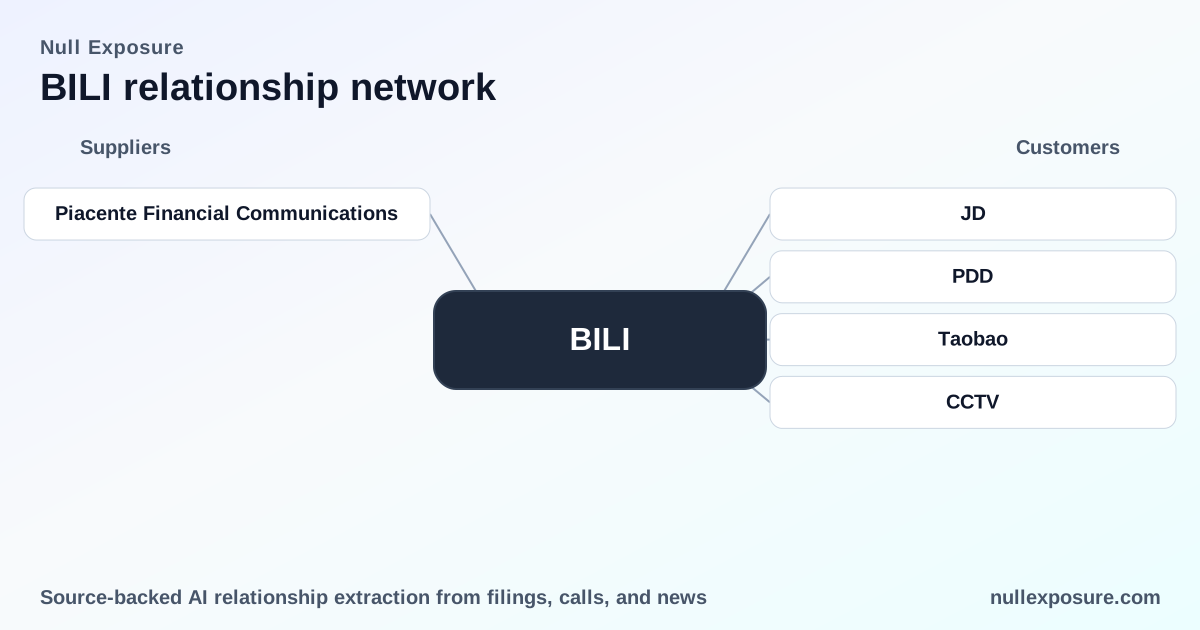
Bilibili’s supplier footprint: what a single visible relationship tells investors
Bilibili Inc. operates an online-entertainment platform focused on China's younger audiences and monetizes through a mix of content-driven revenue streams, advertising and value-added services tied to its user base. For investors and supplier-side operators evaluating Bilibili, the current supplier visibility is concentrated and tactical: publicly visible supplier activity centers on investor-relations and communications services rather than core content or technology vendors, which has implications for contracting posture, counterpart concentration, and supplier bargaining power.
If you want a consolidated view of supplier signals across emerging media platforms, visit https://nullexposure.com/ for comparative supplier intelligence and research.
One supplier shows up in the public record — what it is and why it matters
Bilibili’s disclosed supplier relationships in the searchable results are narrow. The only explicit provider referenced is a financial communications / investor-relations firm.
- Piacente Financial Communications — An earnings-call transcript for Bilibili’s Q4/FY2025 results (posted March 9, 2026 on InsiderMonkey) directs investor contacts to Juliet Yang at Piacente Financial Communications, identifying Piacente as the external IR/communications touchpoint for investors. (Source: InsiderMonkey earnings-call transcript, March 9, 2026.)
Why that single disclosure matters: supplier visibility limited to IR suggests the company’s public footprint of external vendors is currently dominated by communications partners rather than an array of strategic operating suppliers visible in public filings. That dynamic is relevant to counterparty risk assessments and negotiation posture.
What the sparse supplier list implies about contracting posture and concentration
There are no supplier-level contractual constraints recorded in the source set. Treat that absence as a company-level signal: Bilibili’s publicly disclosed supplier exposures are currently low in this dataset, which increases the importance of qualitative assessment.
- Contracting posture: With a visible relationship limited to a communications firm, Bilibili looks to be practicing a selective outsourcing strategy for investor-facing services. This implies centralized control over mission-critical platform operations and likely in-house management of core content and product delivery, with external vendors engaged for targeted functions (IR, PR, event support).
- Concentration and criticality: The available evidence points to low publicly disclosed supplier concentration within investor communications; however, absence of broader supplier disclosure in this results set does not prove there is no concentration elsewhere. Company-level signals — like modest institutional ownership and a retail-tilted investor base (see below) — suggest Bilibili prioritizes active investor engagement, which makes IR/communications vendors relatively important for market perception even if they are not operationally critical.
- Maturity of supplier relationships: The single visible vendor relationship is consistent with an operation that stages external engagements (outsourced IR) while keeping product and platform execution internal or under non-public arrangements. That pattern is typical for consumer internet platforms that depend on tight integration between product and content partners.
Financial posture that shapes supplier negotiations
Bilibili’s reported financials frame supplier risk and payment capacity in concrete terms. According to the company’s latest reported quarter (2025-12-31), trailing revenue was approximately $30.3 billion with gross profit near $11.1 billion, but net profitability remains moderate with a profit margin around 3.9% and operating margin about 6.1%.
- Working-capacity signals: Market capitalization sits around $10.4 billion, EV/Revenue roughly 2.0, and EV/EBITDA at an elevated ~65.9, indicating investors value growth but also reflecting relatively thin current earnings conversion — all of which tighten supplier leverage if counterparty confidence or payment flexibility becomes an issue.
- Investor composition: Institutional ownership is low (~9.5%), suggesting a retail-heavy shareholder base that makes consistent and visible investor communications important; that dynamic elevates the strategic importance of high-quality IR and PR services. (Company reporting and ownership figures, latest quarter 2025-12-31.)
From a supplier perspective, these numbers imply Bilibili can sustain targeted external spend for investor-facing services, but large, long-duration vendor contracts should be negotiated with attention to covenant triggers and payment terms given compressed net margins.
(If you want structured supplier-tracker reports and comparative supplier risk scoring, see https://nullexposure.com/ for premium research and coverage.)
Practical takeaways for vendors, operators and investors
- For IR/communications firms: The visible IR engagement with Piacente signals that Bilibili centralizes investor outreach through specialist advisors. Companies bidding for similar work should emphasize crisis communications capability and digital investor engagement given Bilibili’s retail-dominant investor profile. (InsiderMonkey transcript, March 9, 2026.)
- For content and technology suppliers: Absence of public supplier disclosure in this dataset means you should treat information flow as limited — diligence should rely on direct inquiries and contract review rather than public records alone. Expect negotiation leverage to be shaped by Bilibili’s desire to keep core platform control in-house.
- For investors evaluating supplier risk: Supplier concentration risk is not evident from the public record here, but the strategic criticality of investor communications is high given the retail shareholder base and the company’s valuation multiple; monitor IR vendor continuity and public disclosures for signs of changes in external engagement.
Risk factors and what to watch next
- Operational opacity: Limited supplier visibility in public search results increases the importance of primary diligence — supplier payment terms, SLAs, and termination rights should be reviewed in any commercial negotiation.
- Profitability pressure: Modest profit margins constrain long-term discretionary spend, so suppliers should expect tighter commercial terms on large engagements.
- Reputational sensitivity: Given the emphasis on investor communications (visible through Piacente), reputational incidents or lapses in investor messaging would move markets more quickly because of the retail-heavy shareholder base.
Final verdict and action steps
Bilibili currently presents a narrow, communications-centric supplier footprint in the public record. For operators and investors, that translates into predictable IR priorities but elevated need for direct diligence on content, technology and monetization partners that are not visible here.
- If your mandate is supplier risk assessment or vendor origination, start with direct inquiry and contract-level review; don’t rely solely on public mentions.
- If you are an investor focused on governance and market signaling, track changes in IR vendors and public communications cadence as leading indicators of investor relations strategy.
For a full supplier-risk package and ongoing monitoring tailored to internet-platform operators, explore the research offerings at https://nullexposure.com/.
Key takeaway: visible supplier activity is concentrated and tactical — investor communications are prioritized — so diligence should be direct and contractual for all other supplier categories.