Biora Therapeutics (BIOR) — What its advisory roster tells investors about the sale process and counterparty risk
Biora Therapeutics develops oral biotherapeutic products and historically monetized through advancing clinical assets toward commercialization or partnering/licensing outcomes. The company operates with minimal operating scale and near-zero revenue base, and now runs a Chapter 11 sale process that converts its commercial strategy into a legally supervised asset disposition aimed at maximizing recovery for stakeholders. For investors and operators evaluating supplier relationships, the composition and roles of Biora’s advisors signal a transactional, high-cost, time-sensitive restructuring rather than a routine strategic partnership.
Explore the full supplier map and relationship context at https://nullexposure.com/ to assess counterparties and exposure across your portfolio.
What the advisor lineup reveals about Biora’s contracting posture and maturity
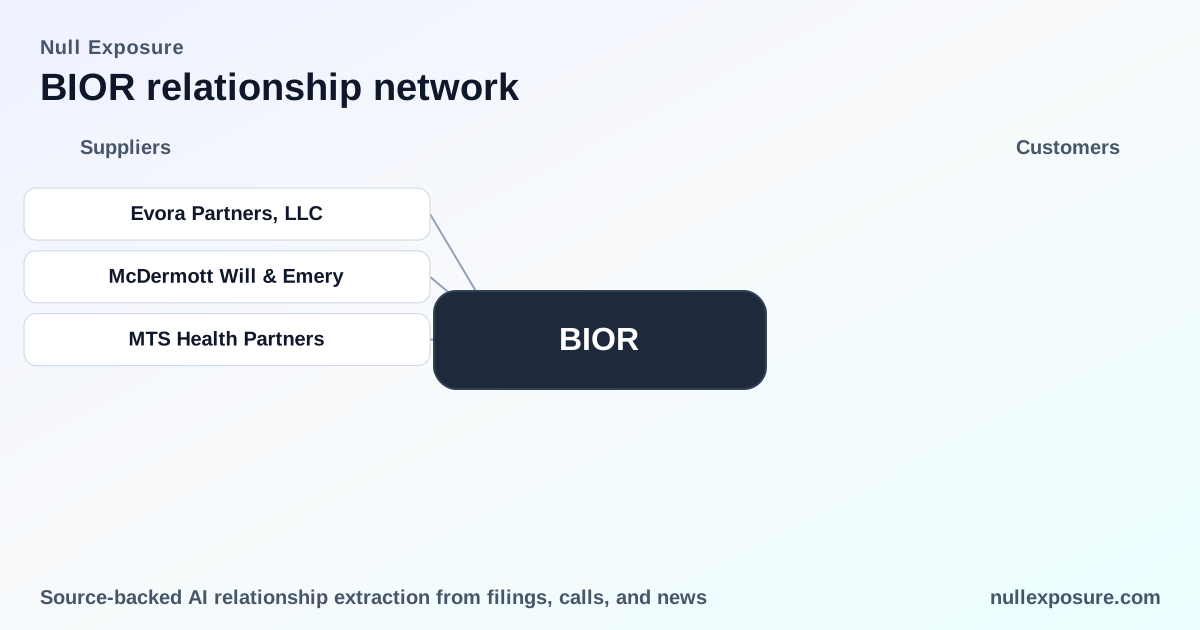
Biora’s roster—legal counsel (McDermott Will & Emery), investment banker (MTS Health Partners), and restructuring advisor (Evora Partners, LLC)—is typical for a company running a Chapter 11 sale process. That combination indicates a defensive contracting posture focused on maximizing value via a sale rather than operating-through distress. These are short-duration, high-urgency engagements intended to convert assets, resolve creditor claims, and complete a court-supervised transfer of economic rights.
Company-level signals reinforce why that posture is necessary: market capitalization under $1.0 million, negative EBITDA, and TTM revenue of roughly $860k demonstrate extreme financial stress and limited runway under a go-forward development model. A sale process under Chapter 11 converts supplier relationships from ongoing operational contracts into counterparties to a disposal event—legal, financial, and restructuring advisors become de facto gatekeepers for counterparty recoveries and post-sale contract novations.
The relationships — who’s on the roster and what they are doing
- McDermott Will & Emery: McDermott is acting as Biora’s legal counsel for the Chapter 11 sale process, handling bankruptcy filings, creditor negotiations, and documentation needed to effect a court-approved sale. According to a GlobeNewswire press release dated December 30, 2024, McDermott Will & Emery is identified explicitly as Biora’s legal counsel in connection with the Chapter 11 sale process.
- MTS Health Partners: MTS Health Partners serves as Biora’s investment banker and is running the commercial marketing and sale execution efforts to solicit bids and structure the transaction. The same GlobeNewswire release on December 30, 2024 lists MTS Health Partners as Biora’s investment banker in the FY2024 sale announcement.
- Evora Partners, LLC: Evora Partners is retained as the restructuring advisor, supplying creditor engagement support, financial restructuring analysis, and coordination between the company and potential buyers. The GlobeNewswire press release dated December 30, 2024 cites Evora Partners, LLC as the company’s restructuring advisor for the Chapter 11 process.
These three entries are the complete public supplier/advisor roster disclosed in the company announcement tied to the sale process.
How these relationships drive near-term risk and opportunity for counterparties
- Criticality of advisors: With legal, banker, and restructuring advisor roles concentrated in three firms, those suppliers control the timing, buyer set, and contractual form of any post-sale relationships. Counterparties should treat these firms as the primary channels for information and negotiation during the sale timeline.
- Concentration and maturity: These are advisory engagements initiated specifically for a distressed sale—short-term in maturity but high in impact, and not indicative of long-term operating partnerships that produce recurring revenue. Service continuity for vendors and CROs will depend on buyer decisions and contract novation terms.
- Contracting posture and negotiation leverage: The debtor-in-possession and sale context puts the company and its advisors in a position to prioritize claims and expedite transfers; counterparties face elevated legal and commercial risk if they rely on pre-existing contract terms without securing protections in the sale documents.
Explore detailed supplier risk reports and counterparty maps at https://nullexposure.com/ to benchmark exposure across similar restructurings.
What operators and counterparties should monitor right now
- Track the sale timeline and hearing dates filed with the bankruptcy court; bid procedures and stalking-horse arrangements will shape counterparty outcomes.
- Review any requested break-fee structures or expense reimbursements that can dilute recoveries to unsecured vendors; legal counsel announcements often disclose these terms.
- Prepare for novation clauses: buyers routinely seek the right to reject or assume contracts—counterparties should proactively document performance claims and security interests to optimize recovery.
- Watch for DIP financing terms and proposed plan treatment, as these determine priority and cash available for unsecured claims.
These action items flow directly from the advisory roles and the legal mechanics disclosed in the December 30, 2024 press release.
Investment implications — valuation, downside, and upside catalysts
Biora’s balance of metrics signals that equity holders face significant downside until the sale process concludes: market capitalization is under $1 million and trailing revenue is roughly $860k, a profile consistent with limited operational upside absent a transformational buyer or licensing event. The sale process itself is the primary near-term catalyst; an asset sale or IP license could crystallize recoveries for creditors and determine whether any residual value accrues to shareholders.
For potential buyers or strategic partners, the advisor quartet simplifies the path to diligence and acquisition—but it also increases the immediate costs of transacting. From an investor perspective, the most likely outcomes are creditor recoveries or asset transfer; equity upside requires a materially accretive bid that covers secured claims and restructuring costs.
Final verdict and next steps for analysts and operators
Biora’s public disclosure of McDermott Will & Emery, MTS Health Partners, and Evora Partners, LLC in the Chapter 11 sale announcement is a clear indicator that this is a time-bound, legally managed disposal rather than a routine supplier renewal cycle. Advisors control the sale mechanics; counterparties should pivot to protection and documentation rather than relying on legacy contract terms. For investors, the sale process is the central catalyst—monitor filings and advisor communications closely.
For a deeper look at how supplier rosters translate into counterparty risk across restructurings, and to map exposure across portfolios, visit https://nullexposure.com/.