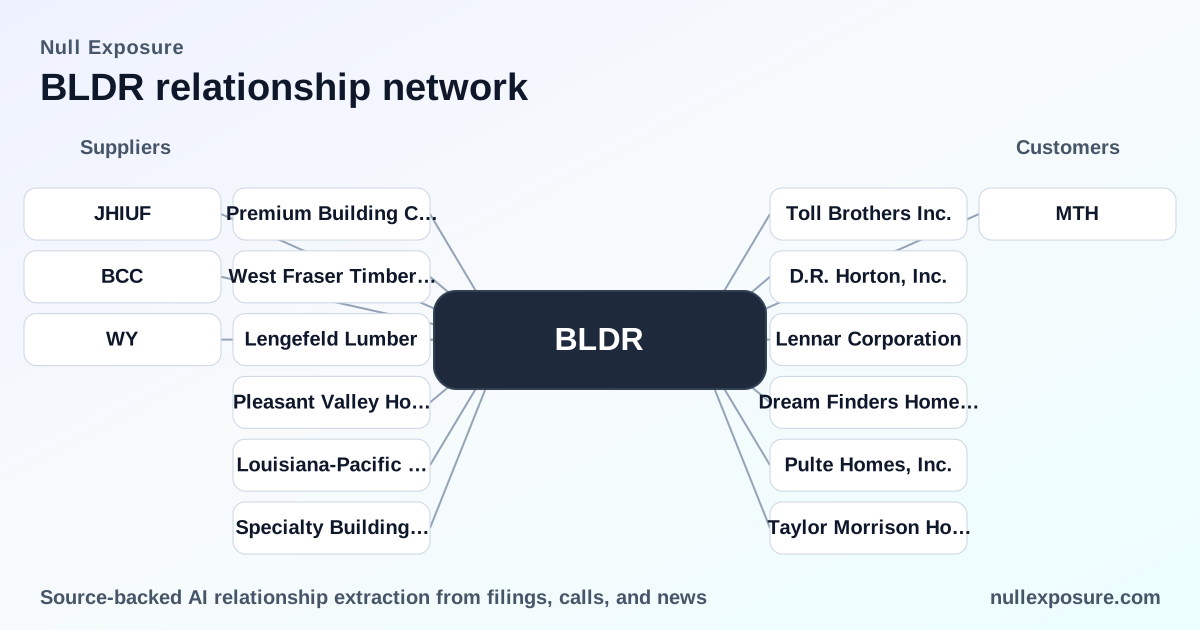
BLDR Supplier Map: What investors should know before underwriting the supply chain
BLDR operates and monetizes as a vertically integrated supplier and distributor of building materials: it sources lumber, engineered components, and manufactured building products from national and regional manufacturers, consolidates production through targeted acquisitions, and sells integrated systems to builders and contractors at scale. Revenue is driven by product sales across distribution and component manufacturing, with margin exposure tied to commodity lumber cycles and purchasing leverage with large suppliers. For deeper supplier intelligence, visit https://nullexposure.com/ to track evolving counterparty risk and acquisition-driven growth.
How BLDR sources product and where value is captured
BLDR balances a mix of contracted and spot purchases for OSB and lumber to hold down cost and preserve supply continuity, a posture that reduces short-term volatility but keeps exposure to commodity swings. The company explicitly lists national-scale manufacturers—including Boise Cascade, Weyerhaeuser, West Fraser, James Hardie, Louisiana‑Pacific, and Specialty Building Products—as its largest suppliers in its FY2024 disclosure, indicating a procurement strategy concentrated among large enterprise counterparties and focused on North American supply channels (FY2024 10‑K). BLDR also discloses that its largest single supplier accounted for 8% of materials purchases in 2024, while noting it is one of the largest customers for many suppliers, a structural source of purchasing leverage that supports margin capture.
Key company-level supply signals to underwrite
- Contracting posture: Mix of contract and spot buying for lumber/OSB to balance cost and availability (company filing commentary on buying strategy).
- Counterparty profile: Predominantly large, national manufacturers — a signal of supplier sophistication and scale but also concentration of sourcing power.
- Geography: North America‑centric procurement and supplier footprint, which ties BLDR to regional lumber markets and policy/regulatory shifts.
- Materiality and leverage: No single supplier dominance (>8%), yet BLDR’s size gives it notable purchasing leverage with manufacturers.
- Role of counterparties: Suppliers act principally as manufacturers of raw and finished building products rather than logistics or financing partners.
A mid‑analysis snapshot of strategic actions and acquisitions
BLDR is actively consolidating supply and manufacturing capacity through acquisitions: in 2025 it acquired assets that bring truss and wall panel operations into New York, and earlier in the cycle it closed on regional suppliers to deepen its local manufacturing base. These moves reduce reliance on third-party mill availability and convert procurement exposure into owned production margin. For a continuously updated supplier view and transaction history, see https://nullexposure.com/.
Detailed supplier and relationship summaries
-
Premium Building Components — BLDR acquired the assets of Premium Building Components in January, establishing its first truss and wall panel operations in New York and expanding in‑market production capacity. Source: BLDR 2025 Q4 earnings call (reported March 2026).
-
Lengefeld Lumber — BLDR completed an acquisition of Lengefeld Lumber in November, adding a leading supplier focused on Central Texas distribution that strengthens regional lumber sourcing and service to local builders. Source: BLDR 2025 Q4 earnings call (reported March 2026).
-
Pleasant Valley Homes — Acquired alongside Lengefeld Lumber in November, Pleasant Valley Homes is a wholesale manufacturer of factory‑built housing serving ten Northeastern states, expanding BLDR’s factory housing footprint and finished‑goods supply. Source: BLDR 2025 Q4 earnings call (reported March 2026).
-
West Fraser Timber Co. Ltd. — Listed among BLDR’s largest suppliers in the FY2024 Form 10‑K, West Fraser represents one of the national timber and panel manufacturers underpinning BLDR’s materials intake. Source: BLDR 2024 Form 10‑K (filed FY2024).
-
Louisiana‑Pacific Corp. — Named in BLDR’s FY2024 disclosures as a principal supplier, Louisiana‑Pacific supplies engineered wood products that feed BLDR’s distribution and component manufacturing channels. Source: BLDR 2024 Form 10‑K (FY2024).
-
Specialty Building Products — Cited in the FY2024 10‑K as a major supplier, Specialty Building Products supports BLDR’s portfolio of finishing and cladding SKUs that complement structural lumber and components. Source: BLDR 2024 Form 10‑K (FY2024).
-
James Hardie Industries plc — Identified in the FY2024 filing among national suppliers, James Hardie provides fiber cement and related exterior products integral to BLDR’s building systems offering. Source: BLDR 2024 Form 10‑K (FY2024).
-
Boise Cascade Company — Boise Cascade is listed as one of BLDR’s largest national suppliers in FY2024, supplying plywood, lumber, and engineered wood products central to BLDR’s product mix. Source: BLDR 2024 Form 10‑K (FY2024).
-
Weyerhaeuser Company — Also named in the FY2024 10‑K, Weyerhaeuser supplies key timber, lumber, and engineered products that feed BLDR’s manufacturing and distribution operations. Source: BLDR 2024 Form 10‑K (FY2024).
What investors should watch next
-
Commodity price transmission: BLDR’s margins will continue to track lumber and OSB price swings despite contractual hedging; the company’s mix of spot and contract buys allows for opportunistic sourcing but preserves exposure to market rallies. This is a primary earnings sensitivity that investors must model explicitly.
-
Integration and maturity of acquisitions: Recent buys—from regional lumber suppliers to truss and panel assets—are strategically sensible, but integration execution will determine whether acquisitions convert into durable margin improvement or short‑term disruption.
-
Supplier concentration vs. leverage: The company’s disclosure that no single supplier exceeds 8% of spend while being a major customer to many suppliers is a double‑edged signal: lower single‑vendor concentration but higher counterparty sophistication and potential supplier negotiating power.
For ongoing diligence and alerts on supplier changes, use the supplier intelligence hub at https://nullexposure.com/ to monitor filings, earnings calls, and acquisition activity in real time.
Bottom line: actionable framing for investors
BLDR’s supplier posture is strategically defensive yet acquisitive—it reduces spot vulnerability by contracting selectively and by buying manufacturing capacity, while retaining exposure to North American lumber markets. Investors should price in both the upside from converting procurement into owned manufacturing margin and the downside from commodity volatility and integration risk. For a continuous feed of supplier-level evidence and to inform underwriting decisions, return to https://nullexposure.com/ and subscribe for alerts.