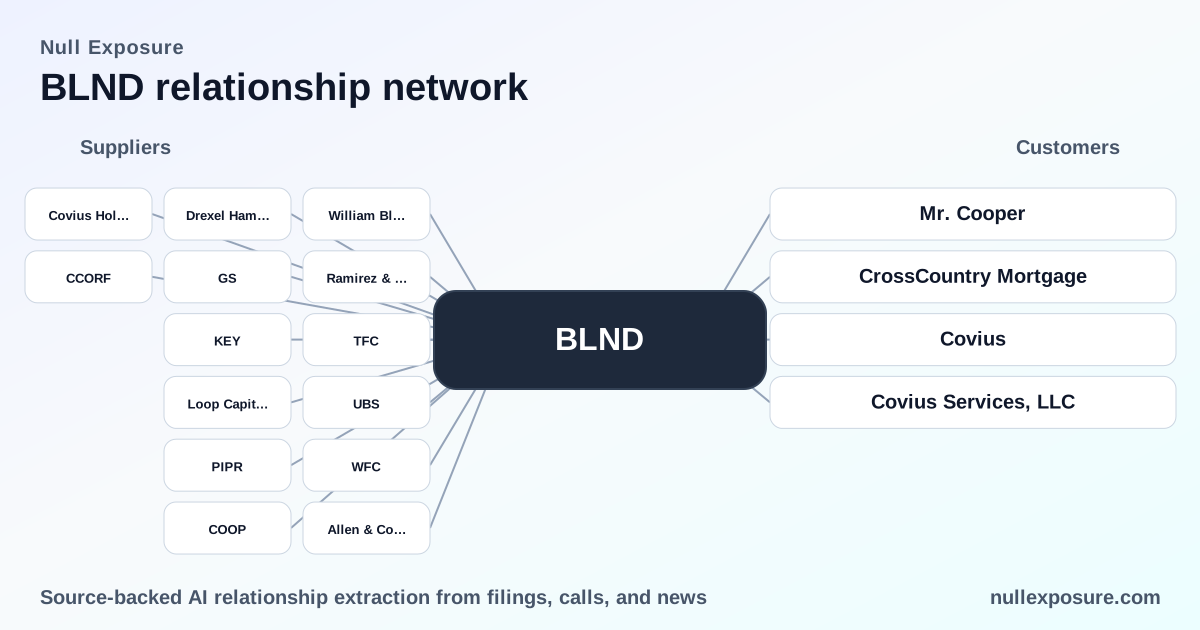
Blend Labs (BLND): Platform fintech with concentrated underwriting exposure and infrastructure commitments
Blend operates a B2B digital lending platform that sells workflow software and integrations to banks, credit unions and mortgage originators, monetizing through subscription and transaction-related fees plus commission revenue tied to ancillary services (title/insurance). Revenue derives from software subscriptions, commissions on insurance/title activity, and professional services; critical vendor relationships and a handful of underwriting partners shape both cost and revenue dynamics. For a quick deep-dive into counterparty exposures and supplier posture, see https://nullexposure.com/.
How Blend makes money and what drives margin pressure
Blend sells cloud-hosted lending software that automates loan origination and closing; client banks pay recurring fees while Blend captures a slice of ancillary commissions when closing-related services flow through its platform. The company reports $123.5 million in trailing revenue with negative net margins and operating losses, underscoring a growth-at-scale profile where top-line traction coexists with negative profitability (RevenueTTM $123,506,000; DilutedEPSTTM -$0.09; OperatingMarginTTM -0.111).
Operationally, Blend runs on third-party cloud infrastructure and contracts for hosting and SaaS services under multi-year, non-cancelable commitments—a predictable fixed-cost layer that supports platform availability but increases operating leverage. Blend’s business also concentrates commission revenue with a limited set of insurance underwriters, exposing the firm to partner-specific contract risk and pricing pressure if those relationships change.
For more supplier-level detail and direct counterparty mappings, visit https://nullexposure.com/.
Supplier and advisor relationships you should know (every contact in the record)
Below is a concise, source-backed summary of every relationship captured in the results set.
-
Goldman Sachs & Co. LLC — Served as a lead book-running manager in Blend’s 2021 IPO process, underwriting and distribution support for the public offering (PYMNTS IPO report, FY2021: https://www.pymnts.com/news/ipo/2021/digital-lending-platform-blend-labs-to-raise-360m-in-ipo/).
-
Allen & Company LLC — Named as a lead book-running manager on Blend’s 2021 IPO, providing placement and capital markets advisory (PYMNTS IPO report, FY2021: https://www.pymnts.com/news/ipo/2021/digital-lending-platform-blend-labs-to-raise-360m-in-ipo/).
-
Wells Fargo Securities, LLC — Identified among lead book-running managers for Blend’s proposed 2021 IPO, indicating debt/equity distribution support and capital markets engagement (PYMNTS IPO report, FY2021: https://www.pymnts.com/news/ipo/2021/digital-lending-platform-blend-labs-to-raise-360m-in-ipo/).
-
KeyBanc Capital Markets — Listed as a book-running manager and syndicate participant for the IPO, playing a role in placement and investor outreach (PYMNTS IPO report, FY2021: https://www.pymnts.com/news/ipo/2021/digital-lending-platform-blend-labs-to-raise-360m-in-ipo/).
-
Truist Securities — Served as a book-running manager on the 2021 IPO, supporting underwriting and distribution to institutional investors (PYMNTS IPO report, FY2021: https://www.pymnts.com/news/ipo/2021/digital-lending-platform-blend-labs-to-raise-360m-in-ipo/).
-
UBS Investment Bank — Named among the IPO book-runners, providing capital markets execution and syndicate support (PYMNTS IPO report, FY2021: https://www.pymnts.com/news/ipo/2021/digital-lending-platform-blend-labs-to-raise-360m-in-ipo/).
-
Piper Sandler — Listed as a co-manager on the 2021 offering, participating in the underwriting syndicate and distribution (PYMNTS IPO report, FY2021: https://www.pymnts.com/news/ipo/2021/digital-lending-platform-blend-labs-to-raise-360m-in-ipo/).
-
William Blair — Named a co-manager in Blend’s 2021 IPO syndicate, indicating boutique investment banking involvement for distribution and coverage (PYMNTS IPO report, FY2021: https://www.pymnts.com/news/ipo/2021/digital-lending-platform-blend-labs-to-raise-360m-in-ipo/).
-
Canaccord Genuity — Included among co-managers on the 2021 IPO, supporting retail and specialist investor outreach (PYMNTS IPO report, FY2021: https://www.pymnts.com/news/ipo/2021/digital-lending-platform-blend-labs-to-raise-360m-in-ipo/).
-
Drexel Hamilton — Named as a co-manager in the 2021 IPO syndicate, contributing to distribution efforts (PYMNTS IPO report, FY2021: https://www.pymnts.com/news/ipo/2021/digital-lending-platform-blend-labs-to-raise-360m-in-ipo/).
-
Loop Capital Markets — Listed among co-managers for the IPO, participating in placement and book-building (PYMNTS IPO report, FY2021: https://www.pymnts.com/news/ipo/2021/digital-lending-platform-blend-labs-to-raise-360m-in-ipo/).
-
Piper Sandler (duplicate entry) — Appears again in the record as a co-manager on the 2021 offering; see the same PYMNTS IPO coverage for context (PYMNTS IPO report, FY2021: https://www.pymnts.com/news/ipo/2021/digital-lending-platform-blend-labs-to-raise-360m-in-ipo/).
-
Ramirez & Co., Inc. — Named as a co-manager on Blend’s IPO syndicate, indicating participation in the offering’s distribution network (PYMNTS IPO report, FY2021: https://www.pymnts.com/news/ipo/2021/digital-lending-platform-blend-labs-to-raise-360m-in-ipo/).
-
Canaccord Genuity (duplicate entry) — Also listed in the results as a co-manager; see the PYMNTS IPO piece for details (FY2021: https://www.pymnts.com/news/ipo/2021/digital-lending-platform-blend-labs-to-raise-360m-in-ipo/).
-
Mr. Cooper (FY2022 context) — Blend recorded a material impairment tied to Title365, an asset acquired from Mr. Cooper; the FY2022 loss included a $391.8 million impairment related to Title365 (National Mortgage Professional, FY2022: https://nationalmortgageprofessional.com/news/blend-labs-has-cut-420-jobs-april).
-
Mr. Cooper (FY2025 context) — Blend’s 2021 acquisition of Title365 from Mr. Cooper for $422 million is referenced in later reporting; the transaction and its aftermath informed Blend’s strategic moves around title services (HousingWire FY2025 coverage: https://www.housingwire.com/articles/blend-labs-narrows-q2-losses-announces-new-head-of-finance/).
-
Covius Holdings Inc. — Covius agreed to acquire Blend’s Title365 business and will continue to provide integrated title and closing services to Blend customers post-transaction, signaling a divestiture of in-house settlement operations (Inman, announcement of the deal, FY2025: https://www.inman.com/2025/06/09/covius-inks-agreement-to-acquire-blends-title365-business/).
Each entry above is drawn from the cited news coverage and company disclosures captured in the record.
What the supplier posture and disclosures imply for investors
Blend’s filings and public coverage reveal three practical constraints that shape the investment thesis:
-
Contracting posture: Blend carries multi-year, non-cancelable hosting and SaaS commitments with disclosed future purchase obligations (the company reported future non-cancelable obligations totaling approximately $11.5 million across the near-term periods disclosed). This creates fixed operating leverage and underwrites uptime and scalability for customers.
-
Revenue concentration risk: Commission income is materially sourced from a limited number of insurance underwriters, a commercial concentration that influences both revenue volatility and negotiating leverage. Losing or repricing these underwriter relationships would directly affect commission margins and customer economics.
-
Service-provider criticality: Blend depends on third-party infrastructure and data providers (including AWS) and maintains partner arrangements for title issuance, which embeds outsourced operational risk into the platform offering and suggests higher dependency on vendor SLAs and third-party resilience.
These constraints explain why Blend has opted to divest Title365 to Covius: the company moved away from vertically integrated settlement operations after impairment charges and strategic refocusing on core SaaS (see the Covius deal and Title365 impairment notes above).
For an operational risk scorecard and counterparty mapping tailored to institutional diligence, explore https://nullexposure.com/.
Investment implications and next steps
Blend is a software platform with clear revenue levers (subscriptions + commissions) but persistent profitability pressure and partner concentration. The IPO syndicate membership shows broad capital markets support historically, but the Title365 impairment and subsequent sale highlight execution risk when Blend operates outside pure software delivery. For operators evaluating BLND as a supplier or investors assessing exposure, focus diligence on:
- Contract length and termination provisions with major underwriters and hosting vendors.
- Post-divestiture service-level agreements with Covius for title/closing continuity.
- Counterparty concentration metrics for commission revenue.
To continue your due diligence with mapped supplier exposures and the document trail, visit https://nullexposure.com/ for the full counterparty view and actionable supplier risk signals.