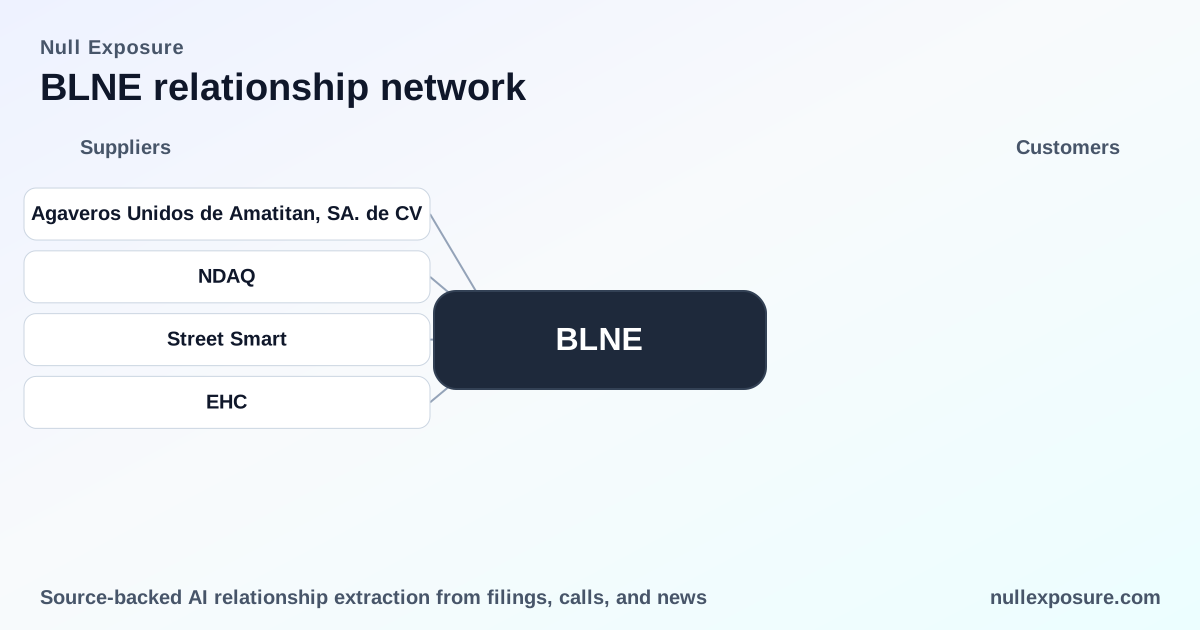
BLNE (Eastside Distilling): Supplier map, contractual posture, and what investors need to know
Eastside Distilling operates as a branded spirits company that acquires, manufactures, blends, bottles, imports and sells alcoholic beverages, and it has recently repositioned parts of the business toward financial services by launching an AI-based online mortgage venture under the Beeline/BLNE banner. The company monetizes through brand ownership and wholesale distribution of spirits, retail placement via distributor networks, and increasingly through ancillary financial services and technology partnerships that extend distribution to mortgage lenders. Understanding supplier relationships is critical because the business combines concentrated supplier/distributor dependencies with technology and channel partners that directly affect margins and growth.
Discover supplier risk profiles and relationship intelligence at https://nullexposure.com/.
The supplier picture in plain English
Eastside’s supplier footprint reflects a hybrid consumer-products model layered with a nascent tech/financial-services stack. The most consequential supplier relationship is a long-term, exclusive sourcing agreement for a signature tequila brand; distribution sits with a limited set of wholesale partners and, by law, state-licensed or state-owned agencies in certain jurisdictions; and the company is integrating third‑party lending and loan-origination platforms to scale its mortgage business. These linkages create concentration risk, some supplier power, and operational exposure to third-party technology that investors should price into any valuation or partnership thesis.
A practical next step: for deeper supplier-contract intelligence and monitoring, visit https://nullexposure.com/.
Agaveros Unidos de Amatitan, SA. de CV — Exclusive tequila partner
Eastside has a long-term exclusive agreement with Agaveros Unidos for the Azuñia Tequila brand, giving the company exclusive rights under that brand relationship. The 2024 Form 10‑K states the exclusivity explicitly, and the filing warns that termination or adverse price changes from Agaveros Unidos would negatively affect the business. (Source: Eastside Distilling 2024 Form 10‑K.)
NASDAQ — Public listing and ticker transition
The company’s common stock began trading on NASDAQ under the new ticker BLNE on January 27, 2025, an explicit corporate milestone for liquidity and market access. That transition was announced in a January 2025 press release covered by financial press outlets. (Source: Globe and Mail/press release, January 2025.)
Street Smart / Streetwise Reports affiliate — Consulting relationship
Eastside (and its Beeline/Beeline Holdings initiative) has a consulting relationship with Street Smart, an affiliate of Streetwise Reports, which supports investor communications and outreach tied to the company’s relaunch and public-market narrative. (Source: Streetwise Reports / Street Smart coverage, January 2025.)
Encompass — Integration to broaden lender access
Eastside announced integration plans between its BLINKQC product and Encompass, with integration expected live and expanding access to approximately 3,100 Encompass‑licensed lenders as of a May 4, 2026 update. This is a distribution and technology channel relationship for the mortgage/lending side of the business. (Source: StockTitan overview referencing product release, May 2026.)
How the relationships shape contract posture, concentration and criticality
-
Contracting posture and maturity: The Agaveros Unidos agreement is explicitly long‑term and exclusive, which locks in supply for Azuñia Tequila and limits short‑term supply-side substitution. That is a structural advantage for brand continuity but creates vendor lock‑in and negotiating leverage for the supplier. (Company filing: FY2024 Form 10‑K.)
-
Concentration and distributor power: Eastside distributes spirits in a limited number of states and relies on a small set of wholesale distributors and state-licensed agencies in control states. This concentration increases distribution risk: distributor behavior drives retail placement and availability, which directly affects sales velocity and promotional effectiveness. (Company-level signal from Form 10‑K.)
-
Critical dependencies: The filings name two critical dependencies. First, the Agaveros Unidos relationship is material and potentially critical to product supply for the Azuñia brand; termination or adverse price changes would harm margins and availability. Second, the company states that a substantial majority of advertising spend runs through Google, establishing a single-channel marketing dependency that exposes the company to price and platform risk. The 10‑K highlights both points as material exposures. (Company filing: FY2024 Form 10‑K.)
-
Technology and service-provider exposure: Eastside’s mortgage strategy relies heavily on third‑party technology and integrations (for example, Encompass/BLINKQC), which accelerate go‑to‑market but limit control and introduce vendor and operational risks—service continuity, data integration, and cost variability are all relevant. (Company-level signal from constraints and news items.)
-
Buyer/distributor role mix: The company functions as both buyer (sourcing distillates and raw materials from suppliers) and manager of distributor relationships for retail placement, amplifying the importance of procurement and route‑to‑market execution. (Company-level signal.)
Mid‑analysis action: review supplier contract terms and renewal windows at https://nullexposure.com/ to quantify replacement cost and concentration risk.
Investment implications — upside, risks and what to monitor
-
Upside: Exclusive brand sourcing (Azuñia) supports premium positioning and protects gross margins if Agaveros maintains quality and cooperative pricing; Encompass integration accelerates distribution of the mortgage product to thousands of lenders, a scalable channel for financial revenue diversification.
-
Key risks: Supplier lock‑in with Agaveros and channel concentration in distribution and digital advertising create single‑point exposures that can depress revenue or require expensive workarounds; third‑party technology dependence increases operational risk for the mortgage line of business.
-
Monitor closely: renewal and price terms in the Agaveros agreement, state‑by‑state distributor coverage and sales penetration, Google ad spend and pricing trends, and completion/status of Encompass/BLINKQC integration and lender onboarding metrics.
Bottom line: Eastside’s supplier relationships are a mixed bag of durable brand exclusivity and concentrated distribution/technology exposure. The exclusive Agaveros contract is a strategic asset but also a material vulnerability; the firm’s future results will hinge on distributor execution and the success of third‑party technology integrations.
For ongoing alerts and supplier-level intelligence on BLNE, visit https://nullexposure.com/.
Final thoughts and recommended next steps
Investors should treat Eastside as a hybrid play—consumer packaged goods upside supported by exclusive brand arrangements, coupled with execution risk tied to distribution and third‑party tech for its mortgage strategy. Prioritize contract diligence on Agaveros, track distributor penetration metrics across the seven states noted in filings, and confirm the Encompass integration live metrics and lender uptake. For a deeper dive into supplier contracts, renewal timelines, and concentration analytics, start with a vendor risk review at https://nullexposure.com/.