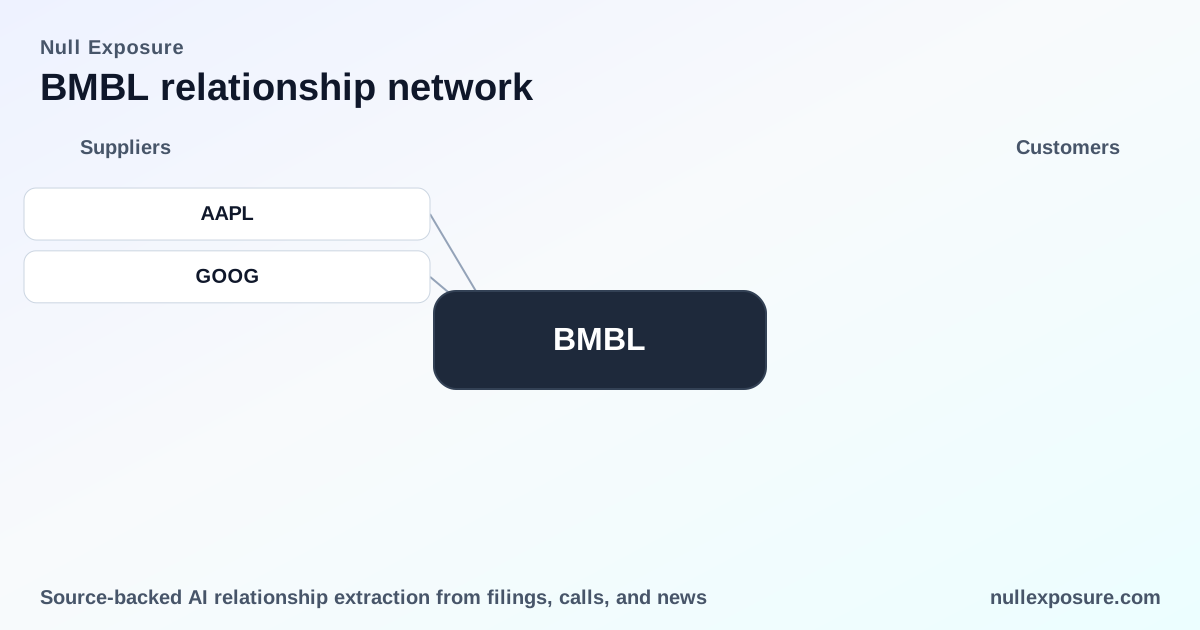
Bumble Inc (BMBL) — supplier posture, commitments and what investors should watch
Bumble operates a portfolio of online dating and social platforms and monetizes primarily through paid subscriptions, in‑app purchases and advertising tied to its mobile apps and web properties. For investors evaluating supplier exposure, the core commercial fact is simple: distribution and user monetization are tightly coupled to third‑party platforms and cloud infrastructure, and those supplier relationships influence margins, product rollout speed and operational resilience.
Discover a complete supplier risk map at https://nullexposure.com/ to benchmark these exposures against peers.
Why supplier relationships matter for a consumer app company like Bumble
Bumble’s value proposition depends on scale and engagement delivered through mobile devices and datacenter‑hosted services. That creates four actionable supplier signals:
- Contracting posture — committed minimums create real financial leverage for suppliers. Company disclosures show multi‑year minimum spend and commitment fees with cloud providers, producing fixed cash outflows that reduce flexibility in a downcycle.
- Concentration and criticality — distribution and hosting are mission‑critical. Bumble explicitly relies on mobile app stores for distribution and a handful of material data centers across multiple geographies, making those providers high‑impact single points for outages or fee increases.
- Relationship maturity — formal vendor governance is in place, but not necessarily diversification. The company conducts security assessments and requires industry‑standard cybersecurity controls from critical providers, indicating mature supplier management practices even while reliance remains.
- Cost sensitivity — app store fees and committed cloud spend are direct margin levers. The combination of third‑party distribution fees and minimum cloud commitments compresses margin upside and increases operating leverage.
These are company‑level signals drawn from recent disclosures and filings (see the contractual commitment details below).
The two explicit supplier relationships called out in company communications
Apple App Store
Bumble notes that its ability to distribute dating products through third parties such as the Apple App Store is essential, and that those channels involve fees and controls that affect distribution and monetization. According to Bumble’s third‑quarter 2025 results press release (BizWire, Nov 5, 2025), the company singled out mobile app stores as a vector for distribution and related fees. This makes app store policy changes or fee adjustments a direct revenue and product cadence risk.
Source: Bumble Q3 2025 results press release (BizWire, November 5, 2025).
Google Play Store
Bumble likewise identifies the Google Play Store as a primary distribution channel subject to fees and platform controls that can limit, prohibit or increase the cost of distributing or updating mobile applications. The company discussed these dependencies in its Q3 2025 results communication, highlighting distribution exposure across both major mobile ecosystems.
Source: Bumble Q3 2025 results press release (BizWire, November 5, 2025).
Cloud, data centers and contractual commitments — the numbers that constrain flexibility
Bumble’s public disclosures (period end December 31, 2024) include clear quantitative commitments to third‑party cloud services that shape cash flow and optionality:
- The company amended a cloud services agreement in November 2024 that commits to a minimum of $9.5 million over 12 months, with approximately $8.9 million remaining as of December 31, 2024 if minimums are unmet.
- A separate amendment in October 2024 created a $12.4 million commitment over 36 months, with approximately $8.2 million remaining as of December 31, 2024.
- Bumble reports material data centers in Miami, Prague, Frankfurt and Amsterdam, indicating deliberate geographic distribution for hosting but also concentration in those sites.
These disclosures are company filing items reported as of year‑end 2024; they signal non‑trivial committed spend in the $1m–$10m band with individual third‑party cloud suppliers and underline the financial rigidity that comes from minimum commitment clauses.
Source: Company filings and disclosures as of December 31, 2024 (contract amendment summaries and data center listings).
What this means for investors — risk, leverage and monitoring priorities
- Fee and distribution risk is direct and observable. Because Bumble relies on Apple and Google as primary distribution gateways, any change in their fee structures or app‑store policies directly affects user acquisition economics and in‑app monetization timing. The recent public mention of app stores in the Q3 2025 results confirms management is treating this as a strategic supplier relationship.
- Committed cloud spend reduces short‑term flexibility. The multi‑million dollar minimums mean Bumble cannot quickly reduce cloud expense in a rapid downturn without incurring termination or make‑good payments. That increases operating leverage when revenue declines and limits capex flexibility.
- Operational resilience is mixed: geographic hosting spread is good, but concentration remains. Multiple material data centers across regions reduce single‑site risk, yet the listed facilities concentrate hosting footprint to a manageable number of locations—sufficient redundancy, but still a concentrated supplier set.
- Supplier governance exists and is documented. Security assessments and contractual cybersecurity obligations indicate institutionalized supplier management, which reduces operational risk but does not eliminate commercial dependency.
Key takeaway: app‑store dynamics and cloud commitment structures are the two biggest supplier levers that will move Bumble’s margins and execution risk over the next 12–24 months.
Explore interactive supplier heat maps and peer comparisons at https://nullexposure.com/ to see how these exposures stack up across the sector.
Practical watchlist for analysts and operators
- Track app‑store policy developments and any litigation or regulatory action affecting app economics; quantify the P&L sensitivity to a 100–200 bps change in effective app‑store take rates.
- Monitor quarterly disclosures for changes in committed cloud spend, contract renegotiations, and the remaining carry on minimum commitments.
- Validate business continuity and failover arrangements for the named material data centers and review vendor SLAs for recovery objectives.
- Evaluate management commentary in earnings calls for signs of supplier diversification or renegotiation success.
Bottom line and next steps
Bumble’s supplier risk profile is clear and actionable: mobile app stores control distribution and fee exposure, while committed cloud agreements lock in material fixed spend. Investors should treat these supplier relationships as strategic levers that can affect margins, growth cadence and downside protection.
For a deeper, interactive view of supplier relationships and contractual exposures across your portfolio, visit https://nullexposure.com/ and request a comparative supplier risk briefing.