Bitmine Immersion Technologies (BMNR): supplier map and what it means for investors
Bitmine Immersion Technologies monetizes by operating and investing in digital-asset infrastructure: it acquires and operates BTC mining hardware, holds crypto assets (including a large ETH position disclosed in March 2026), and purchases third‑party custody, staking and consulting services to support those positions. Revenue is driven by mining production and occasional asset sales; the balance sheet and custody arrangements are central to operational continuity and investor returns. For a focused view of BMNR’s supplier footprint, this note parses public announcements and filings and highlights contract features that drive counterparty risk and concentration. Learn more at https://nullexposure.com/.
The investor thesis in one line
Bitmine is a capital‑intensive, asset‑backed play on crypto production and treasury management: small operating revenue today, concentrated crypto holdings and long‑dated service commitments that create asymmetric operational leverage if crypto prices and miner yields recover.
Why supplier relationships matter for BMNR now
Bitmine’s supplier posture is not an afterthought—it's foundational. The company combines three structural characteristics that investors must weigh together:
- Concentration of custody and custody backups. Bitmine uses named custodians (Bitgo and Gemini) to store BTC and has a geographic spread of custody locations; custodial continuity is a core operational dependency disclosed in its annual filing for the year ended August 31, 2025.
- Long‑dated service contracts that create lock‑in and potential damages exposure. The company’s consulting/custody arrangement with ETH Tower carries a 10‑year term and heavy termination penalties, which amplifies operational risk if counterparty performance or pricing changes.
- Capital intensity with small recurring spend but material asset exposure. Annual consulting fees are modest (expected in the $40k–$50k range), yet custodial and hardware purchases (including a November 2024 order for 3,000 S‑19j Pro miners) link Bitmine to a small set of suppliers whose reliability affects asset access and mining throughput.
These are not isolated facts; they form an operating model where counterparty reliability, contract enforceability and custody stability drive value far more than near‑term revenue growth.
What the filings and press releases actually disclose
The company’s FY2025 filing and March 2026 corporate release together reveal the mix of contracts and public‑facing supplier interactions:
- Long‑term consulting with ETH Tower: According to the company’s filing for the year ended August 31, 2025, Bitmine entered a ten‑year Consulting Agreement with Ethereum Tower LLC to provide consulting, asset management, custody, and staking services—renewable and non‑cancelable except in limited circumstances. The filing further states that an early, no‑cause termination would trigger an 85% liquidated‑damages payment on fees otherwise payable through term end, signaling meaningful contractual stickiness and potential financial exposure.
- Custody and backup providers named: The same FY2025 filing identifies Bitgo Trust as the primary BTC custodian and Gemini Trust Company, LLC as a regulated backup facility, indicating a layered custody strategy intended to mitigate key‑loss and theft risk.
- Hardware procurement activity: The FY2025 disclosure records an agreement (November 2024) to purchase 3,000 S‑19j Pro BTC miners from Luxor Technology Corporation, reflecting ongoing capital expenditure to support mining throughput.
- Fee scale: The company expects aggregate consulting/custody fees in the $40,000–$50,000 range annually—small in absolute terms but relevant given the heavy asset exposure and long contract terms.
These contract excerpts are company‑level signals that shape counterparty exposure and operational resilience rather than micro line‑items of cost.
Supplier relationship summaries and sources
Below I cover every supplier relationship cited in the public materials and press coverage.
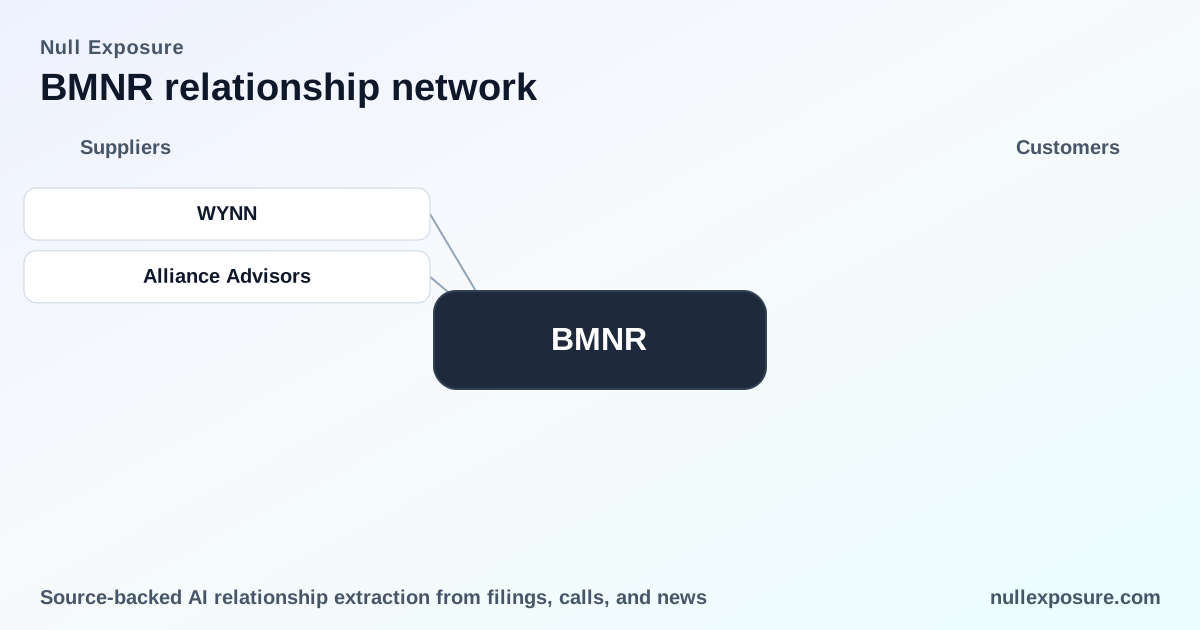
Wynn Las Vegas — meeting venue and investor event host
Bitmine announced it will hold its Annual Stockholder Meeting at Wynn Las Vegas on January 15, 2026, signaling a high‑visibility, investor‑facing event in a major hospitality venue. According to a March 2026 corporate release carried by TradingView and EQS News, the company named Wynn Las Vegas as the meeting site. (TradingView / Chainwire press release, March 9, 2026; EQS News release, March 9, 2026.)
Alliance Advisors — registrar and logistics contact for investors
Investor support and registration logistics for the annual meeting are routed through Alliance Advisors; the company provided Alliance’s contact (LogisticsSupport@allianceadvisors.com) for shareholder questions and registration assistance. This is documented in the same March 2026 meeting announcement. (EQS News release, March 9, 2026; TradingView / Chainwire press release, March 9, 2026.)
Note: the March 2026 releases that reference Wynn and Alliance also disclose Bitmine’s retained ETH position and aggregate crypto/cash holdings, underscoring why the meeting logistics were publicized alongside treasury disclosures.
Constraints and what they imply for working capital and counterparty risk
The public filing paints a clear operating posture for BMNR:
- Contracting posture: The ETH Tower consulting agreement is long‑term (10 years) and not readily cancellable without severe financial penalty. This creates durable service continuity but also locks Bitmine into counterparty terms that could be costly if market conditions change.
- Concentration and criticality: Custodial arrangements are material operational dependencies—Bitgo is the primary custodian and Gemini is the backup—so any disruption or regulatory action affecting those firms would immediately impact access to assets.
- Maturity and spend profile: Despite these material dependencies, the annual cash outlay for consulting is modest (about $40k–$50k), highlighting a capital structure where fixed contractual obligations are low in nominal spend but high in practical importance because they underwrite access to large crypto balances.
- Buyer behavior: Bitmine is an active hardware purchaser (e.g., the Luxor miner order) and a buyer of custody/staking services, indicating the company’s dual role as equipment operator and service consumer.
These constraints should be read as structural features: low recurring fees but high asset exposure, long lock‑in with concentrated custody, and ongoing capital purchases that perpetuate reliance on a small supplier set.
Investment implications and risk checklist
- Valuation disconnect: Market capitalization (
$10.6B) vs trailing revenue ($7.2M) and negative operating margins points to a market pricing that assumes material upside from crypto holdings or mining yield; counterparty reliability and custody continuity are therefore primary value drivers. - Contract risk: The ETH Tower agreement’s ten‑year term and 85% termination penalty create asymmetric downside if the relationship breaks down.
- Event sensitivity: Public‑facing events (annual meeting at Wynn) and registrar management (Alliance Advisors) are small operational touches but matter for governance and shareholder access; the March 2026 announcement also tied these logistics to a major treasury disclosure about ETH holdings.
Mid‑note action: if you want a consolidated supplier risk brief for BMNR, review our supplier scoring and counterparty heatmap at https://nullexposure.com/.
Bottom line and next steps for investors
Bitmine’s supplier ecosystem is small but material: custodians and a long‑term consulting provider are central to asset access, while hardware vendors drive production capacity. For investors, the immediate focus is not on expense line‑items but on contract enforceability and custody resilience given the company’s large disclosed crypto balances and modest operating revenue.
For a deeper supplier risk assessment and ongoing monitoring of BMNR counterparties, visit https://nullexposure.com/.