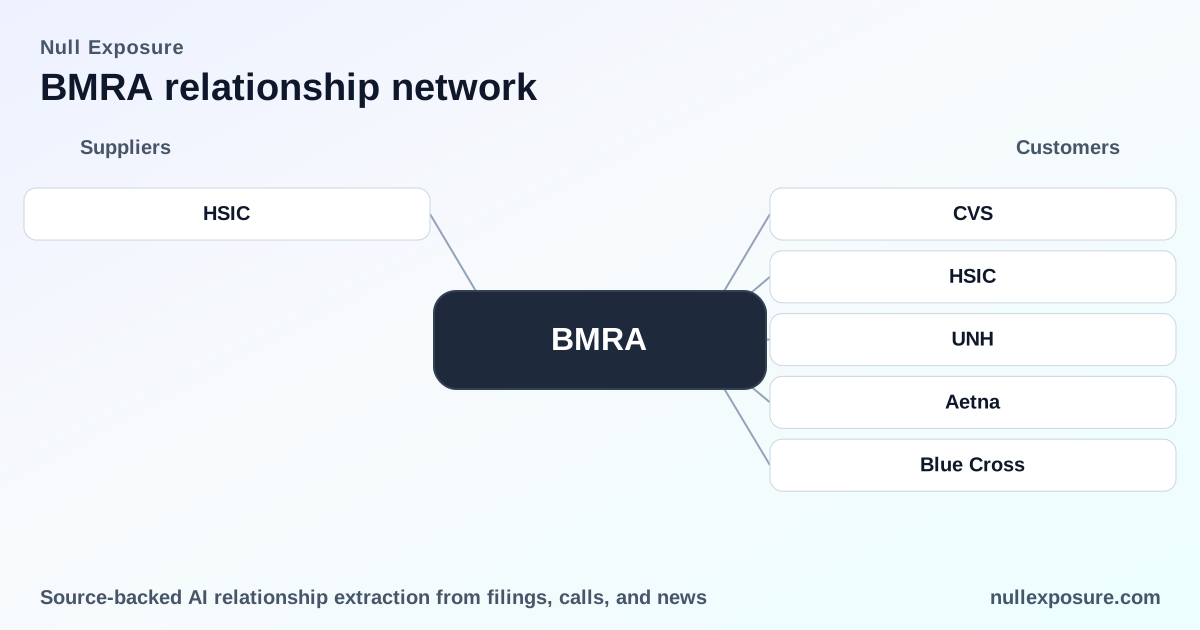
Biomerica (BMRA): Supplier relationships and what Henry Schein means for commercialization
Biomerica Inc. operates as a diagnostics company that develops and manufactures proprietary tests for metabolic and gastrointestinal conditions and food intolerances, and it monetizes through direct product sales, clinical partnerships and commercial distribution agreements that drive test adoption and reimbursement. Recent commercialization behavior shows Biomerica shifting from small-scale direct sales toward channel partnerships that accelerate market access for its inFoods® IBS product and support Medicare reimbursement capture. For investors and operators, the vendor footprint and commercialization partners are immediate signals about go-to-market scale and supplier concentration risk. If you want a concise supplier-risk dashboard and relationship intelligence, visit https://nullexposure.com/.
Why the Henry Schein agreement matters for revenue and scale
Biomerica’s core economics depend on selling diagnostic kits and securing payer coverage; distribution partnerships amplify both volume and billing reach. A marketing services agreement with Henry Schein gives Biomerica access to 400+ medical field and tele-sales representatives across primary care and gastroenterology, which materially changes the company’s sales posture from predominantly small-lot retail activity toward physician-facing channels that can generate higher reimbursement revenues. According to reporting, the arrangement specifically supports commercialization of the inFoods® IBS test in the U.S., and company communications link the effort to a $300 Medicare payment rate established for the test, which improves unit economics for clinical placements (see the first Quiver Quant release referenced below).
If you want ongoing monitoring of supplier dependencies as Biomerica scales, check https://nullexposure.com/ for continuous supplier intelligence.
Documented supplier mentions — every result in the record
The public record in the provided results contains six distinct mentions, all relating to Henry Schein, Inc. (HSIC). Each entry below is summarized in plain English with the original source noted.
- A Quiver Quant news release (March 9, 2026) reported that in late 2025 Biomerica entered a marketing services agreement with Henry Schein that provides access to more than 400 medical field sales and tele-sales representatives targeting primary care and gastroenterology practices nationwide; the release also linked the commercialization push to an established $300 Medicare payment rate for the inFoods® IBS test (https://www.quiverquant.com/news/Biomerica,+Inc.+Reports+Successful+Responder+Analysis+Results+for+inFoods%C2%AE+IBS+and+Establishes+$300+Medicare+Payment+Rate).
- A Bitget news item (March 9, 2026) repeated the marketing agreement disclosure, noting the same late‑2025 timing and the 400+ sales representatives as the commercialization vehicle for the inFoods® IBS test in the U.S. (https://www.bitget.com/asia/news/detail/12560605222414).
- A second Quiver Quant posting (March 9, 2026) covering a quarterly update noted that during the second quarter Biomerica entered into a marketing services agreement with Henry Schein to support U.S. commercialization of the inFoods® IBS test, describing the arrangement as part of the company’s commercialization strategy (https://www.quiverquant.com/news/Biomerica%2C+Inc.+Reports+4%25+Decline+in+Operating+Expenses+Year-to-Date+and+Strengthens+Balance+Sheet+with+14.7%25+Improvement+in+Working+Capital).
- StockTitan ran a report (March 9, 2026) that also described the Henry Schein marketing agreement and emphasized the expanded field and telesales reach for primary care and GI practices as the channel through which Biomerica plans to scale inFoods® adoption (https://www.stocktitan.net/news/BMRA/biomerica-reports-real-world-data-nearly-60-of-ibs-patients-achieved-sk8eyfybe101.html).
- Another Marketscreener note (March 9, 2026) captured the same marketing services deal and its role in the U.S. roll-out of inFoods®, appearing in coverage of Biomerica’s quarterly revenue commentary (https://www.marketscreener.com/news/medical-diagnostic-firm-biomerica-s-q1-revenue-falls-on-lower-retail-activity-ce7d5adfd88cff2d).
- A StockTitan financial update (March 9, 2026) reiterated that the second quarter activity included the Henry Schein marketing agreement to support commercialization of inFoods® in the United States (https://www.stocktitan.net/news/BMRA/biomerica-reports-second-quarter-fiscal-2026-financial-t3826d12ddxm.html).
Takeaway: All sourced mentions consistently identify Henry Schein as the marketing services partner for commercialization of the inFoods® IBS test and quantify the field/telesales reach, which is the primary supplier relationship disclosed in the provided record.
Supplier concentration and operating constraints — what to watch
Company-level disclosures show vendor concentration that is material to payable balances and raw-material sourcing. As of May 31, 2025, one vendor accounted for 20% of accounts payable, and for fiscal year ended May 31, 2025, purchases from one vendor represented approximately 12% of raw material purchases (down from ~16% in FY2024). These are company-level signals drawn from financial disclosures and should be treated as constraints on operating flexibility rather than tied to any specific supplier unless the company names the vendor.
- Concentration signal: 20% of accounts payable tied to a single vendor indicates a counterparty that could influence payment terms or delivery priority.
- Procurement trend: Raw material sourcing concentration at ~12% (FY2025) that declined versus FY2024 suggests limited progress toward broader supplier diversification; procurement risk remains meaningful for a manufacturing-centric company.
Strategic and operational implications for investors and operators
- Commercial leverage: The Henry Schein agreement shows Biomerica is prioritizing channel partnerships to accelerate clinical adoption and reimbursement capture; this can compress sales cycles and increase average revenue per placement when combined with payer coverage like a $300 Medicare payment.
- Supplier risk: The disclosed vendor concentration is a material operational risk that can affect cost of goods, lead times, and working capital. Management needs to demonstrate supplier diversification or contingency plans to mitigate that exposure.
- Capital and margin pressure: Financials show negative EBITDA and elevated operating losses, so successful commercialization and efficient supplier management are required to reach profitability; the Henry Schein channel reduces go-to-market friction but does not eliminate margin or execution risk.
If you are running diligence or vendor risk assessments, incorporate supplier-concentration metrics and channel-partner performance into the valuation model. For continuous supplier relationship tracking and prioritized signals, visit https://nullexposure.com/.
Practical due-diligence checklist for operators and procurement teams
- Validate the scope and exclusivity of the Henry Schein marketing services agreement, including KPIs tied to field rep activity and compensation terms.
- Confirm the billing and reimbursement workflow for inFoods® under the stated Medicare payment rate—who invoices, how claims are processed, and payer mix expectations.
- Reconcile the 20% accounts-payable concentration with current supplier agreements and confirm contingency plans for alternate sourcing of critical materials.
- Monitor unit economics under the channel agreement to ensure salesforce-driven placements retain acceptable gross margins after distribution and marketing fees.
Bottom line and next steps
Biomerica is executing a clear channel strategy via Henry Schein to scale clinical adoption of the inFoods® IBS test while still managing meaningful supplier concentration risk at the company level. The commercialization step increases scale potential and payer access, but investors and operators should require transparency on partner economics and supplier diversification before upgrading conviction. For deeper supplier-risk scoring and continuous monitoring, visit https://nullexposure.com/.