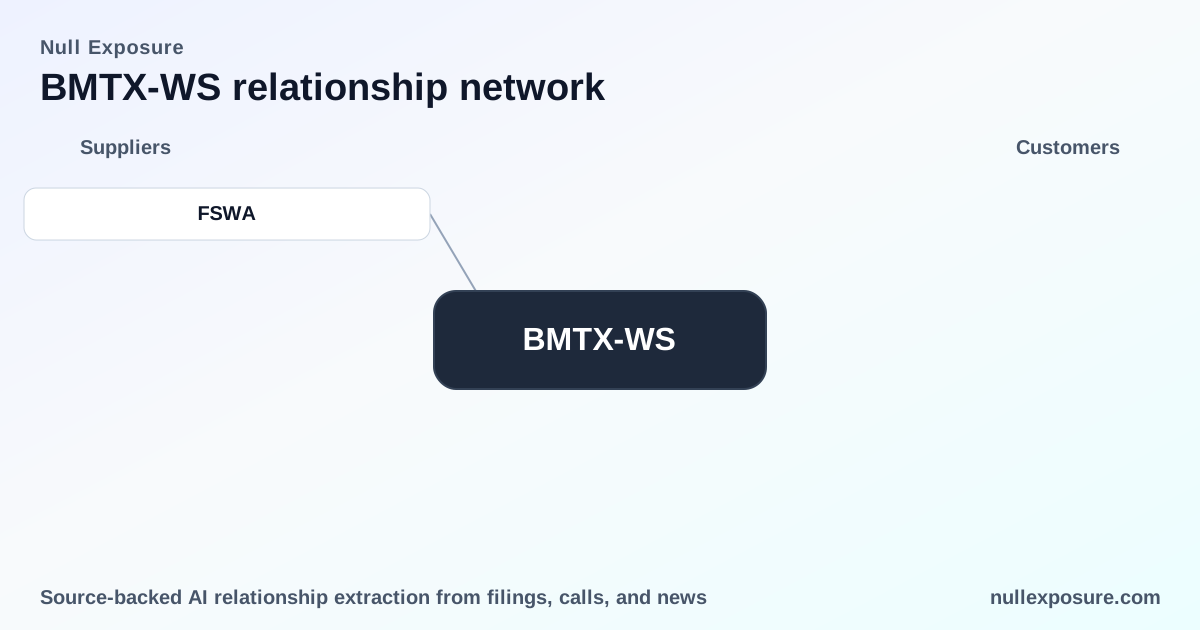
BMTX-WS: What the First Sound Bank outcome reveals about BM Technologies' supplier posture
BM Technologies operates as a digital banking platform and Banking-as-a-Service (BaaS) provider, monetizing through fee-based BaaS contracts, interchange and deposit spread, and partner-driven product rollouts that leverage chartered bank relationships. For investors and operators evaluating supplier and partner risk, the company’s value proposition is highly dependent on third‑party bank relationships and execution of consolidation strategies, which directly affect scale, regulatory posture, and revenue durability. Learn more about how we map supplier relationships at https://nullexposure.com/.
The deal that didn’t close: First Sound Bank in plain English
BM Technologies and Seattle-based First Sound Bank reached a mutual decision not to move forward with a previously announced merger, ending a planned combination between the BaaS platform and the community bank. According to a company announcement published on Yahoo Finance on March 9, 2026, the companies agreed to terminate the merger plan; an earlier notice carried via FinancialContent referenced the same outcome in the context of the FY2022 outreach. Both public notices confirm termination of the merger and that no consolidation occurred.
Source context: company release on Yahoo Finance (March 9, 2026) and FinancialContent notice referencing the FY2022 merger discussions.
Why this relationship matters to suppliers and operators
The aborted First Sound merger is not just a one-off headline; it is evidence of a specific operating constraint that shapes BM Technologies’ supplier relationships:
- Contracting posture: BM Technologies relies on negotiated bank partnerships rather than owning its bank charter; its commercial model prioritizes agreements with community banks to provide regulated deposit and payment services. This structure places contractual dependencies at the center of commercial performance.
- Concentration risk: Partnerships with a small number of chartered banks concentrate operational and regulatory exposure; losing a planned strategic consolidation increases the importance of resilient, replaceable supplier relationships.
- Criticality of partners: Partner banks are critical service providers—regulatory compliance, deposit funding, and payments infrastructure flow through those entities—so their willingness to merge or to remain as counterparty has a direct operational impact.
- Maturity signal: The termination of a merger negotiation signals either difficulty in integration economics or strategic realignment and underscores that BM Technologies’ path to scale relies on successful bank onboarding and execution rather than guaranteed roll‑ups.
These are company‑level operating signals rather than being tied to any single relationship unless a constraint explicitly names one.
Relationship-by-relationship review
First Sound Bank: BM Technologies and First Sound Bank mutually agreed not to proceed with their previously announced merger, leaving BM Technologies without the consolidation that could have simplified its partner bank footprint and regulatory posture. This decision was announced in a company press release on Yahoo Finance (March 9, 2026) and echoed in a FinancialContent notice tied to the FY2022 discussions.
How this shapes commercial and operational risk
BM Technologies’ business model depends on predictable, durable supplier relationships that provide regulated services. With the First Sound outcome, the company faces the following structural realities:
- Revenue sensitivity to partner continuity: Fee income tied to BaaS contracts requires operational continuity from partner banks; disruptions or failed consolidations increase the chance of contract renegotiation or client churn.
- Regulatory and compliance dependency: Because BM Technologies outsources the chartered banking function, any partner’s compliance issues or strategic reversal are immediately material.
- Execution premium required to scale: Investors should value BM Technologies on an execution multiple: the company must either broaden its partner base to reduce concentration or deliver repeatable, low-friction bank integrations to justify growth assumptions.
These points highlight where suppliers and counterparties hold leverage and where the company must demonstrate repeatable processes.
Learn more about mapping supplier leverage and partner concentration at https://nullexposure.com/.
Practical signals investors and operators should monitor
Focus monitoring on observable, high‑value events that change the risk profile:
- New partner bank announcements and whether they are exclusive or non‑exclusive.
- Any change in the number of active partner integrations or withdrawn bank relationships.
- Public statements about regulatory readiness, remediation programs, or expanded deposit insurance arrangements.
- Contractual terms disclosed in filings that indicate termination rights, exclusivity, or minimum revenue guarantees.
Track these indicators as they will determine whether BM Technologies reduces concentration risk or remains dependent on a small set of critical partners.
Bottom line and next steps for due diligence
The termination of the First Sound Bank merger is a meaningful operational signal: BM Technologies’ growth and risk profile are anchored to partner bank relationships, and failed consolidations elevate counterparty and execution risk. For investors evaluating exposure or operators negotiating supplier terms, the priority is to confirm the stability and replaceability of partner banks and to quantify contractual protections that mitigate concentration.
If you want systematic supplier intelligence and relationship mapping for investment or procurement decisions, explore our research hub at https://nullexposure.com/ for in‑depth supplier profiles and monitoring tools.
Investors and operators should treat partner bank stability as a first‑order variable when assessing BM Technologies’ prospects; continued transparency on partner count, contract terms, and integration velocity will be the clearest indicators of whether the company can convert platform potential into durable earnings.