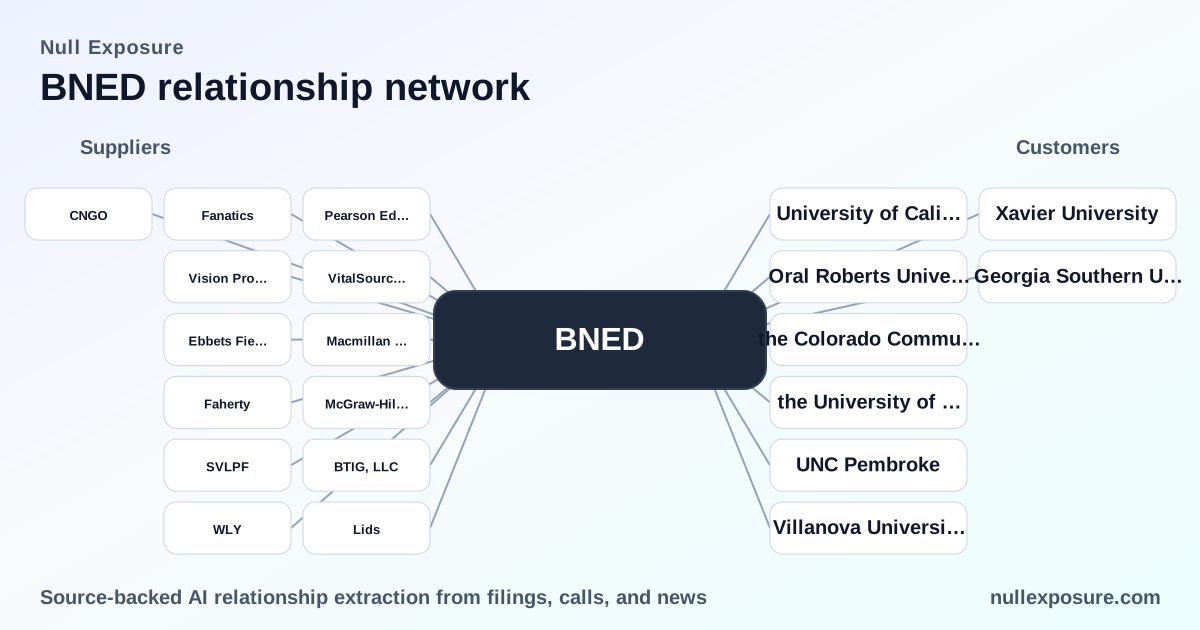
Barnes & Noble Education (BNED): supplier map, operating posture, and investor implications
Barnes & Noble Education operates campus and K–12 bookstores, combining physical retail sales of new and used textbooks, branded merchandise, and fulfillment of digital courseware through licensing and platform partners; the company monetizes via textbook and merchandise gross margin, digital content licensing fees, and auxiliary services tied to campus retail. Revenue concentration into course materials and large publisher relationships, plus expanding logo merchandise partnerships, define BNED’s supplier-driven economics. For a deeper supplier risk view, explore the full supplier coverage at https://nullexposure.com/.
Who supplies BNED’s products and services — a concise inventory investors need
Below are the counterparties the company discloses or that appear in recent reporting and press — each entry is a plain-English summary with source reference.
- Pearson Education — Listed among BNED’s primary new-textbook suppliers, Pearson is a core content source for course materials that feed the company’s core retail and course-adoption revenue. According to BNED’s FY2025 10‑K, major publishers including Pearson supply new textbooks (FY2025 filing).
- Macmillan Learning — Named with other large publishers as a principal supplier of new textbooks that sustain BNED’s campus inventory and adoption catalogs (BNED FY2025 10‑K).
- McGraw‑Hill Education — Cited as one of the company’s primary new-textbook vendors and therefore integral to inventory assortment for semester cycles (BNED FY2025 10‑K).
- John Wiley & Sons — Identified alongside other major publishers as a primary supplier of new textbooks in the FY2025 10‑K, making Wiley a material content partner for BNED’s college retail operations.
- Cengage Learning — Included in the group of core textbook suppliers; Cengage’s titles contribute to the product mix BNED must offer to remain adopted by instructors (BNED FY2025 10‑K).
- VitalSource Technologies, Inc. — BNED has an explicit contract with VitalSource to provide digitally formatted courseware from major publishers, establishing VitalSource as a critical digital-platform service provider for electronic course materials (BNED FY2025 10‑K).
- BTIG, LLC — BTIG underwrote ATM (at-the-market) equity sales for BNED that raised $78.5 million through an ATM sales agreement, representing a financing counterparty rather than a product supplier (reported on TradingView, March 2026).
- Fanatics — Partnered with BNED on logo general merchandise and e-commerce capabilities to expand branded assortment and digital retailing for campuses (TradingView coverage summarizing BNED disclosures, March 2026).
- Lids — Working alongside Fanatics, Lids supports logo merchandise assortment and e-commerce improvements for campus stores, enhancing BNED’s non-textbook revenue stream (TradingView report, March 2026).
- Vision Properties — Identified as the landlord in BNED’s headquarters move to Florham Park, representing a real‑estate supplier relationship relevant for corporate operations and occupancy (MorrisFocus, September 2025).
- Savills — Served as tenant representative in the headquarters relocation; Savills’ involvement is a professional services supplier that facilitated BNED’s lease/occupancy transition (MorrisFocus, September 2025).
- Ebbets Field — Named in a merchandising partnership to offer exclusive campus collections and elevate the assortment available to students, reflecting BNED’s branded merchandise strategy (press release covered in The Globe and Mail, FY2026).
- Faherty — Highlighted as a brand included in BNED’s elevated merchandising assortment to diversify non-textbook retail and improve customer value at campus stores (The Globe and Mail press release, FY2026).
What the supplier relationships reveal about BNED’s operating model
BNED runs a two-sided supplier posture: heavy dependence on a small set of large textbook publishers for core product flow, plus a growing network of branded merchandise and digital-platform partners to diversify revenue.
- Concentration is material. The company’s filings note that a related-party supplier accounted for approximately 45% of total purchases in FY2025, signaling significant supplier concentration that compresses negotiating leverage and elevates execution risk (company FY2025 10‑K).
- Contract mix is mixed maturity. BNED holds licensing arrangements for digital content with language that does not guarantee renewal on favourable terms, while it also maintains longer-term contractual commitments elsewhere (the 10‑K references licensing risk; separate filings note a Term Loan Credit Agreement signed June 7, 2022 with TopLids LendCo and Vital Fundco).
- Digital distribution is outsourced and critical. The contracted relationship with VitalSource for digitally formatted courseware places a critical operational dependency on a service provider for BNED’s digital channel (10‑K FY2025).
- Spend concentration extends to financing and real estate. Purchases from Vital Fundco totaled $454.5 million in Fiscal 2025 (constraint evidence), and rent payments to an identified landlord such as MBS Realty are small but recurring (~$0.7 million annually), reflecting both large procurement lines and steady occupancy costs (FY2025 evidence).
These characteristics translate into a supplier risk profile where publisher availability, licensing renewal, and key-platform uptime are core to revenue stability, while branded-merchandise partnerships and financing arrangements are immediate levers for growth and liquidity.
For a full supplier-risk scorecard and operational mapping, visit https://nullexposure.com/.
Risks, opportunities, and what investors should watch next
- Risk — supplier concentration and licensing renewal. With a small group of publishers supplying the majority of new-textbook inventory and licensing agreements carrying non‑guaranteed renewals, adoption changes or unfavorable license terms will exert immediate pressure on gross margins. BNED’s negative EPS and thin profitability metrics underscore sensitivity to supplier cost shifts (company financials FY2025).
- Opportunity — diversification through branded merchandise and digital platforms. Partnerships with Fanatics, Lids, Faherty and Ebbets Field expand higher-margin merchandise categories and digital retail capabilities, partially offsetting secular pressures in print textbooks (reported March 2026 and FY2026 press releases).
- Balance-sheet moves matter. The ATM agreement with BTIG that raised $78.5 million strengthens liquidity but dilutes shareholders; monitor future capital raises and leverage tied to term loans with named counterparties (TradingView coverage, March 2026; loan cited in 2022 agreement).
- Operational risk from third-party platforms. VitalSource’s role as the digital content channel means platform outages or contract disputes would directly reduce BNED’s ability to deliver digital courseware (10‑K FY2025).
Bottom line and recommended actions
Barnes & Noble Education’s supplier ecosystem is strategically concentrated around major textbook publishers and a small set of platform and merchandising partners; this creates both vulnerability and optionality. Investors should track publisher adoption trends, VitalSource contract health, and monetization traction from merchandise partnerships as the primary signals of revenue durability. For investors conducting counterparty due diligence or monitoring supplier risk, begin with BNED’s FY2025 10‑K and the recent marketplace notices summarized above — and get the supplier roadmap at https://nullexposure.com/ for ongoing monitoring.
Explore the supplier relationships and constraints in more depth at https://nullexposure.com/ to support investment or operational decisions.