Banzai International (BNZIW) — what supplier relationships reveal about operational posture and near-term risk
Banzai International monetizes by selling technology and communications services under a professional-services-heavy model: recurring software and analytics offerings are supported by a network of external advisors, legal counsel, auditors and specialized consultants, and the company finances working capital through short-term financing arrangements and placement agents. This supplier footprint creates a mix of cost structure rigidity and vendor concentration that is material to investors evaluating execution and liquidity risk. For a deeper vendor map and ongoing monitoring, visit the Null Exposure homepage: https://nullexposure.com/.
What the statutory filings actually disclose on suppliers
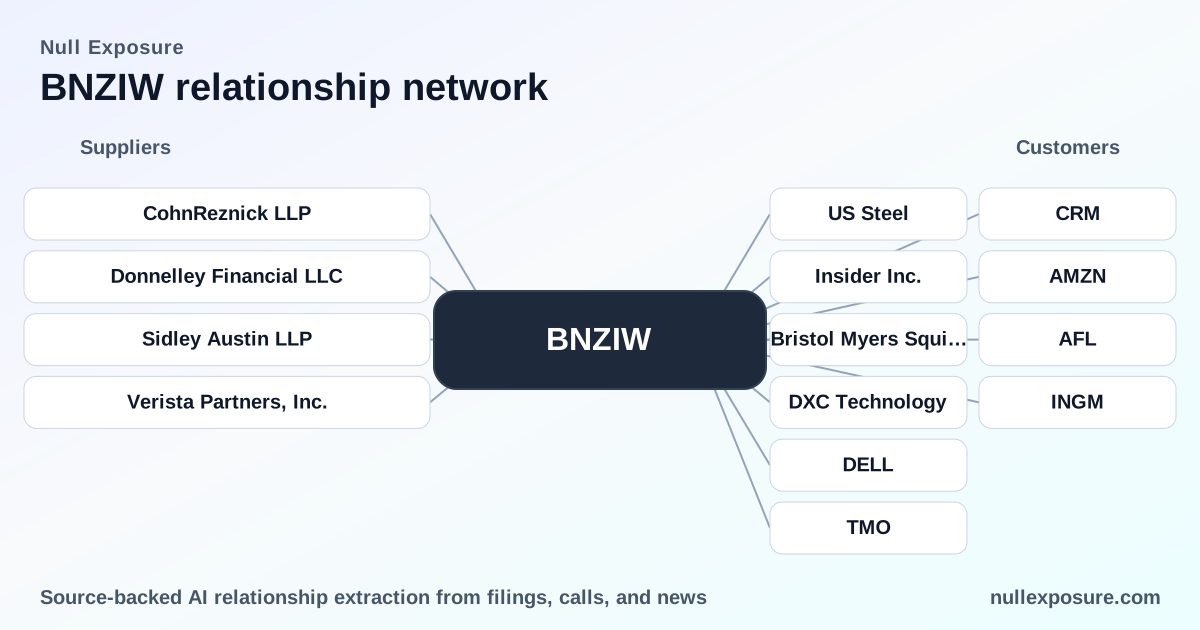
Banzai’s FY2024 Form 10‑K documents four supplier relationships with explicit contractual remediation or repayment language. Each relationship is short, factual and tied to prior unpaid or previously provided services.
-
CohnReznick LLP — The company entered into a Settlement Letter with CohnReznick to address an unpaid balance of $817,400 for services rendered, recorded in the FY2024 10‑K. This is a material settlement on the company’s payables ledger. (Source: FY2024 Form 10‑K, bnziw-2024-12-31.)
-
Donnelley Financial LLC — Banzai executed a Repayment Agreement with Donnelley Financial for previously provided services, indicating a structured payback plan rather than an immediate write-off. (Source: FY2024 Form 10‑K, bnziw-2024-12-31.)
-
Sidley Austin LLP — The company entered into a Repayment Agreement with Sidley Austin for previously provided legal services, signaling deferred legal expense obligations being managed via agreed terms. (Source: FY2024 Form 10‑K, bnziw-2024-12-31.)
-
Verista Partners, Inc. (aka Winterberry Group) — Banzai signed a Repayment Agreement with Verista for previously provided services, again documenting vendor claims converted to structured repayment obligations. (Source: FY2024 Form 10‑K, bnziw-2024-12-31.)
Why these supplier items matter to investors
The presence of multiple repayment and settlement agreements in a single fiscal filing is a clear operational signal: Banzai is managing vendor obligations through negotiated terms rather than cash settlement at invoice date. This has three immediate implications:
- Liquidity management: Repayment agreements and settlements free immediate cash but create medium-term liability schedules. Investors should treat these as contingent claims on operating cash flow until extinguished.
- Vendor trust and criticality: Legal, financial and advisory firms (Sidley, Donnelley, CohnReznick, Verista) are not commodity vendors; they provide critical, high-trust services. Structured repayments with these firms indicate that Banzai retains access to essential services while extending payment terms.
- Operational leverage: When professional-service suppliers are deferred, internal teams bear the burden of execution; execution risk rises if vendor support is curtailed or contract leverage shifts.
For ongoing monitoring of Banzai’s supplier posture, check Null Exposure: https://nullexposure.com/.
Company-level constraints that frame the supplier picture
Beyond individual suppliers, Banzai’s filings surface several company-level operating characteristics that clarify why repayment arrangements are present and what they mean for execution and financial resilience.
-
Long-term contracting posture: Banzai holds an operating lease for office space that expires in October 2027, indicating fixed occupancy costs through mid‑2027 and a commitment to current physical operations. This lease is a long-term contractual obligation that reduces short-term flexibility. (Company-level excerpt from FY2024 10‑K.)
-
Broad reliance on external service providers: Filings document engagements with a range of professional service providers — investor relations firms (MZHCI), placement agents (A.G.P./AGP, H.C. Wainwright), financial advisors (Roth Capital), and lenders (Agile Lending) — demonstrating a business model that outsources capital markets, advisory and IR functions. Those engagements include equity issuances, placement fees and fee-for-service arrangements that shape liquidity and governance dynamics. (Company-level excerpt from FY2024 10‑K.)
-
Mid-range capital commitments: Reported capital expenditure commitments of $11,629 thousand (presented in thousands in the filing) place Banzai in a $10m–$100m spend band for near-term financing needs, implying ongoing investment requirements that will compete with vendor repayments for cash. (Company-level excerpt from FY2024 10‑K.)
Collectively, these constraints portray a company that is contractually committed, reliant on professional services, and managing material capex and payables simultaneously.
Reading the vendor agreements as a credit lens
Treat the supplier set as a partial credit map:
-
Concentration and criticality: Legal and financial advisors are single points of failure for transactions, compliance and capital raises. Repayments to Sidley and Donnelley suggest the company prioritized continuity of advisory support while stretching cash. That practice is acceptable short-term but elevates execution risk if cost-cutting continues.
-
Maturity and posture: The use of repayment agreements is consistent with a defensive short-term posture rather than aggressive bilateral renegotiation or vendor replacements. Settlement with CohnReznick for a large balance indicates the company will use negotiated settlements to manage legacy payables.
-
Counterparty risk: Vendors with recourse (placement agents and lenders noted elsewhere in filings) give Banzai the ability to extend runway through equity and subordinated loans, but these arrangements dilute shareholders or add secured obligations that sit ahead of unsecured trade creditors.
Investment implications and recommended next steps
For investors and operators evaluating BNZIW supplier relationships, the actionable conclusions are:
- Monitor vendor repayment schedules and cash flow: The pattern of structured repayments is the single most important short-term credit signal. Require disclosure of amortization timelines and covenant triggers in ongoing reporting.
- Assess critical-vendor continuity: Prioritize tracking relationships with legal and financial advisors; any disruption would materially impact financing and compliance execution.
- Factor capex commitments into runway models: The ~$11.6m of commitments in the filing competes with vendor repayment obligations; build scenarios that stress operating cash by 6–12 months.
If you want an automated supplier-risk snapshot or ongoing alerts on BNZIW counterparties, start here: https://nullexposure.com/.
Bottom line
Banzai’s FY2024 supplier disclosures show a company managing obligations through structured repayment and settlement agreements while maintaining critical advisor relationships and mid-range capital commitments. That profile signals a deliberate liquidity-management strategy that preserves operational continuity at the expense of longer-term leverage or dilution pathways. Investors should treat the vendor portfolio as a real-time risk barometer: when legal and placement relationships are being paid on terms rather than in cash, runway and execution cadence are the deciding variables for valuation and credit decisions.
For continuous coverage of supplier risk and counterparty changes for Banzai and comparable issuers, visit Null Exposure: https://nullexposure.com/.