Boston Omaha (BOC) — Supplier relationship profile and operating constraints
Boston Omaha operates and monetizes as a regional outdoor advertising owner-operator: it owns and leases billboard inventory across the southeastern United States, sells advertising impressions to brands and agencies, funds growth through targeted acquisitions and structured financing, and supports operations with external banking and professional services. Revenue is driven by billboard leasing and incremental monetization of acquired assets; cash flow and growth are tightly linked to capital markets access and bank financing. For a concise supplier-risk perspective and portfolio diligence, see more at https://nullexposure.com/.
One explicit external partner shows a capital-markets touchpoint
Boston Omaha’s recorded supplier relationships are limited in the provided results, but the single explicit external partner is meaningful: the company engaged a major investment bank to place securities, reflecting active capital-marketing behavior and occasional reliance on underwriters for funding.
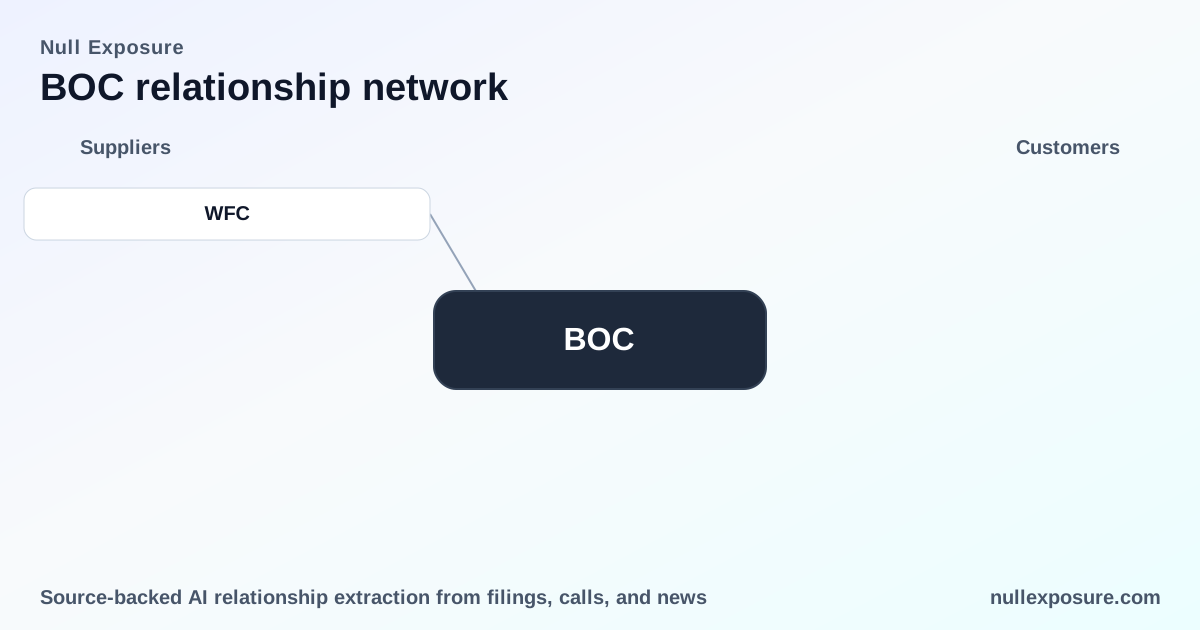
Wells Fargo Securities — Wells Fargo Securities served as the sole book runner for a Boston Omaha public offering, demonstrating the company’s willingness to access public markets via underwritten offerings when capital needs arise (reported March 9, 2026). Source: a StockTitan news post covering the offering (March 9, 2026).
Operating constraints that shape supplier posture and risk
The constraint evidence in filings and disclosures reveals a mixed contracting posture: material long-term debt coexists with short-term, annually renewed insurance/reinsurance arrangements and routine bank credit facilities. These characteristics determine supplier criticality, bargaining leverage, and refinancing exposure.
- Long-term borrowing: Company filings state that a Term Loan is payable in full on December 6, 2028 and that each term loan is due five years following the borrowing date, signaling multi-year commitments to lenders and medium-term refinancing timelines. This is a company-level capital-structure signal that drives supplier negotiation leverage with banks and servicers.
- Short-term renewals for risk transfer: Reinsurance availability and pricing are subject to prevailing market conditions and annual renewals, which creates annual variability in insurance cost and capacity and imposes cyclical procurement activity.
- Geographic concentration: Operations are conducted entirely within the U.S., so supplier exposure is domestic and not complicated by foreign-currency risk.
- Active buyer behavior and capex: The company acts as a buyer of asset-backed equipment; for example, a subsidiary (FIF St. George) acquired broadband construction equipment and related assets for $2.881 million in cash, demonstrating ongoing equipment and asset purchases that create procurement relationships.
- Third-party service providers and banking relationships: Filings identify a Credit Agreement for a subsidiary (Link) with First National Bank of Omaha and the use of third-party cybersecurity and managed service providers, indicating dependency on financial and professional services suppliers.
Collectively, these constraints point to an operating model where external financing and professional services are critical suppliers, with medium-term maturity on term debt and recurring short-term renewals for risk programs. Boston Omaha’s supplier mix is therefore a combination of capital providers, specialized service firms, and transactional vendors supporting acquisitions and operations.
Relationship-level evidence (all relationships from results)
Wells Fargo Securities — A StockTitan news post on March 9, 2026 reports that Wells Fargo Securities acted as the sole book runner for Boston Omaha’s public offering, underscoring the company’s access to bulge-bracket underwriting for equity issuance when capital is required. Source: StockTitan news coverage of the offering (March 9, 2026).
What the constraints imply for investors and operators
Boston Omaha’s supplier and financing footprint creates a specific risk-return profile for investors and a clear operational checklist for managers:
- Refinancing and liquidity risk are primary supplier-related risks. The presence of term loans due through 2028 and five-year term structures implies medium-term refinancing cadence; underwriters and banks are consequential counterparties when liquidity needs occur. Company filings explicitly note term loan maturities in the 2028 window.
- Annual renewals of reinsurance create earnings volatility. Because reinsurance capacity and cost renew annually, procurement teams and CFOs must plan for variability in insurance spend that can affect margins in any given year.
- Domestic concentration simplifies geopolitical risk but concentrates supplier exposure to U.S. capital markets and insurance cycles. The company operates entirely in the U.S., so macroeconomic shifts in domestic interest rates, insurance markets, and advertising demand will directly impact supplier costs and availability.
- Subsidiary-level credit lines and borrowings are material. As of December 31, 2024, Link had borrowed $30 million under a term loan and there was approximately $3.4 million outstanding under the BOB Credit Agreement, signaling mid-range spend bands and active use of bank credit at subsidiary level; these are direct supplier-flows to financial institutions and affect consolidated leverage and covenant profiles.
- Compliance and covenant health matter operationally. Filings state that the company was in compliance with its covenants as of December 31, 2024, which reduces near-term supplier-trigger risk, but covenant maintenance remains a core operational task.
For operators, prioritize maintaining diversified bank relationships and locking in reinsurance capacity early in renewal cycles. For investors, monitor leverage metrics, covenant language, and timing of any anticipated capital raises; underwriters like Wells Fargo show the company’s route to public financing but do not replace bank-level liquidity needs.
Explore deeper supplier intelligence and covenant monitoring at https://nullexposure.com/ to track these dynamics over time.
Tactical takeaways and recommended next steps
- Key strength: Access to institutional underwriters supports equity-capital options and reduces sole dependence on bank term financing for large capital needs. Evidence: Wells Fargo acting as sole book runner for a public offering (March 2026).
- Key risk: Concentration in U.S. markets and reliance on annual reinsurance renewals create idiosyncratic supplier-cycle risk that can pressure margins in downside scenarios.
- Immediate actions for investors: Review upcoming debt maturities, covenant thresholds, and reinsurance renewal calendars; validate subsidiary credit usage (Link and BOB exposures shown in filings) as these influence consolidated liquidity.
- Immediate actions for operators: Strengthen multi-year financing commitments where possible, stagger reinsurance renewals, and institutionalize supplier contingency plans for underwriting and bank facilities.
For detailed supplier mapping and covenant monitoring tools tailored to investment workflows, visit https://nullexposure.com/. For portfolio teams evaluating supplier concentration and capital-market dependencies, Boston Omaha exemplifies a small-cap operator with active financing behavior, medium-term debt horizons, and recurring short-term insurance relationships.
Concluding: Boston Omaha’s supplier profile is capital-market centric and bank-dependent, with reinsurance renewal cycles adding an annual dimension of procurement risk. Investors should track covenant compliance, subsidiary borrowings, and the timing of any future public offerings or bank refinancings as the primary drivers of supplier risk and operating flexibility.