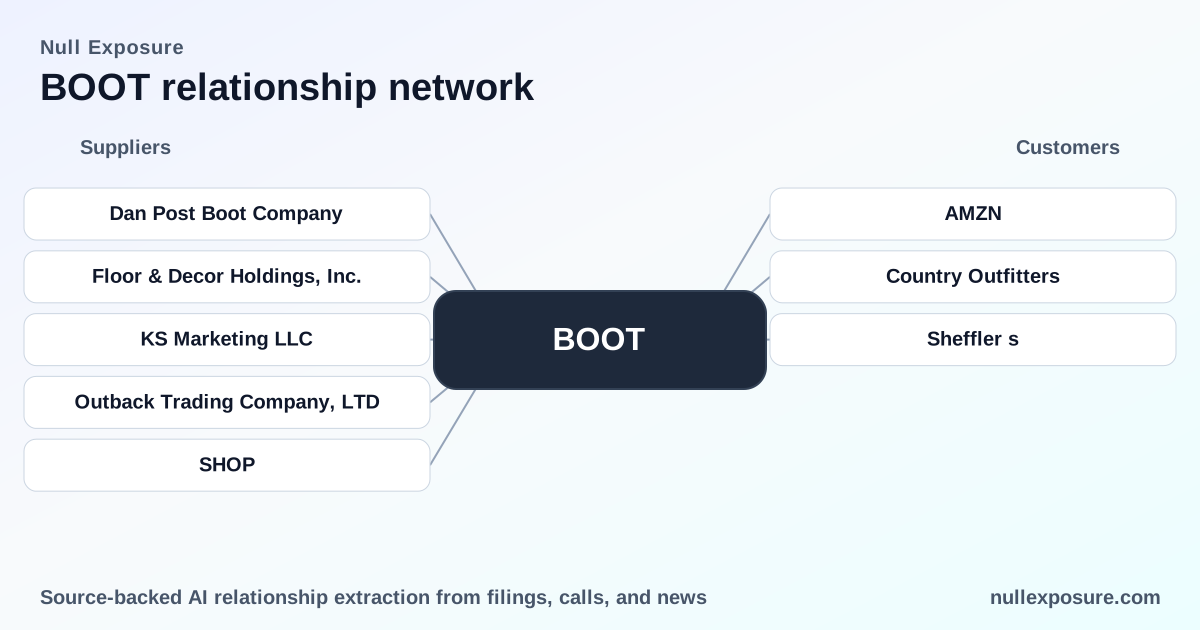
Boot Barn Holdings (BOOT): supplier relationships you need to underwrite
Boot Barn is a specialty apparel and footwear retailer that monetizes through retail sales of exclusive-brand and third‑party merchandise across a national store footprint and direct-to-consumer channels; the company sources inventory globally, sells via both brick-and-mortar and Shopify-powered sites, and generates margin from branded product mix and scale. Investors should underwrite exposure to supplier concentration, spot contracting practices, and offshore manufacturing when evaluating supplier risk for BOOT. For a deeper look at supplier linkages and constraints, visit https://nullexposure.com/.
What the supplier list tells investors about the operating model
Boot Barn purchases merchandise on a purchase‑order basis from several hundred suppliers worldwide and does not maintain long‑term written supply agreements. This contracting posture establishes a spot-market supplier relationship that reduces long-term supplier lock‑in but increases short-term supply and pricing sensitivity. The 10‑K for fiscal 2025 identifies that the company sources both domestic and international merchandise (including Mexico and China) and that the top three suppliers together represented approximately 25% of consolidated sales in FY2025, a material concentration that drives procurement leverage but also single‑point risk (FY2025 10‑K). For further company-level context, see https://nullexposure.com/.
Vendor snapshots — the relationships called out in Boot Barn’s filings and coverage
Dan Post Boot Company
Boot Barn purchased substantial quantities of merchandise from Dan Post Boot Company, totaling part of an aggregate of roughly $38.0 million in merchandise purchases in fiscal 2025 (compared with $32.8 million in FY2024 and $45.0 million in FY2023). According to Boot Barn’s FY2025 Form 10‑K, these purchases are recorded as part of the company’s core third‑party and exclusive-brand sourcing (10‑K, FY2025).
KS Marketing LLC
KS Marketing LLC is listed among suppliers from which Boot Barn purchased merchandise included in the same aggregate purchase figure cited for FY2025 (about $38.0 million of purchases in FY2025). The FY2025 10‑K lists KS Marketing LLC in the company’s aggregated supplier purchase disclosure, indicating recurring commercial buying activity across reporting periods (10‑K, FY2025).
Outback Trading Company, LTD
Outback Trading Company, LTD is another named supplier included in Boot Barn’s aggregate purchasing disclosure—part of the roughly $38.0 million in FY2025 purchases—signaling a commercially significant, recurring sourcing relationship for product inventory (10‑K, FY2025).
Floor & Decor Holdings, Inc.
Boot Barn discloses a capital expenditures relationship with Floor & Decor Holdings, Inc., characterized in the filing as capital expenditures with Floor & Decor, indicating a vendor or service counterparty role outside of direct merchandise procurement (FY2025 10‑K). The mention is specific to CapEx activity rather than core merchandise purchases (10‑K, FY2025).
Shopify (SHOP)
Boot Barn’s e‑commerce storefronts are built on Shopify, allowing rapid deployment and limited CapEx to support direct-to-consumer initiatives; this was reported in March 2026 media coverage and cited on an earnings‑call transcript highlighting Shopify as the platform that reduces development lift (news reports and Q3 FY2026 earnings call transcript, March 2026). Coverage in Bitget and an InsiderMonkey transcript referenced company commentary that Shopify underpins the company’s digital channel scalability (news, March 9, 2026).
What the constraints imply for procurement and counterparty risk
Boot Barn’s supplier constraints show a spot contracting model, global sourcing footprint, material supplier concentration, and an offshore manufacturing base for exclusive brands. These are company-level signals derived directly from the FY2025 filing:
- Contracting posture — spot / purchase order basis. The company states it "does not have long‑term written agreements with our suppliers" and operates off purchase orders, which creates price and availability exposure during supply shocks (FY2025 10‑K).
- Global sourcing and manufacturing. Boot Barn purchases inventory from several hundred suppliers worldwide and notes that the majority of exclusive-brand products are manufactured in countries such as Mexico and China, indicating exposure to foreign‑manufacturing risk and currency or logistics volatility (FY2025 10‑K).
- Concentration and materiality. The top three suppliers accounted for approximately 25% of consolidated sales in FY2025, a material concentration that affords procurement leverage but concentrates operational risk in supplier performance (FY2025 10‑K).
- Spend and scale signal. While the filing highlights large company spend and leasing commitments (total lease expense $129.0 million in FY2025), it also frames supplier spend as meaningfully large relative to net sales growth, consistent with a higher spend band profile (FY2025 10‑K).
These constraints translate into an operating model that is responsive and capital‑light on IT (Shopify), inventory‑intensive and externally manufactured, and dependent on a small number of high‑impact suppliers.
Risk and opportunity implications for investors and operators
- Supply disruption vulnerability is elevated. The combination of offshore manufacturing and spot purchase‑order contracting means Boot Barn can be price‑flexible but has limited guaranteed supply during shortages; this escalates the importance of multi‑sourcing and inventory buffers.
- Concentration creates negotiating leverage and downside risk. Top‑three supplier concentration of ~25% of sales provides scale benefits but concentrates counterparty failure risk; investors should model scenarios where one major supplier materially underperforms.
- Digital channel strategy reduces CapEx but increases platform dependency. Shopify enables rapid DTC scalability and limits CapEx spend, but it also represents a strategic third‑party dependency for customer experience and sales continuity (news coverage and earnings commentary, March 2026).
- Operational levers available to management. Management can re-balance supplier mix, increase nearshore manufacturing, or formalize longer‑term agreements with strategic suppliers to reduce volatility while accepting higher fixed commitments.
For a full commercial profile and third‑party mapping, explore the supplier intelligence at https://nullexposure.com/.
Final take: what underwriters and portfolio managers should do next
Boot Barn’s supplier set reflects a retailer with high operational scale, material supplier concentration, and a deliberate tradeoff between spot flexibility and supplier dependence. Underwrite scenarios that stress offshore manufacturing disruptions, price inflation on key SKUs, and platform outages affecting digital sales. Operational diligence should prioritize supply continuity plans, supplier audit records, and contract renegotiation potential for the top suppliers identified in the 10‑K.
If you want structured, investible supplier intelligence and the original citations from Boot Barn’s FY2025 filing and the March 2026 media coverage, review the full resource hub at https://nullexposure.com/. For a tailored supplier‑risk memo on BOOT for investment committees or procurement teams, request a focused briefing via https://nullexposure.com/.