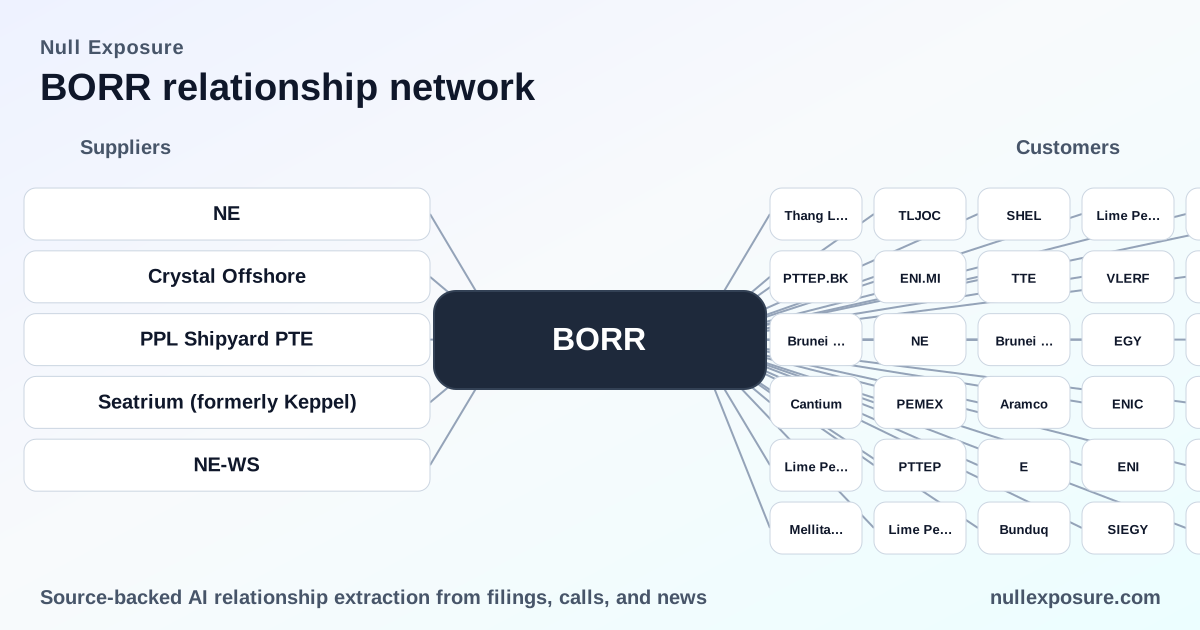
Borr Drilling: fleet growth through acquisitions and supplier execution — what investors should price in
Borr Drilling is an asset-heavy offshore drilling contractor that monetizes primarily by owning and contracting jack‑up and other offshore rigs to oil and gas operators on day‑rate and multi‑year contracts, supplemented by opportunistic asset trades. Revenue derives from rig utilization and dayrates; cash flow and valuation are driven by fleet scale, contract backlog and capital deployment (acquisitions, yard works and upgrades). For a consolidated view of Borr’s supplier signals and fleet strategy, visit https://nullexposure.com/.
The Jan‑2026 Noble acquisition in plain language
Borr completed the purchase of five premium jack‑up rigs from Noble Corporation for a total purchase price of $360 million, a transaction announced and closed in January 2026. This is a strategic fleet expansion intended to increase utilization potential and contract coverage; public filings and press releases confirm the deal closed in late January 2026 (PR Newswire/Reuters coverage, Jan 28, 2026). The acquisition is accretive to fleet scale but also raises immediate questions about leverage and free cash flow given the size of the outlay relative to Borr’s balance sheet and recent leverage commentary in sector analysis (Sahm Capital, Feb–Mar 2026).
Suppliers, yards and repair partners that matter right now
Operational performance for a drilling contractor is as much about suppliers and yards as it is about contracts. Two supplier/yard relationships show up in recent reporting:
- Crystal Offshore carried out fabrication, repair and upgrade work on at least one Borr rig at its Abu Dhabi facility during Sept–Oct 2024, indicating Borr uses regional yards for mid‑life refurbishments and rapid turnaround scopes (Offshore‑Energy, March 2026 recap).
- PPL Shipyard PTE (Singapore) is cited as the original builder for one of Borr’s rigs referenced in recent reporting, underscoring reliance on Asian shipyards for construction and major structural work (Offshore‑Energy, March 2026 recap).
Both relationships underscore that Borr’s operational continuity depends on yard availability and execution quality across Abu Dhabi and Singapore hubs; yard performance feeds directly into time‑on‑hire and revenue.
For a quick company overview and comparable supplier intelligence, browse https://nullexposure.com/ in‑depth pages.
How the Noble deal shifts the operating and contracting posture
Borr’s acquisition of five premium jack‑ups is a classic scale move: increase the number of revenue‑earning assets to capture rising dayrates in the jack‑up market. Public coverage (Reuters/PR Newswire and industry outlets, Jan 2026) and investor notes (Simply Wall St and Sahm Capital, Feb–Mar 2026) indicate the fleet increased materially — one note referenced fleet count moving to 29 rigs following the deal — and that management positions the purchase as backlog support.
Investors must price two simultaneous effects:
- Positive: greater asset base to convert higher spot or contract dayrates into EBITDA; recent trailing EBITDA is strong enough to show operational leverage (trailing EBITDA reported at roughly $469.8m with Revenue TTM ~$1.02bn).
- Negative: the $360m cash outlay increases near‑term capital intensity and elevates leverage questions; independent commentary flagged debt risk and margin pressure from fleet expansion (Sahm Capital, March 2026). Borr’s EV/EBITDA and forward multiples (EV/EBITDA ~7.14 per company overview) reflect market expectations around that trade‑off.
Seatrium (formerly Keppel) and delivery timing: why speed matters
Industry reporting shows Borr was in active discussions with Seatrium (formerly Keppel) to accelerate the delivery of rigs Vale and Var to August and November 2024 respectively, a clear sign that management prioritizes early deployment of newbuilds into the market when dayrates support it (Offshore‑Energy, March 2026). Faster deliveries boost near‑term utilization and revenue recognition; conversely, they require coordinated yard capacity and capex scheduling. Execution risk at Seatrium therefore has direct revenue implications for Borr.
Relationship-by-relationship digest
- Noble Corporation — Borr completed the acquisition of five premium jack‑up rigs from Noble for $360 million, closing in January 2026, a transaction documented in Noble’s PR release and widespread trade press coverage (PR Newswire / Reuters, Jan 28, 2026).
- Crystal Offshore — One of Borr’s rigs underwent comprehensive fabrication, repair and upgrade work at Crystal Offshore’s Abu Dhabi facility during Sept–Oct 2024, illustrating Borr’s use of regional yards for mid‑life work (Offshore‑Energy, March 2026).
- PPL Shipyard PTE — Reporting identifies PPL Shipyard PTE in Singapore as the construction yard for a rig described in recent operational coverage, showing continued dependence on Asian shipbuilding capacity for rig builds and major works (Offshore‑Energy, March 2026).
- Seatrium (formerly Keppel) — Borr engaged Seatrium to accelerate delivery dates for rigs Vale and Var to August and November 2024, indicating deliberate timing choices to maximize early utilization (Offshore‑Energy, March 2026).
What the supplier map says about Borr’s business model constraints
The available relationship signals imply the following company‑level characteristics:
- Contracting posture: asset‑owner/operator model — Borr invests capital to own rigs and capture dayrates rather than operating primarily as a pure operator; asset acquisition (Noble rigs) confirms that posture.
- Concentration and criticality: the company’s performance is concentrated on fleet utilization and the timely completion of yard works; a handful of yard partners (regional yards in Abu Dhabi, Singapore, and major builders like Seatrium) are critical to delivering utilization.
- Maturity and capital intensity: Borr is a capital‑intensive operator in a cyclical industry; recent acquisitions and accelerated newbuild deliveries position the company in a growth‑through‑capex phase, which increases sensitivity to debt markets and dayrate cycles.
- Disclosure posture: relationships are disclosed through filings and trade press coverage rather than contractual constraint text in the materials reviewed; analysts and industry commentators are focusing on balance‑sheet effects and execution risk.
These are company‑level signals; no supplier relationship in the source material included a discrete contractual constraint excerpt naming a supplier obligation.
For a consolidated look at supplier exposures and to benchmark Borr against peers, check https://nullexposure.com/ for deeper supplier intelligence.
Investment implications and next steps
- Key upside: continued strengthening of dayrates plus higher fleet scale can drive meaningful EBITDA expansion given Borr’s trailing profitability indicators (Operating Margin TTM ~25.9%, Profit Margin ~4.4%).
- Key risk: capital allocation into acquisitions and accelerated deliveries raises leverage and execution risk; monitor capex burn, debt metrics and yard performance closely.
- Actionable monitoring: track fleet utilization and backlog movement, follow filings and press releases for subsequent asset purchases or sales, and watch yard completion notices for the Vale/Var deliveries.
Visit https://nullexposure.com/ to monitor supplier relationships, yard dependency and event‑driven exposures for Borr and comparable drilling contractors.
Bold takeaways: the Noble transaction materially increases fleet scale and near‑term revenue potential, but also elevates leverage and execution risk tied to yard partners; investor thesis should balance upside from dayrates against capital‑intensity and supplier execution.