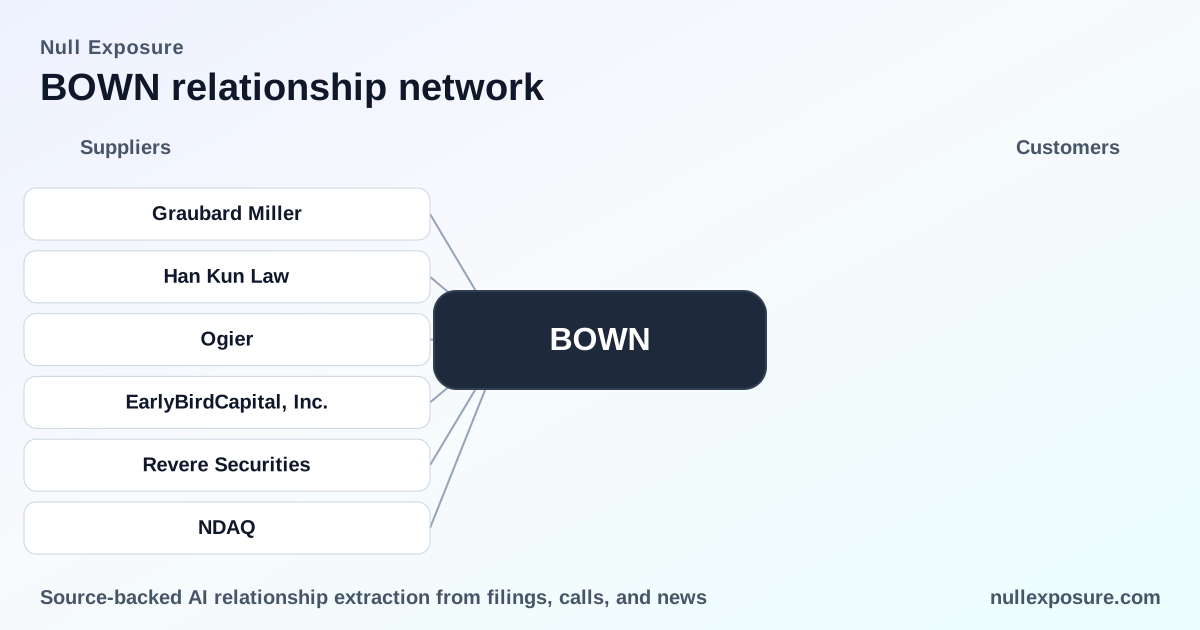
Bowen Acquisition Corp (BOWN): supplier map and what it means for investors
Bowen Acquisition Corp is a classic blank‑check vehicle: a NASDAQ‑listed SPAC formed to effect a business combination and monetize through a successful merger that converts trust capital and sponsor equity into an operating company with public equity. The company raised raised capital via an initial public offering and maintains a small public float under concentrated insider control; its cash runway and ability to close deals depend on relationships with legal advisers, placement agents and the exchange infrastructure that supported its IPO and listing. For investors and operators evaluating counterparty risk, these supplier relationships define the firm’s execution capacity and short‑term strategic risk.
Find detailed supplier coverage and relationship context at https://nullexposure.com/ for ongoing tracking and due diligence.
How Bowen operates and who gets paid when a deal closes
Bowen is a shell company with zero operating revenue and a stated purpose of completing one or more business combinations. The business model monetizes by (1) deploying IPO proceeds and sponsor equity to consummate an acquisition, and (2) converting the combined company into a public operating company where sponsors and public shareholders capture post‑merger value. Cash management and access to capital markets are therefore the primary business drivers — not product sales or recurring operating revenue. The firm’s economics are tied directly to the success of its merger process and the legal, financial and exchange relationships that enable that process.
The supplier roster — who does what (concise, sourced)
-
Graubard Miller serves as Bowen’s U.S. legal advisor, handling U.S. transactional and disclosure work associated with the announced merger activity. According to a CityBiz article announcing Bowen’s merger agreement, Graubard Miller is listed as U.S. counsel to BOWN (CityBiz, March 9, 2026): https://www.citybiz.co/article/510344/bowen-acquisition-corp-announces-entering-into-merger-agreement-with-shenzhen-qianzhi-biotech-company/.
-
Han Kun Law is acting as Bowen’s PRC legal advisor for cross‑border elements of the transaction, addressing PRC regulatory and transactional structuring. The CityBiz announcement identifies Han Kun Law in that role (CityBiz, March 9, 2026): https://www.citybiz.co/article/510344/bowen-acquisition-corp-announces-entering-into-merger-agreement-with-shenzhen-qianzhi-biotech-company/.
-
Ogier is engaged as Bowen’s Cayman Islands legal advisor, covering offshore vehicle structure and Cayman corporate governance linked to the target merger. CityBiz lists Ogier as Cayman counsel to BOWN (CityBiz, March 9, 2026): https://www.citybiz.co/article/510344/bowen-acquisition-corp-announces-entering-into-merger-agreement-with-shenzhen-qianzhi-biotech-company/.
-
EarlyBirdCapital, Inc. acted as book‑running manager for Bowen’s IPO, underwriting and placing the initial offering that funded the SPAC trust. Bowen publicly announced the closing of its $60 million IPO and named EarlyBirdCapital as book‑running manager in a GlobeNewswire press release (GlobeNewswire, July 17, 2023): https://www.globenewswire.com/news-release/2023/07/17/2705679/0/en/Bowen-Acquisition-Corp-Announces-Closing-of-60-000-000-Initial-Public-Offering.html.
-
Revere Securities served as co‑manager on Bowen’s IPO, supporting distribution and syndicate placement during the offering that created the public float (GlobeNewswire, July 17, 2023): https://www.globenewswire.com/news-release/2023/07/17/2705679/0/en/Bowen-Acquisition-Corp-Announces-Closing-of-60-000-000-Initial-Public-Offering.html.
-
Nasdaq Global Market is the listing venue that enabled Bowen’s units and subsequent equity trading; Bowen’s units commenced trading on the Nasdaq Global Market under the ticker BOWNU in July 2023, establishing the public market infrastructure that underpins liquidity (GlobeNewswire, July 17, 2023): https://www.globenewswire.com/news-release/2023/07/17/2705679/0/en/Bowen-Acquisition-Corp-Announces-Closing-of-60-000-000-Initial-Public-Offering.html.
What these relationships imply about contracting posture and execution risk
Bowen’s supplier map is tightly focused on capital markets and cross‑border legal capacity, which matches the operational reality of a SPAC. Key operating model signals:
-
Contracting posture: sponsor‑driven, transaction‑centric. The firm is organized to consummate a single or small number of deals; contracts with legal advisors and underwriters are oriented to discrete transaction milestones rather than ongoing vendor services.
-
Concentration and control. Bowen’s public metrics show a small free float and high insider ownership (approximately 69% insiders, 27.6% institutions), indicating concentrated decision‑making and potential speed in executing counterparty agreements, but also elevated governance risk for minority holders.
-
Criticality of a narrow supplier set. Legal advisors (U.S., PRC, Cayman) plus placement managers and the listing exchange are mission‑critical: without clean legal opinions, underwriting support, and listing compliance, a SPAC cannot complete its defining monetization event.
-
Early maturity and capital dependency. Bowen reports zero revenue and negative book value, and its capitalization (~$27.5 million market cap per latest public data) is limited relative to potential acquisition needs; the company’s survival and value creation are contingent on consummating a deal within SPAC timelines and potentially accessing additional capital.
These company‑level signals shape negotiating leverage: vendors that deliver certainty on cross‑border regulatory clearance and listing readiness command outsized influence during deal execution.
Explore supplier impact on deal execution and counterparty risk at https://nullexposure.com/.
Risk and operational considerations for investors and counterparties
-
Execution risk is concentrated in a handful of advisers. Delays or disputes with U.S., PRC or Cayman counsel could materially delay a merger timeline and trigger sponsor redemptions or equity dilution. The same is true for underwriting partners if follow‑on financing or PIPE placements are required.
-
Liquidity and market risk are non‑trivial. Small float, elevated beta and lack of operating cashflows make the stock sensitive to deal announcements and sentiment; the listing venue and bookrunners set the initial market tone.
-
Cross‑border regulatory exposure is front and center. With PRC counsel retained, investors should treat PRC regulatory clearance and structural robustness as deal determinatives, not secondary items.
Bottom line and next steps for diligence
Bowen is a narrowly focused SPAC whose near‑term value hinges on legal and capital‑markets suppliers delivering a clean, timely business combination. Investors should evaluate these named advisers not as peripheral vendors but as operational gatekeepers to value realization.
For ongoing monitoring of supplier ties, legal filings, and transaction updates, visit https://nullexposure.com/ — the hub for supplier‑centric diligence and early warning signals.