BPOPM (Popular Capital Trust II Pref): Supplier Exposure and Operational Risk Map for Investors
Popular Capital Trust II (BPOPM) monetizes by issuing preferred securities backed by a portfolio of income-generating financial assets and tapping the operational, processing and balance-sheet capabilities of its parent banking franchise. The trust’s cash yield depends on the stability of underlying banking operations and third‑party providers that perform core transaction processing and security functions. For investors evaluating counterparty risk, the critical variable is not the preferred coupon alone but the resilience of the service ecosystem that supports payment flows, custody and liquidity operations. Learn more about supplier risk and monitoring tools at https://nullexposure.com/.
Executive thesis: why supplier relationships matter for a preferred trust
BPOPM is a capital vehicle without large standalone operations; it relies on Popular’s operating platform and external vendors for execution. Supplier concentration and contractual duration directly influence the predictability of distributions because processing failures, cyber incidents or a sudden loss of exclusivity can increase operational costs or interrupt cash collection. Investors should treat supplier disclosures as second‑order but material risk drivers—especially where the filing documents both exclusivity commitments and long contract tenors.
All supplier relationships disclosed in the filings
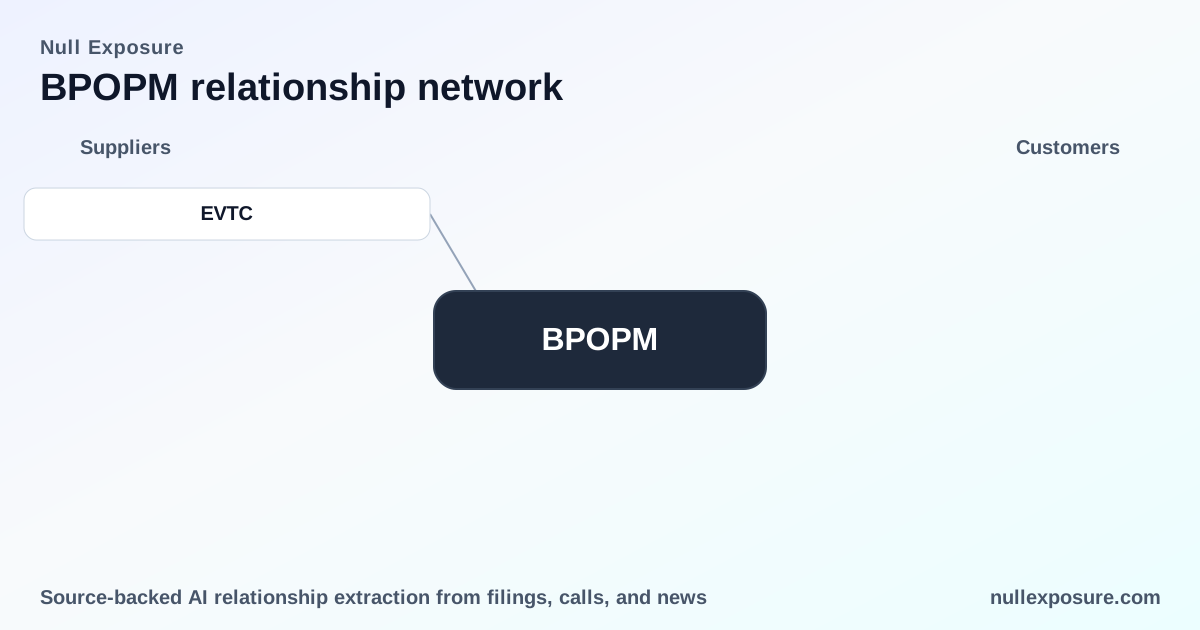
Evertec (EVTC) — Evertec is identified as the most important third‑party service provider for the issuer, responsible for identifying and remediating certain cybersecurity vulnerabilities and providing core financial transaction processing services. According to the FY2024 Form 10‑K (bpopm-2024-12-31), the company explicitly extends commercial agreements with Evertec and depends on it for remediation of cybersecurity issues.
Source: FY2024 Form 10‑K (bpopm-2024-12-31), referenced in the company’s supplier disclosure.
Why Evertec matters: the single most important supplier
The filing states Evertec is the most important third‑party provider and that Popular extended exclusivity and commercial agreements; the company relies on Evertec for core payment processing and cybersecurity remediation. The 10‑K highlights extended exclusivity for BPPR’s merchant acquiring business through 2035 and ATH network commitments through 2030, which signal long‑dated dependency on Evertec’s platform and roadmap. Source: FY2024 Form 10‑K (bpopm-2024-12-31).
This is not theoretical: the filing warns that failures in Evertec’s systems or security posture could produce loss of customer data, service disruption, reputational damage, and increased costs—outcomes that would directly stress the trust’s ability to collect and remit cash to preferred holders. Evertec is therefore a critical single point of failure in the operating chain.
Contracting posture, concentration and criticality — what the constraints reveal
The disclosures and extracted constraints collectively sketch a clear operating model:
- Long‑term contractual exposure where named. The agreement excerpts explicitly extend exclusivity commitments to 2035 (merchant acquiring) and 2030 (ATH Network) with Evertec, demonstrating long-dated operational lock‑in that increases dependency risk for an extended period.
- Framework arrangements govern termination and set‑offs. The master services agreement allows termination for convenience with 180 days’ notice, while repurchase agreements include set‑off rights under master repurchase terms—indicating standardized exit mechanics but meaningful switching friction.
- Short-term liquidity instruments coexist with long-term vendor lock‑in. Repurchase agreements are generally overnight, limiting funding duration risk, but they exist alongside longer vendor exclusivity, creating an operational mismatch between funding flexibility and service immobility.
- Global sourcing and funding breadth. The company manages secured funding from a global counterparty set and accepts varied collateral, signaling diversified liquidity sources that mitigate funding shocks but do not directly reduce vendor dependency.
- Material operational dependency on third parties. Multiple excerpts label third‑party service provision as capable of producing a material adverse effect, making supplier risk not cosmetic but material to business continuity.
- Active and service‑provider relationship stage. The relationship with Evertec is active and operational rather than exploratory, meaning remediation and contingency planning should already be in place.
These are company‑level signals except where the excerpts explicitly name Evertec; the long‑term extension is a relationship‑level fact, while repurchase terms and funding geography are broad operational constraints.
What investors should watch next
The combination of a critical provider and long exclusivity creates a narrow set of monitoring priorities:
- Cybersecurity remediation cadence and third‑party audit outcomes. Demand evidence of periodic penetration testing results or independent attestation of Evertec’s controls. The filing already notes reliance on third parties for penetration testing and forensic services.
- Contract renewal windows and exit economics. Monitor the 180‑day MSA termination clause and the 2030/2035 exclusivity milestones to anticipate negotiating leverage or the risk of a protracted migration if a replacement is needed.
- Contingency arrangements and service redundancy. Seek disclosure of fallback processors, disaster recovery drills, and contractual SLAs tied to financial remedies—the existence of such clauses materially reduces operational risk.
- Funding resilience vs. operational lock‑in. Even with global funding, a major processing outage could disrupt settlements; assess liquidity buffers and operational loss allowances.
For a quick assessment checklist and deeper monitoring tools visit https://nullexposure.com/.
Practical implications for portfolio managers and operators
- For yield investors: The preferred dividend stream is only as secure as the payments and custody rails that support it. Prioritize names where vendor concentration is low or contractual horizons are short.
- For operational risk officers: Audit vendor SLAs and incident response playbooks now. If the relationship with Evertec governs merchant acquiring through 2035, remediation plans should be operationalized and stress‑tested annually.
- For credit analysts: Model a stressed scenario where service disruption increases operating costs or delays collections for multiple quarters; quantify the coverage impact on the trust’s distribution capacity.
Action items in order of priority:
- Request specific attestations or SOC reports covering Evertec’s processing and security controls.
- Track contract termination windows and exclusivity end‑dates (2030/2035).
- Confirm existence of alternative processing paths or insurance that covers vendor outages.
Bottom line and next steps
BPOPM’s supplier risk is concentrated and material: Evertec is a single, long‑tenored critical provider for payments and cybersecurity remediation. While global funding posture and short‑term liquidity instruments reduce certain financial risks, they do not eliminate the operational concentration risk that could interrupt distributions. Investors should demand governance-grade disclosure on vendor controls, SLAs, and contingency planning.
For ongoing supplier intelligence, benchmarking and alerts about material vendor disclosures, visit https://nullexposure.com/ — and subscribe to get real‑time monitoring and scoring for counterparties that matter to your portfolio.