Brady Corporation (BRC) — supplier relationship intelligence for investors
Brady Corporation manufactures and sells Identification Solutions (IDS) and Workplace Security Products (WPS), monetizing through the sale of hardware, consumables and integrated security solutions to industrial and institutional customers worldwide. Its business converts durable product lines and recurring consumable demand into predictable revenue, with TTM sales of about $1.57 billion, EBITDA of $312 million and a market capitalization near $4.06 billion — a profile that supports a disciplined procurement posture and diversified supplier base. For portfolio managers and procurement leads evaluating Brady as a supplier partner or customer, the public record on supplier-related disclosures is limited but instructive. Visit https://nullexposure.com/ for deeper supplier-screening resources.
Quick read: why supplier relationships matter for Brady investors
Brady’s operating model depends on reliable access to raw materials, components and finished products that feed manufacturing and recurring consumable replenishment. A buyer-oriented procurement posture and a distributed supplier footprint reduce single-vendor risk, while margins and cash generation indicate the company can absorb price volatility or carry modest inventory buffers. Institutional ownership is high (about 86%), signaling sophisticated scrutiny of vendor risk in investor conversations.
What the public mentions actually show
Below are every supplier-related mention returned in the searched results. Each entry is summarized in plain English and linked to the reported source.
-
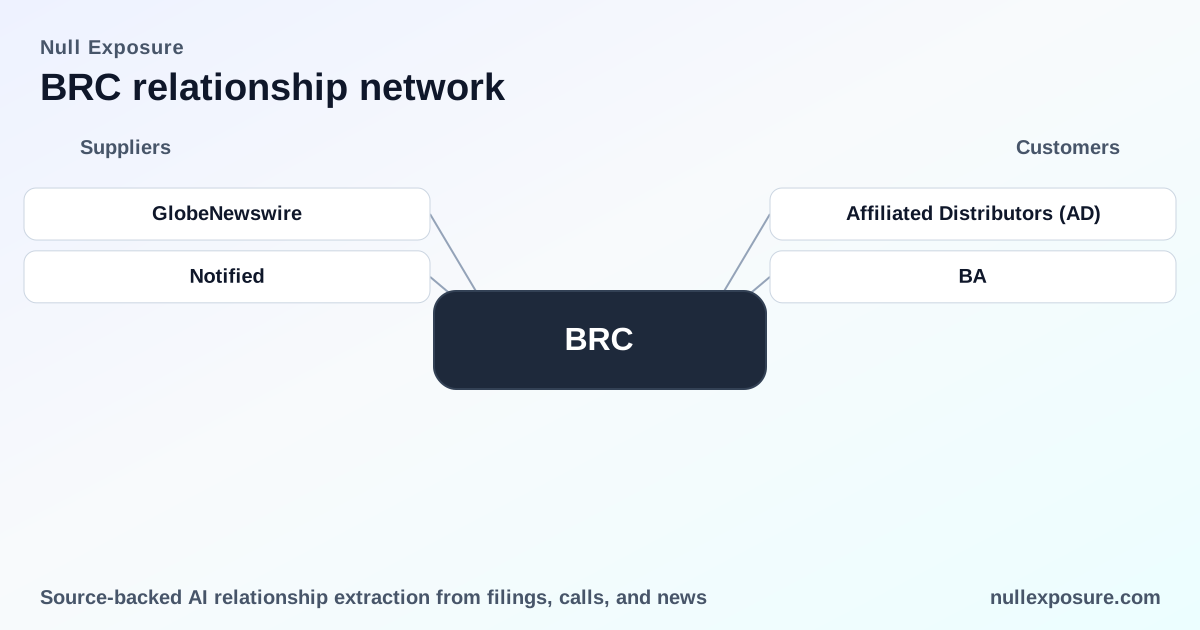
A QuiverQuant capture of a GlobeNewswire distribution announced Brady would release Fiscal 2026 first-quarter financial results on November 17, 2025; the item is an earnings release notice rather than a supplier contract disclosure. According to that GlobeNewswire release (distributed and archived via QuiverQuant), the company scheduled its Q1 FY2026 results and accompanying webcast.
Source: GlobeNewswire via QuiverQuant (FY2025 / FY2026 press release notices). -
A Notified-hosted notice recorded by QuiverQuant reiterated that the Q1 FY2026 earnings call would be webcast and could be accessed through Notified’s platform; that entry points investors to the webcast channel rather than vendor terms. The Notified posting confirms the company’s investor communication channel for the quarter.
Source: Notified capture of Brady investor webcast notice (FY2025/FY2026). -
A second Notified item captured by QuiverQuant referenced the company’s Fiscal 2025 fourth-quarter financial results announcement (September 4, 2025) and clarified the call would be available via Notified. This is another investor-relations distribution documenting where the company hosts earnings webcasts.
Source: Notified posting aggregated by QuiverQuant (FY2025 Q4 announcement). -
A GlobeNewswire distribution (captured by QuiverQuant) summarized the Fiscal 2025 Q4 results announcement in an AI-generated press-release digest; again, this is an earnings-distribution artifact and not a supplier agreement disclosure. The GlobeNewswire distribution gives dates and access details for the public release of quarterly results.
Source: GlobeNewswire summary (FY2025 Q4). -
A QuiverQuant entry referencing a GlobeNewswire notice captured the Fiscal 2026 second-quarter results announcement (February 19, 2026) and confirmed the Notified-hosted webcast access; this is an investor-communications item about scheduled results.
Source: Notified / GlobeNewswire capture via QuiverQuant (FY2026 Q2 notice).
Together these records are investor-relations communications (earnings call and webcast notices) rather than documents that list counterparty terms or supplier contracts; they do, however, indicate consistent use of centralized, third-party webcast services for public disclosures.
What the constraints signal about Brady’s supply posture
The constraint evidence available is a company-level signal stating that Brady purchases raw materials, components and finished products from many suppliers. That text supports several operating-model conclusions without tying them to any named counterparty:
- Contracting posture — buyer: Brady acts as a buyer purchasing inputs across categories; procurement is likely standardized and contractually oriented toward price, quality and continuity.
- Concentration — likely dispersed: “Many suppliers” suggests supplier concentration risk is moderate to low; this reduces exposure to supplier failure but increases procurement complexity.
- Criticality — operationally important: Inputs are critical to manufacturing and consumables supply; disruptions would affect revenue, but diversified sourcing mitigates single-supplier outages.
- Maturity — established procurement processes: A long-running product business with consistent quarterly disclosures implies mature sourcing practices and periodic renegotiation cadence.
These are company-level characteristics informed by the constraint text and Brady’s financial profile; the constraint excerpt does not name any single supplier.
How these dynamics translate to investor risk and opportunity
Operationally, Brady benefits from a mix of durable products and consumables that create recurring revenue and reduce demand cyclicality. Key financial signals support a stable buyer profile: 13% profit margin, operating margin of 16.2%, and forward P/E near 15.4 indicate a profitable, cash-generative business with valuation that accommodates steady capital allocation to procurement and working capital.
Risks for investors tied to supplier relationships include:
- Supply chain cost inflation, which could compress margins if procurement cannot fully pass costs to customers.
- Geographic concentration in manufacturing or suppliers (not explicitly stated in these records), which would require monitoring in filings and operating disclosures.
- Dependence on timely logistics for consumables replacement cycles; any sustained disruption would affect recurring revenue cadence.
For procurement and operations teams, the corporate posture implies focus on multi-source agreements, inventory buffers for critical components and active supplier performance management.
Explore structured supplier intelligence and relationship mapping at https://nullexposure.com/ — it’s a practical next step for underwriting counterparty and supply-chain exposure.
Practical takeaways for operators and investors
- Investor takeaway: Brady’s earnings-distribution record is routine and centralized; there is no public evidence in these entries of supplier concentration or single-vendor dependency. Financials support resilience to moderate supplier churn.
- Operator takeaway: Procurement should continue to emphasize diversification and contract standardization given the stated multi-supplier approach; margin stability suggests some flexibility to absorb short-term input cost moves.
Bottom line and recommended next steps
Brady operates as a buyer with a diversified supplier footprint that supports its manufacturing and consumable-led revenue base. The public records retrieved are investor-relations notices rather than vendor contracts, but the explicit company-level statement that it sources raw materials and finished goods from many suppliers is a favorable signal for counterparty risk: it points to an operating model that reduces single-supplier exposure while requiring disciplined procurement execution.
For investors or operators who need granular vendor mapping, supplier concentration analysis, or contract-level risk scoring, begin with the company’s filings and extend to supplier-level monitoring solutions. For targeted supplier intelligence and relationship screening tools, visit https://nullexposure.com/ to see how supplier visibility can be operationalized into investment and procurement decisions.