Supplier Spotlight: Dutch Bros (BROS) — Key Relationships and Operational Constraints
Dutch Bros operates and franchises a national chain of drive-through coffee shops and convenience-style outlets and monetizes through retail beverage and food sales, franchise royalties/fees, and supply-chain-driven margins on branded packaged goods; the company also extracts procurement economics through vendor rebates tied to systemwide purchase volumes. For investors analyzing supplier exposure, the interplay between long-term real estate commitments, concentrated sourcing for roasting and co‑packing, and financing relationships defines both operational leverage and downside risk. Learn more about how we map these relationships at https://nullexposure.com/.
How Dutch Bros sources, contracts, and captures margin
Dutch Bros runs a vertically coordinated retail model: company-operated shops sit alongside franchised locations, all supported by centrally sourced coffee blends, co-packing partners, and a third‑party distribution network. Revenue is retail-led, with scale benefits captured through centralized purchasing, branded product sales, and franchise economics. Key commercial mechanics include:
- Long-term real estate leases (15–20 year initial terms with renewal options) that create a fixed-cost base and lock in location economics across cycles.
- Systemwide vendor rebate arrangements where rebates are provided based on dollar purchases, giving Dutch Bros negotiating leverage as a large buyer.
- Centralized roasting and co-packing for espresso blends and packaged goods, concentrating operational risk in a small set of suppliers.
- Third-party logistics and cloud/IT service providers supporting distribution, payments, and corporate productivity functions — these vendors are operationally critical for national scale.
These characteristics produce a contracting posture that is strategically long-duration on real estate, buyer-dominant on procurement economics, but operationally concentrated with outsized criticality attached to a few roasting/co‑packing and logistics providers.
Who the company works with (and what that means for investors)
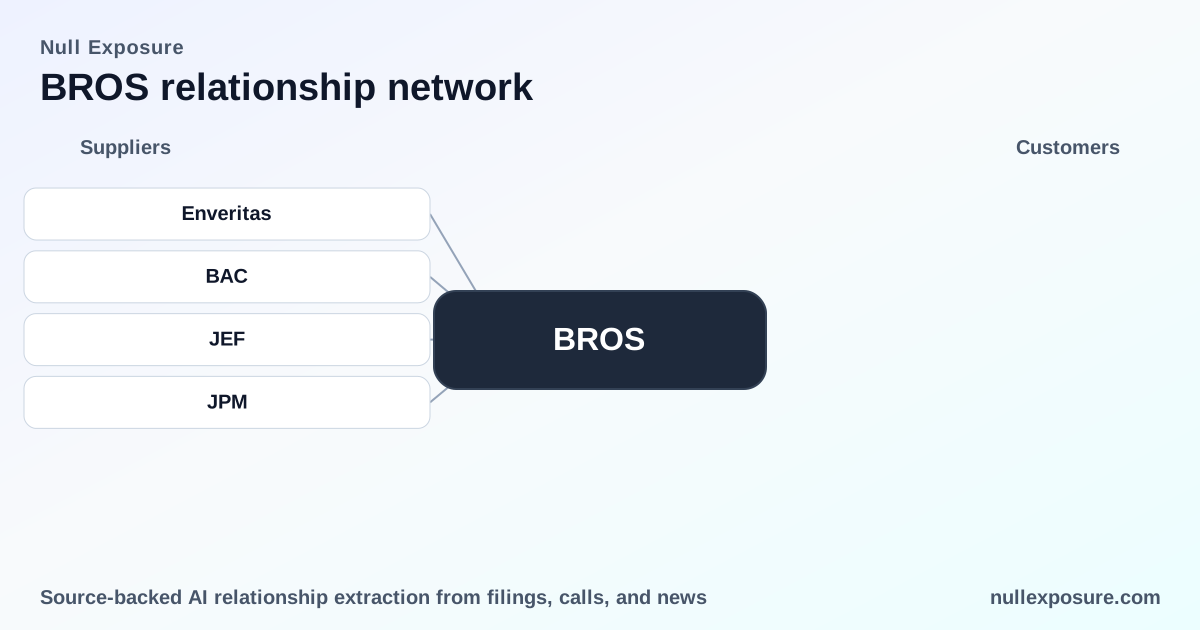
Dutch Bros’ public disclosures and market reports identify both sustainability partners and capital markets counterparties that shape brand resilience and financing flexibility. Below I cover each relationship referenced in recent filings and news.
Enveritas — sustainability verification partner
Dutch Bros partners with Enveritas for sustainability verifications and is a member of World Coffee Research, focusing on preserving coffee origin diversity and agricultural innovation; this relationship supports supply continuity and brand ESG positioning. A TradingView summary of Dutch Bros’ SEC 10‑K (reported March 9, 2026) documents the Enveritas partnership in FY2026.
BofA Securities — lead book‑running manager on equity capital actions
BofA Securities acted as a lead book‑running manager for a proposed public offering of Dutch Bros Class A common stock, reflecting an ongoing institutional banking relationship for capital markets execution. A StockTitan report referencing the FY2023 announcement lists BofA Securities among the lead managers.
Jefferies LLC — co‑manager on capital markets transactions
Jefferies LLC served alongside other firms as a lead book‑running manager for the same proposed Class A common offering, providing distribution and underwriting capacity for Dutch Bros’ equity issuance efforts. The StockTitan FY2023 notice records Jefferies’ role.
J.P. Morgan Securities LLC — debt/equity markets and hedging counterparty
J.P. Morgan Securities LLC was named as a lead manager for the proposed equity offering and also functions institutionally with Dutch Bros on derivatives and credit facilities; the FY2023 StockTitan item records their role as a book‑runner. Additionally, Dutch Bros disclosed an interest rate swap with JPMorgan Chase Bank, N.A., showing active balance‑sheet risk management.
Constraints shaping supplier risk and negotiating posture
The company‑level signals from public filings create a compact but meaningful risk profile that investors should weigh:
- Contracting posture — long-term leases. Real estate leases are typically 15–20 years with renewal options, embedding a long-duration fixed-cost structure that supports predictable site economics but raises exposure to occupancy/traffic downturns.
- Concentration — material dependence on a small number of suppliers. Dutch Bros explicitly cites reliance on a limited set of vendors for co‑packing, roasting, and consumer packaged goods, making these supplier relationships material to operations and throughput.
- Geographic sourcing risk — global coffee inputs. The company imports green coffee beans and notes tariff and trade risks that can increase input costs and construction expenses for new sites, creating margin pressure if commodity or trade conditions change.
- Role diversity — buyer, distributor, service provider, manufacturer signals. Dutch Bros acts principally as a large buyer (leveraging rebates), operates distribution through third parties, uses service providers for IT and logistics, and depends on manufacturers/co‑packers for finished goods.
- Maturity and sophistication — hedging and financial counterparties. The disclosed interest rate swap (notional ~$59.1 million as of Dec 31, 2025) indicates an active approach to interest‑rate risk and established relationships with major banks for treasury and capital functions.
These constraints together create a profile of high operational leverage to a small supplier set but sophisticated financial relationships that partially mitigate funding and rate risks.
What investors and operators should watch next
From a risk/reward standpoint, supply concentration and global commodity exposure are the primary operational vulnerabilities; conversely, vendor rebate economics and franchise growth are repeatable margin drivers. Specific signals to monitor:
- Supplier contract renewals or expansions with co‑packers and roasters, which will change concentration risk.
- Tariff developments affecting green coffee costs that can compress gross margins.
- Capital markets activity and underwriting relationships that determine dilution risk and financing cost (underwriters listed above).
- ESG verification progress with Enveritas and World Coffee Research as indicators of long‑term origin security and brand premium capture.
If you want a structured view of how these supplier relationships alter enterprise risk, get a deeper supplier analysis at https://nullexposure.com/.
Actionable takeaways for investment and operations teams
- Prioritize supplier diversification for roasting and co‑packing to reduce single‑point criticality; this is the clearest operational lever to protect margins.
- Stress test lease and traffic scenarios given the long-term lease structure; fixed occupancy commitments are a material operating lever.
- Monitor banking counterparties for capital markets readiness—lead managers such as BofA, J.P. Morgan and Jefferies influence the cost and execution of future equity/debt raises.
- Treat sustainability partnerships as strategic insurance: Enveritas and World Coffee Research membership reduce origin concentration risk and support premium positioning.
For further supplier intelligence and ongoing monitoring of these counterparties, visit https://nullexposure.com/ — we track how relationships translate into measurable operational risk and investor signals.
Dutch Bros’ model combines strong consumer demand and franchise leverage with concentrated supply relationships and long‑dated lease commitments; investors should value the growth optionality while discounting for supplier concentration and global input volatility.