BEST SPAC I Acquisition Corp. Rights (BSAAR): Counterparty map and investor implications
BEST SPAC I Acquisition Corp. Rights (BSAAR) are tradable rights detached from IPO units that give investors exposure to the SPAC’s future business-combination economics; the sponsor monetizes by selling units at IPO, placing $55 million into a Trust Account and using underwriters to distribute the offering, while investors and operators extract value through secondary-market trading of the rights or participation in a successful merger. Rights trade on the Nasdaq under the ticker BSAAR, and the company’s operating model centers on short-duration contractual relationships around the IPO, custody of trust assets, and a single-bookrunner underwriting structure. For a concise counterparty risk brief and next steps for supplier evaluation, see Null Exposure’s research hub: https://nullexposure.com/.
How BEST SPAC I runs its supplier network and where value concentrates
BEST SPAC I executes a classic SPAC operating model: raise capital via a unit IPO, hold proceeds in a trustee-controlled trust, then pursue a merger that converts those proceeds into operating enterprise value. Key characteristics for investors and procurement teams:
- Short contracting posture: The IPO included a 45-day over-allotment option that expired unexercised, signaling transactional, event-driven supplier terms rather than long multi-year service contracts.
- Concentrated, critical custody relationship: $55 million placed in a Trust Account establishes a single, high-dollar custody counterparty relationship that is operationally critical to the SPAC’s ability to close transactions and return funds if no business combination occurs.
- Single underwriter concentration: The offering listed a sole book-runner, concentrating distribution and underwriting economic exposure into one financial intermediary.
- Early-stage maturity: The company’s financial profile shows no operating revenue and limited public track record; counterparties are therefore carrying execution and operational risk rather than long performance histories.
These operating signals drive where diligence should focus: trustee controls, underwriting economics, custody mechanics, and technology/cyber dependencies. If you want modelled counterparty exposure and supplier scoring for BSAAR, start here: https://nullexposure.com/.
Counterparties and what each does for BSAAR
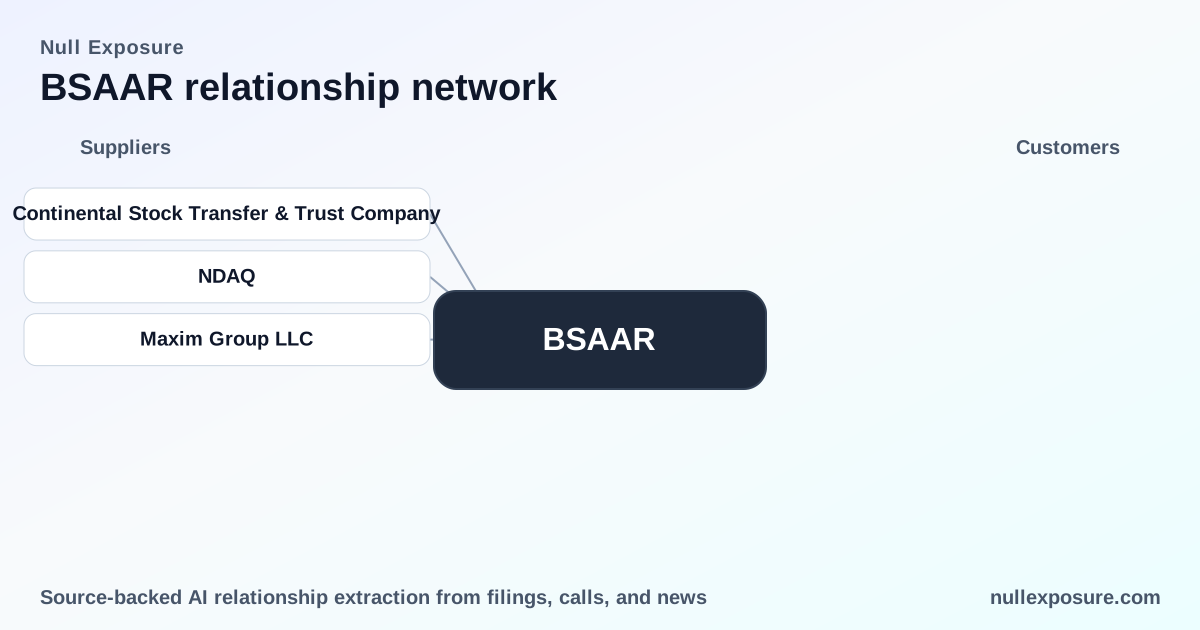
Continental Stock Transfer & Trust Company
Continental acts as the transfer agent and trustee for BEST SPAC I, handling unit separations and custody of the Trust Account that contains the IPO proceeds. According to the issuer’s March 9, 2026 press release on Yahoo Finance, holders must contact Continental to separate units into Class A shares and rights, and the Trust Account is administered with Continental as trustee. (Yahoo Finance, March 9, 2026).
The Nasdaq Capital Market (NDAQ)
The Nasdaq Capital Market is the listing venue designated to host trading of the separated securities; the Class A ordinary shares and rights will trade under BSAA and BSAAR, respectively. Nasdaq’s role establishes the marketplace, spreads, and continuous liquidity mechanisms for the rights, as disclosed in the March 9, 2026 company announcement carried on Yahoo Finance. (Yahoo Finance, March 9, 2026).
Nasdaq (reporting references)
Multiple market releases reiterate Nasdaq’s role: public filings and market coverage from StockTitan and Yahoo Finance repeat that the separated securities will trade on Nasdaq under the stated symbols, confirming market access and ticker assignments. This consistency across market notices anchors the listing and trading expectations for investors. (StockTitan and Yahoo Finance, March 9, 2026).
Maxim Group LLC
Maxim Group LLC acted as the sole book-running manager for the IPO, executing underwriting allocation, distribution and prospectus dissemination responsibilities. Company disclosures and offering materials referenced by press coverage indicate Maxim as the named syndicate contact for prospectus requests and underwriting coordination. (StockTitan and Yahoo Finance, March 9, 2026).
What the explicit constraints tell investors about operational risk
The public excerpts and constraint signals expose actionable operating-model traits for counterparty analysis:
- Contract length and posture: The IPO contained a 45-day over-allotment option — a short-term, event-driven contracting posture that reduces long-tail vendor commitments and emphasises transactional supplier performance.
- Spend concentration: Two spend bands surface as material signals: a mid-sized underwriting fee around $550,000 and a large custody/Trust Account amount of $55,000,000. These figures indicate low-frequency, high-dollar custody risk and modest underwriting expense exposure.
- Service-provider dependency: The filings explicitly place trust custody with a named trustee (Continental) and reference reliance on third-party digital technologies for operations, flagging both custodian and technology/service-provider criticality.
- Maturity and criticality: Lack of operating revenue and reliance on one-time IPO mechanics position the supplier network as essential for closing and liquidity rather than for ongoing operations.
These constraints are company-level signals that shape how investors should allocate diligence effort: prioritize custodian controls, reconciliation processes, and underwriting contract terms rather than long-tenor supplier performance metrics.
Risk implications and practical investor actions
Operational and counterparty risks are concentrated and identifiable. Custody mechanics and trustee controls are the single largest operational exposure because the Trust Account contains the SPAC’s cash runway and redemption obligations. Additionally, single underwriter concentration compresses distribution risk into one firm, which matters for secondary liquidity and market-making in the rights.
Practical next steps:
- Validate trustee controls and redemption mechanics in the trust agreement and request recent proof-of-assets and reconciliation cadence from Continental.
- Review underwriting engagement terms with Maxim Group LLC, including fee structure and stabilizing activities that influence short-term liquidity in BSAAR trading.
- Monitor Nasdaq filings and market notices for ticker activation, trading start dates, and any conditions that alter the separation mechanics.
If you need a tailored counterparty scorecard or direct supplier diligence templates for BSAAR counterparties, get started at Null Exposure: https://nullexposure.com/.
Recommendations for operators and procurement teams
- Treat the trustee relationship as a high-priority supplier: require evidence of segregation, qualified custodial controls, and audit rights. Custody is the non-replicable control point for the SPAC’s capital.
- Negotiate information rights around underwriting allocations and distribution support from Maxim to understand how market liquidity will be maintained when rights begin secondary trading.
- Insist on cyber and third-party operational attestations where the company depends on external digital platforms; the public record flags third-party technology reliance, which directly affects the integrity of shareholder records and transfers.
For bespoke research on how these counterparties position against industry standards, visit Null Exposure’s homepage: https://nullexposure.com/.
Conclusion — investors evaluating BSAAR should focus diligence on trustee custody controls, underwriting economics, and Nasdaq market mechanics. Those three elements determine whether the rights operate as a liquid, tradable instrument tied to a credible trust, or as an administrative liability in the event of execution or custody failures.