Monarch America (BTFL): a microcap hydroponics retailer with limited supplier visibility and noisy relationship signals
Monarch America, Inc. sells hydroponic lights and growing equipment through its The Big Tomato subsidiary in the Denver metro area and monetizes by direct product sales to hobbyist and commercial indoor growers. Revenues are small but real — roughly $4.3M trailing twelve months — while profitability is negative and the balance sheet is minimal, which makes supplier relationships and contract terms disproportionately important for near-term liquidity and operational continuity. If you evaluate small supplier exposures or vendor concentration for an underfollowed OTC company, this profile matters. Learn more at https://nullexposure.com/.
Snapshot: what the company is and how it makes money
Monarch America is an OTCBB microcap retailer/distributor headquartered in Westminster, Colorado. The operating model is straightforward: product sales of hydroponic lighting and equipment through a subsidiary to local and regional customers, with cash conversion tied closely to inventory turns at a single-market footprint. Financial highlights from available coverage:
- Revenue (TTM): $4.32M; Gross profit (TTM): $788k.
- EBITDA: -$1.55M; Profit margin: -55.5%; Diluted EPS (TTM): -$0.022.
- Market capitalization reported at ~$911k, with 113.9M shares outstanding and effectively zero institutional ownership recorded.
- Latest quarter in the coverage is dated 2015-09-30, which is a material data staleness issue for due diligence.
These numbers frame the commercial reality: Monarch is a small, single-market operator with negative operating leverage and meaningful margin pressure, so supplier terms (credit, minimums, lead times) are a material determinant of survival and growth.
What the relationship search returned — full list and plain-English takeaways
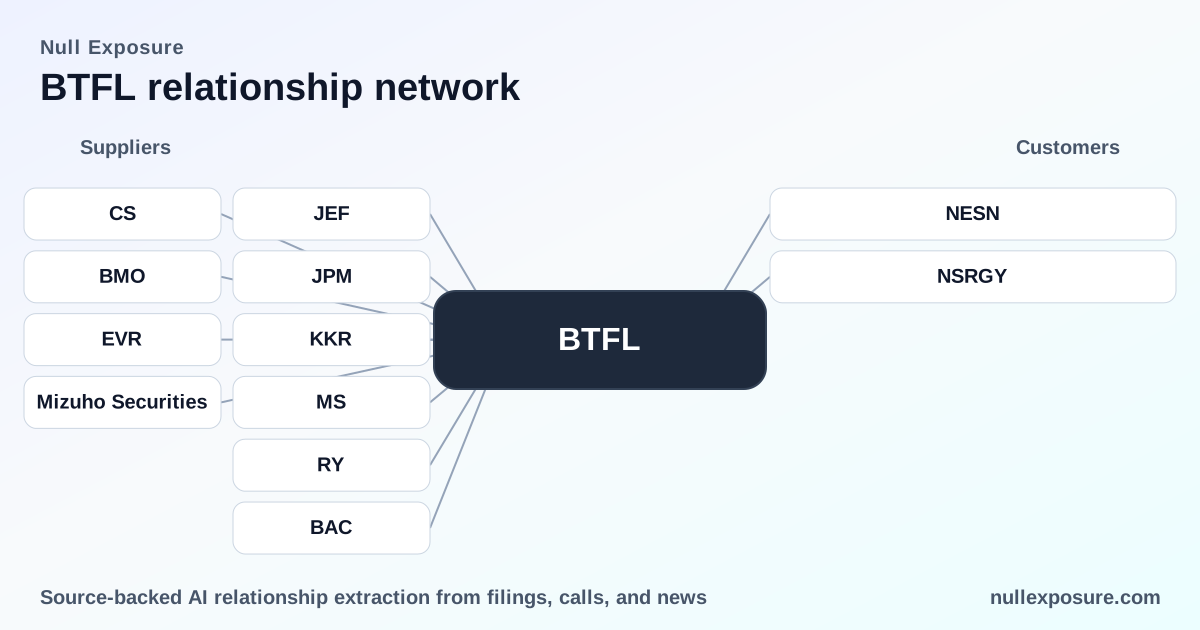
The supplier-scope relationship results returned a group of investment banks named as joint bookrunners on a separate company's IPO. These entries do not reflect typical supplier/manufacturer contracts for hydroponic equipment, but they are the explicit relationship hits returned by the coverage. Each item below is described in plain English with the cited source.
-
Jefferies (JEF): Jefferies is listed among the joint bookrunners on a Bountiful Company IPO filing referenced in Renaissance Capital's IPO news. Source: Renaissance Capital, March 9, 2026 — https://www.renaissancecapital.com/IPO-Center/News/80699/Wellness-products-supplier-The-Bountiful-Company-files-for-a-$100-million-I
-
J.P. Morgan (JPM): J.P. Morgan is also named as a joint bookrunner on that same IPO filing called out by Renaissance Capital. Source: Renaissance Capital, March 9, 2026 — https://www.renaissancecapital.com/IPO-Center/News/80699/Wellness-products-supplier-The-Bountiful-Company-files-for-a-$100-million-I
-
KKR (KKR): KKR appears in the joint bookrunner list in the Renaissance Capital article tied to the Bountiful Company deal. Source: Renaissance Capital, March 9, 2026 — https://www.renaissancecapital.com/IPO-Center/News/80699/Wellness-products-supplier-The-Bountiful-Company-files-for-a-$100-million-I
-
Morgan Stanley (MS): Morgan Stanley anchors the joint bookrunning syndicate noted in the same Renaissance Capital news item. Source: Renaissance Capital, March 9, 2026 — https://www.renaissancecapital.com/IPO-Center/News/80699/Wellness-products-supplier-The-Bountiful-Company-files-for-a-$100-million-I
-
RBC Capital Markets (RY): RBC Capital Markets is listed among the syndicate members on the Bountiful Company IPO referenced in the Renaissance Capital coverage. Source: Renaissance Capital, March 9, 2026 — https://www.renaissancecapital.com/IPO-Center/News/80699/Wellness-products-supplier-The-Bountiful-Company-files-for-a-$100-million-I
-
BofA Securities (BAC): BofA Securities is included in the joint bookrunner list reported by Renaissance Capital. Source: Renaissance Capital, March 9, 2026 — https://www.renaissancecapital.com/IPO-Center/News/80699/Wellness-products-supplier-The-Bountiful-Company-files-for-a-$100-million-I
-
Credit Suisse (CS): Credit Suisse is another member of the syndicate listed in the Renaissance Capital article. Source: Renaissance Capital, March 9, 2026 — https://www.renaissancecapital.com/IPO-Center/News/80699/Wellness-products-supplier-The-Bountiful-Company-files-for-a-$100-million-I
-
BMO Capital Markets (BMO): BMO Capital Markets appears in the syndicate list for the same IPO filing referenced by Renaissance Capital. Source: Renaissance Capital, March 9, 2026 — https://www.renaissancecapital.com/IPO-Center/News/80699/Wellness-products-supplier-The-Bountiful-Company-files-for-a-$100-million-I
-
Evercore ISI (EVR): Evercore ISI is named among the joint bookrunners in the Renaissance Capital piece. Source: Renaissance Capital, March 9, 2026 — https://www.renaissancecapital.com/IPO-Center/News/80699/Wellness-products-supplier-The-Bountiful-Company-files-for-a-$100-million-I
-
Mizuho Securities: Mizuho Securities is listed in the syndicate list in the Renaissance Capital report; an inferred symbol was not provided in the relationship hit. Source: Renaissance Capital, March 9, 2026 — https://www.renaissancecapital.com/IPO-Center/News/80699/Wellness-products-supplier-The-Bountiful-Company-files-for-a-$100-million-I
Why this relationship list is relevant for diligence — and why it is noise
The content above shows the vendor/partner hits the supplier search returned: a cluster of investment banks named as bookrunners on a third-party IPO. For practical supplier-risk diligence on Monarch America, this is operational noise, not evidence of procurement contracts or credit arrangements with those institutions. The presence of these entries is useful as an audit signal: it indicates coverage cross-talk in the monitoring feed and highlights the need to validate relationship types during diligence.
-
Operational posture: Monarch is a small, retail/distribution operator with local market focus; contracting is likely shop-by-shop purchase orders and trade credit rather than structured long-term supplier contracts.
-
Concentration: Financial signals show no institutional ownership and a tiny market cap, implying that supplier negotiations will be maker-driven and sensitive to short-term cash flows.
-
Criticality: For Monarch, supplier criticality is likely high at the SKU level (fixtures and lighting components) but low at the counterparty level if multiple distributors exist; absence of named strategic suppliers in coverage increases execution risk.
-
Maturity: The business operates at microcap maturity: low scale, negative margins, and stale reported quarters, which amplifies the impact of any single supplier disruption.
If you need structured supplier exposure intelligence for underwriting or vendor stress testing on small retail operators, get a targeted supplier roster validated by the company rather than relying on raw relationship hits. For a deeper look at supplier dynamics for underfollowed issuers, visit https://nullexposure.com/.
Key risk takeaways and trigger events to watch
- Liquidity risk is primary: negative EBITDA and tiny market cap mean suppliers with strict payment terms can force inventory reductions or store closures.
- Data staleness is material: latest available quarter in coverage is 2015, which undercuts confidence in trend analysis.
- Concentration of commercial footprint: single-region retail exposure raises operational risk from local demand shocks or regulatory change.
- Coverage noise: relationship hits that name global banks as bookrunners for an unrelated IPO show monitoring false positives — a governance gap for counterparty validation.
Actionable next steps for investors and operators
- Ask Monarch America (or target retail supplier) for a current vendor master list, 12-month purchase ledger, and supplier payment terms; that is the only way to quantify supplier concentration and single-source risk.
- Factor in stale reporting and microcap liquidity when setting credit lines or inventory financing terms.
- Validate relationship hits — when monitoring returns investment banks or IPO syndicates, treat those as coverage artifacts until company-supplied contracts say otherwise.
For more supplier-focused intelligence on small-cap counterparties and to request bespoke relationship validation, start here: https://nullexposure.com/.
Final note: Monarch America is a microcap retail operator with modest revenues and negative profitability; supplier terms and working capital arrangements are decisive for near-term viability. If supplier risk is material to your underwriting or operations strategy, insist on primary documentation rather than relying on automated relationship hits. Explore more at https://nullexposure.com/.