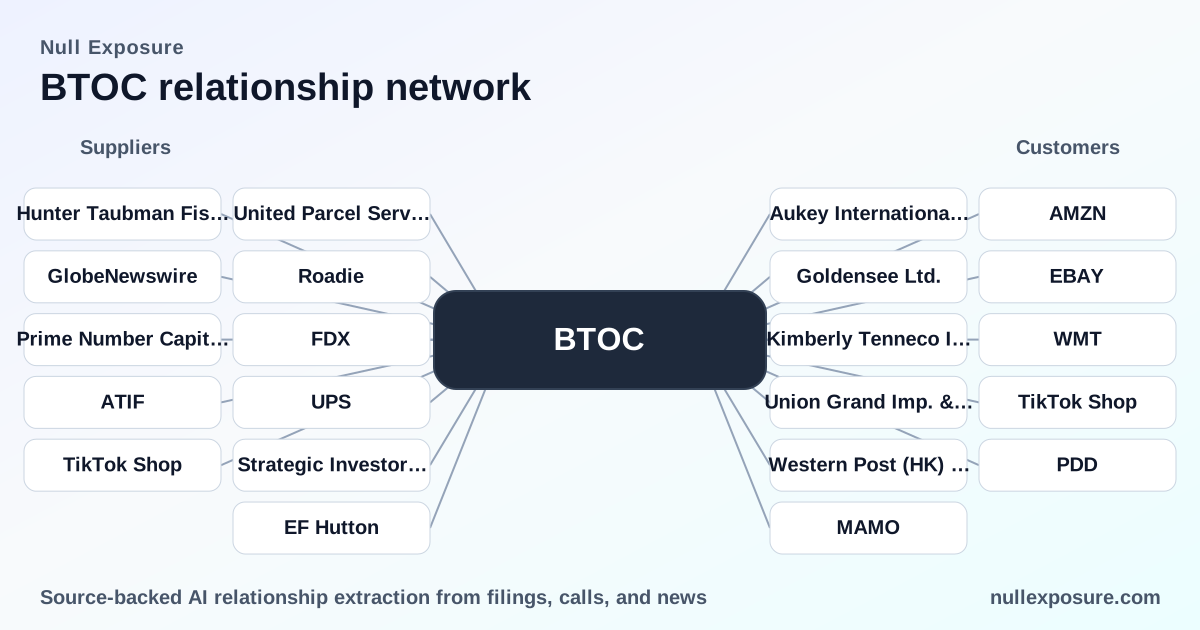
Armlogi (BTOC) — supplier map, operating constraints, and what investors should price in
Armlogi Holding Corp. operates a warehouse-first, outsourced-delivery logistics model: it monetizes by procuring transportation and warehousing from third parties, bundling those services into one-stop fulfillment offerings and reselling them to merchants and platforms. Revenue growth has come from expanded warehousing and platform integrations, while margins are being pressured by rising third‑party carrier costs and the cost of scaling new facilities. For investors evaluating supplier risk, the company’s business is operationally dependent on large logistics carriers and strategic marketing/IR partners, which translate directly into cost volatility and concentration risk. For more supplier analytics and partner diligence, visit https://nullexposure.com/.
How Armlogi actually sources delivery and fulfillment
Armlogi does not operate its own nationwide delivery fleet; instead, it relies on an ecosystem of carriers, last‑mile providers, marketplace integrations and capital markets partners. That structure produces two clear business drivers: scale in warehousing and software-enabled orchestration (revenue per client), and variable cost exposure to carrier contracts (gross margin). Key takeaways:
- Delivery is outsourced — carrier contracts set a major portion of cost of goods sold.
- Platform/customer wins (TikTok Shop, marketplace merchants) drive utilization of leased square footage.
- Capital markets and IR relationships shape access to liquidity and public markets support.
Explore supplier-level detail and commercial signals at https://nullexposure.com/.
The supplier and partner list — one-paragraph summaries with sources
United Parcel Service (UPS)
Armlogi relies on UPS for end‑to‑end delivery services because the company does not maintain its own delivery fleet, making UPS a primary carrier in its logistics stack; rising UPS costs have been cited as a driver of margin pressure. This reliance is documented in Armlogi’s FY2025 10‑K and subsequent investor releases noting increased third‑party carrier expenses. (Armlogi FY2025 10‑K; company financials and investor statements, FY2025.)
Roadie
Armlogi’s warehouse network has been integrated with Roadie for last‑mile delivery, providing on‑demand pickup and flexible delivery options that complement national carriers for final‑mile fulfillment. This partnership was reported in media coverage of Armlogi’s supply‑chain initiatives. (Yahoo Finance coverage, March 2026.)
FedEx
FedEx is named alongside UPS as a major third‑party carrier whose increased rates materially affected Armlogi’s cost structure; management has publicly linked margin compression to higher FedEx carrier costs and described efforts to diversify carrier relationships. (Company financial releases and GlobeNewswire / QuiverQuant reporting, FY2025–FY2026.)
Strategic Investor Relations, LLC
Strategic Investor Relations (Matthew Abenante) functions as Armlogi’s investor relations contact across multiple press releases and financial announcements, facilitating investor communications and disclosure distribution. (GlobeNewswire and other press releases, 2025–2026.)
EF Hutton
EF Hutton acted as the sole book‑running manager for Armlogi’s offering that took the company public and began trading on May 14, 2024, evidencing a direct underwriting relationship important to the company’s public listing and capital access. (Stocktitan summary of the listing, FY2026.)
Hunter Taubman Fischer & Li
Hunter Taubman Fischer & Li provided legal counsel for Armlogi in connection with its offering, indicating the external legal advisory relationships supporting equity transactions and compliance. (Stocktitan coverage of the transaction, FY2026.)
Prime Number Capital
Prime Number Capital was identified as a sole bookrunner on an earlier financing or deal filing (FY2023), showing that Armlogi has used multiple underwriters across its capital‑raising history. (Renaissance Capital IPO center, FY2023.)
ATIF Holdings
ATIF Holdings is listed as a consulting or advisory reference in connection with Armlogi’s Nasdaq listing, suggesting prior transactional or advisory engagement during the company’s public listing process. (Stocktitan reporting on the May 2024 listing, FY2026.)
TikTok Shop
Armlogi announced integration as a warehouse provider for TikTok Shop merchants, allocating over 1.3 million square feet to TikTok‑related fulfillment and offering picking, packing, and inventory synchronization — a strategic commercial relationship that can materially increase utilization and revenue. (Company release summarized on Stocktitan, FY2026.)
GlobeNewswire
GlobeNewswire is a primary distribution channel for Armlogi press releases; several company announcements and financial disclosures have been distributed through GlobeNewswire, and some third‑party summaries of those releases are noted in media coverage. (GlobeNewswire press releases and third‑party summaries, 2025–2026.)
Operating constraints and what they signal about the model
Armlogi’s supplier footprint and the documented constraints create a predictable operating posture:
-
Contracting posture — mixture of long‑term and transactional: The record includes a long‑term agreement with a stated term beginning April 10, 2020, which signals the presence of multi‑year supplier commitments alongside shorter transactional carrier buys. This hybrid contracting posture supports scale but raises fixed commitment risk for leased facilities. (Company contract excerpts, confidence high for long‑term presence.)
-
Geographic reach — global but freight‑centric: References to ocean freight services indicate that Armlogi supports cross‑border logistics, not just domestic fulfillment, which increases complexity around customs, lead time and carrier selection. (Company disclosures referencing ocean freight, moderate confidence.)
-
Concentration — material supplier dependency: The top five suppliers accounted for 51.8% of purchases in FY2025, and the company disclosed dependency on a supplier representing more than 10% of purchases over recent years; this is a material concentration risk that translates into bargaining power asymmetry and pricing vulnerability. (Company FY2025 supplier disclosure.)
-
Relationship role — service‑provider dependence: Armlogi’s revenue model is built on reselling transportation and warehousing services purchased from carriers and landlords; suppliers are core service providers, not peripheral vendors, meaning interruptions or cost changes hit gross margin directly. (Company revenue model description.)
Collectively, these signals point to high operational leverage to supplier pricing and availability, and to the need for continuous carrier diversification and contract management.
(For tactical supplier due diligence and contract exposure analysis, see https://nullexposure.com/.)
Investment implications — where upside and risk sit
- Upside: TikTok Shop integration and expanded warehouse footprint can lift utilization and revenue per square foot if Armlogi converts capacity into sustained merchant volume.
- Risk: Carrier cost inflation and supplier concentration are the clearest margin threats; the business model transfers variable transportation risk to the bottom line.
- Execution: Success depends on Armlogi’s ability to negotiate favorable carrier rates, expand higher‑margin platform partnerships, and convert marketing/IR visibility into predictable demand.
For detailed supplier risk scoring and monitoring tools for investors, visit https://nullexposure.com/.
Final read: what to watch next
Monitor quarterly commentary on carrier expense lines, contract renewal dates with large suppliers, and progress on TikTok Shop volumes. If Armlogi diversifies carriers and stabilizes freight costs, margins will normalize; if not, revenue growth could continue without commensurate gross profit improvement. Investors should weigh the growth opportunity in platform integrations against the concentrated, outsourced cost base when modeling forward margins.