BrightSpring Health Services (BTSGU): supplier relationships that shape operational risk and upside
BrightSpring Health Services operates a large, diversified healthcare-services platform that earns revenue from home health, disability services, and integrated pharmacy dispensing — essentially monetizing through service contracts, pharmacy procurement and distribution, and acquisitions that expand branch-level revenue. With trailing revenue of roughly $12.9 billion and positive EBITDA, BrightSpring is scaling through inorganic roll-ups and centralized pharmacy supply relationships that directly influence margin and operational continuity. For investors evaluating supplier exposures, the company’s supplier footprint is a mix of capital-markets partners, strategic pharmacy distributors, and service vendors that affect working capital, compliance, and reputational risk.
For a structured supplier risk view, see more at https://nullexposure.com/.
How BrightSpring’s operating model shapes supplier risk
BrightSpring operates as a service consolidator in healthcare: it runs networked field operations (home health, hospice, disability services) supported by centralized pharmacy and IT procurement. That operating model produces four characteristic supplier signals:
- Contracting posture — asset-light, centralized procurement: BrightSpring outsources pharmacy distribution and specialized IT/security support while keeping front-line clinical delivery internal; this concentrates leverage with a few large suppliers for critical inputs.
- Concentration — notable reliance on pharmacy distributors: The record shows a notable commercial relationship with Walgreens Boots Alliance for pharmaceutical purchasing, which creates single-vendor exposure for inventory and pricing.
- Criticality — supply and compliance sensitive: Pharmaceutical supply and software/security vendors are mission-critical to patient safety and reimbursement; interruptions would have immediate operational and regulatory consequences.
- Maturity and scale — large but thin margins: The company’s scale (RevenueTTM ~$12.9bn; EBITDA ~$485m) gives negotiating power, but low operating margins mean supplier cost pressure translates quickly to earnings volatility.
These characteristics set the lens for the relationships summarized below. Learn how these supplier ties translate into credit and operational risk at https://nullexposure.com/.
Supplier relationships uncovered (complete list)
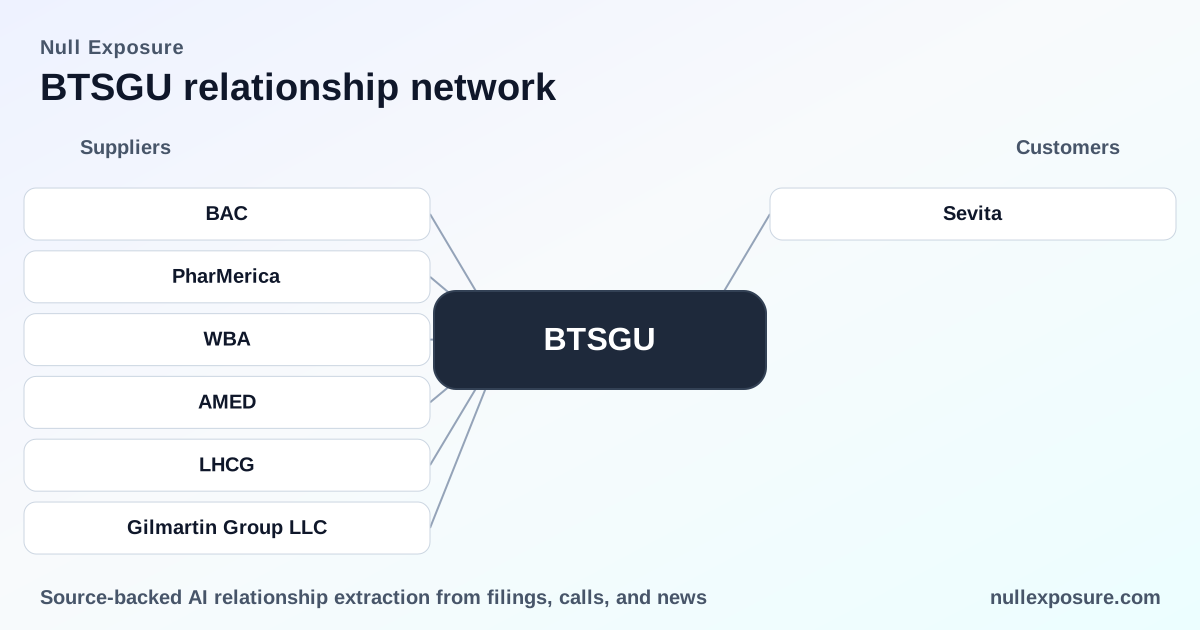
BofA Securities — capital markets execution partner
BrightSpring engaged BofA Securities as the lead manager for a secondary offering and concurrent share repurchase program, acting as the sole book-running manager for the transaction. According to the GlobeNewswire press release announcing the pricing of the offering (Oct 21, 2025) and QuiverQuant coverage of the secondary offering details, BofA executed share sale logistics for stockholders. (GlobeNewswire Oct 21, 2025; QuiverQuant posting on the secondary offering.)
PharMerica — pharmaceutical fulfillment to long-term care settings
Reporting linked PharMerica to drug deliveries into long-term care settings where BrightSpring operates, with coverage noting residents in certain homes receiving multiple medications. BuzzFeed’s investigative piece referencing FY2022 activity highlights PharMerica’s role in fulfilling drug orders to the long-term care environment that intersects with BrightSpring operations. (BuzzFeed, investigative reporting citing FY2022.)
Walgreens Boots Alliance (WBA) — distributor and material inventory counterparty
BrightSpring has contractual arrangements with Walgreens Boots Alliance and affiliates under a pharmaceutical purchase and distribution agreement, creating material procurement exposure; the public record also notes historic transaction and monitoring fees charged by investors and affiliates. BuzzFeed’s reporting and the company’s contract excerpts identify WBA as a supplier of significant inventory, and corporate disclosures reference a Joinder to the WBAD Membership Agreement. This positions WBA as a major, direct supplier for pharmaceuticals. (BuzzFeed investigative report; company disclosure excerpts referencing WBAD Membership Agreement.)
Amedisys — acquisition partner for branch-level capacity
Operational commentary in BrightSpring’s FY2025/FY2026 reporting references acquired home health and hospice branches linked to transactions involving Amedisys; press summaries state 107 branches were acquired as part of the Amedisys and LHC transactions. Amedisys therefore figures as a source of network expansion through deal activity rather than a recurring supplier. (TradingView summary of BrightSpring Q4 and full-year results, FY2026 reporting.)
LHC (LHC Group) — acquisition partner and branch contribution
Similar to Amedisys, LHC is referenced in the company report covering branch acquisitions; BrightSpring incorporated branches from the LHC transaction into its operational footprint, making LHC a counterparty in consolidation activity that increases scope and service revenue. (TradingView summary of BrightSpring Q4 and full-year results, FY2026 reporting.)
Gilmartin Group LLC — investor relations and communications support
Gilmartin Group LLC is named in BrightSpring communications as the investor relations contact point (David Deuchler, CFA) and appears in press materials distributing corporate announcements related to the secondary offering and repurchase. This relationship is functionally service-provider oriented (IR/media communications). (GlobeNewswire press release Oct 21, 2025; QuiverQuant press summary.)
What these relationships mean for investors: risk and opportunity
BrightSpring’s supplier map is concentrated and consequential. The Walgreens Boots Alliance tie is a material procurement relationship that centralizes pharmaceutical inventory risk, pricing exposure, and contractual dependency; the constraint evidence explicitly flags that relationship as notable. Service-provider relationships for cybersecurity and IT also carry outsized importance because those vendors support claims processing, patient records, and regulatory compliance — interruptions translate to cash-flow and compliance risk.
Acquisition-linked counterparties (Amedisys, LHC) represent growth vectors rather than recurring supplier dependence; these relationships drive scale but bring integration execution risk and short-term working-capital demands. The engagement with BofA Securities as sole book-runner on a secondary offering signals active capital markets management and shareholder-liquidity strategies that influence ownership composition. Meanwhile, IR support from Gilmartin Group underpins investor communications around these moves.
Operationally relevant constraints observed in corporate disclosures point to:
- Distributor/manufacturer reliance: contractual purchasing relationships with pharmaceutical manufacturers, wholesalers and distributors are core to pharmacy operations (company-level signal).
- Service-provider dependency: third-party cybersecurity consultants and software vendors support critical systems (company-level signal).
- Materiality flag for WBA: explicit contractual language ties BrightSpring’s pharmaceutical purchases to Walgreens Boots Alliance, confirming concentration on a named counterparty.
Together, these features allocate risk toward supply-chain concentration, regulatory sensitivity, and integration execution rather than commodity market volatility. BrightSpring’s scale offsets some supplier leverage, but thin operating margins and a high beta (2.33) leave earnings exposed to supplier cost shocks or reputational incidents.
For a tactical supplier-risk scorecard and ongoing monitoring of these counterparties, visit https://nullexposure.com/.
Investor takeaway and next steps
BrightSpring is a large-services consolidator where pharmacy distribution partnerships and acquisition counterparties materially shape cash flow and operational risk. Investors should prioritize counterparty diligence on Walgreens Boots Alliance procurement terms, continuity plans with pharmacy fulfillers, and the company’s vendor-controls (cyber/IT) posture — these are the levers that transform supplier disruption into financial impact.
If you evaluate portfolio exposure to healthcare services or are underwriting BrightSpring credit, run a supplier-concentration stress test and track capital-market activity (secondary offerings) for signaling changes in ownership or liquidity. For deeper supplier mapping and continuous monitoring tools, explore our analysis hub at https://nullexposure.com/.