Burlington Stores (BURL) — supplier relationships and operating signals investors should price in
Burlington Stores monetizes a high-volume, low-margin discount apparel retail model: it sources branded merchandise from national manufacturers and opportunistic suppliers, purchases largely on a purchase-order (spot) basis, and converts inventory through a dense store footprint and distribution network into cash‑generating retail sales. Revenue is driven by inventory turns, opportunistic in‑season buys, and ongoing store expansion/remodel capital allocation, while margins reflect both scale procurement and tight inventory management. For investors and operators evaluating Burlington as a counterparty or supplier, the company’s spot procurement posture, material purchase commitments, and significant capex cadence should shape contracting strategy and credit terms. Learn more at Null Exposure.
What the relationship map tells you about Burlington’s operating posture
Burlington is not a long‑term, contract‑backed buyer. Company disclosures state Burlington typically buys on purchase orders and has no long-term purchase contracts with vendors, which gives Burlington maximum sourcing flexibility but increases supplier revenue volatility and working capital exposure for counterparties. The firm also reports large outstanding purchase commitments and multi‑year capital plans that underscore high absolute scale in procurement and store investment.
- Procurement is predominantly spot: Burlington explicitly states its vendor purchases are on a purchase‑order basis with no long‑term guarantees, so suppliers face limited contractual protection and must price for potential order volatility.
- Buyer and manufacturer relationships coexist: Burlington purchases direct from national manufacturers but also sources from other suppliers, blending branded product access with opportunistic buys.
- Service relationships are operationally important: Burlington runs its own distribution centers while relying on third‑party pool point facilities and risk participation arrangements for insurance—signaling mixed insourcing and outsourcing where operational continuity relies on multiple service providers.
- Scale matters: Product sourcing costs and purchase commitments are in the high‑hundreds of millions to low billions annually, making Burlington a strategic big‑ticket customer for vendors in apparel, logistics, and store fixtures.
These company‑level signals should guide negotiation posture: require stronger payment/cancellation protections with a buyer who values purchasing flexibility, and price service reliability accordingly.
Relationship entries — what every counterparty should know
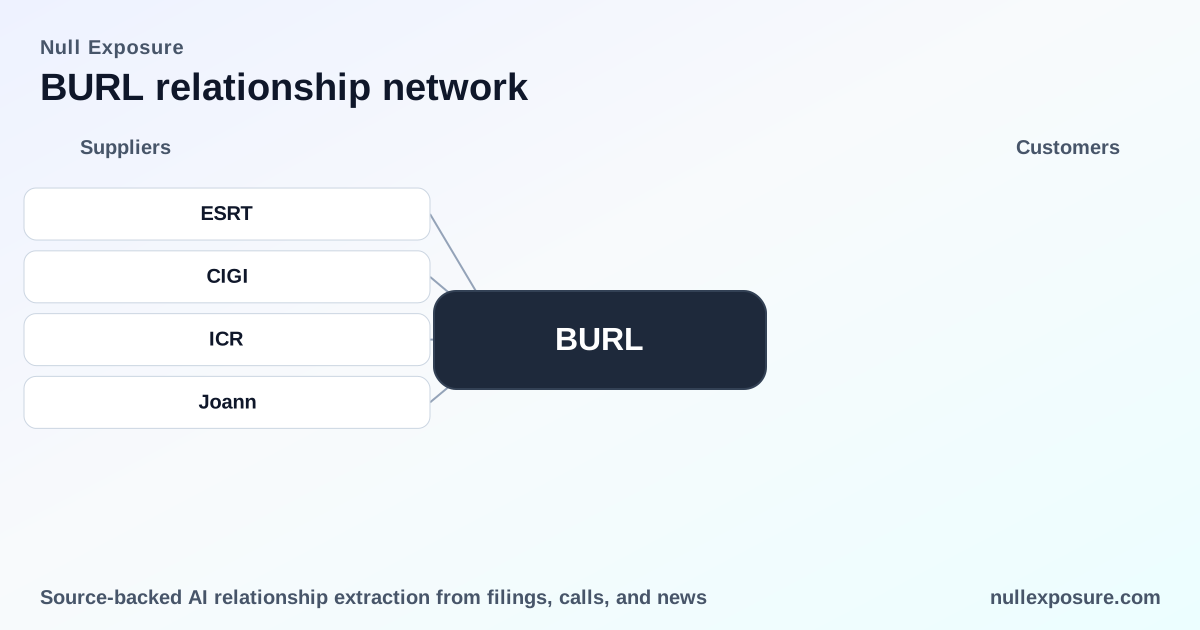
Below are the relationships captured in public reporting. Each entry includes a concise in‑plain‑English takeaway and the source.
-
Empire State Realty Trust, Inc. (ESRT): Burlington executed two lease renewals and one expansion at Manhattan office buildings in Q4 2025, demonstrating continued commercial footprint activity and exposure to premium urban real estate costs. According to an FT Markets / Business Wire announcement (March 2026), ESRT confirmed the renewals and expansion with Burlington in Q4 2025.
Source: FT Markets/Business Wire announcement, March 2026. -
Colliers: Colliers acted as Burlington’s representative in the lease negotiations, with Alan Desino named as the broker handling Burlington’s transactions, indicating Burlington’s use of third‑party real estate advisors to execute portfolio decisions. The same FT Markets release (March 2026) identifies Colliers’ role in the negotiations.
Source: FT Markets/Business Wire announcement, March 2026. -
ICR, Inc.: Burlington’s investor relations contacts include ICR‑listed representatives (David J. Glick and Allison Malkin), which signals the company’s retained communications channels for sell‑side and buy‑side engagement in FY2026 investor outreach. A March 2026 press distribution captured the ICR contact information.
Source: Bitget news item quoting ICR investor relations contacts, March 2026. -
Joann: Burlington acquired the leases for 45 former Joann locations and has announced new store openings, such as a Bakersfield, California site, reflecting growth through lease takeovers and repositioning of legacy retail footprints. The Sun reported Burlington’s plan for the Bakersfield store and the 45-lease acquisition in early 2026.
Source: The Sun article on Burlington store openings and Joann lease acquisitions, March 2026.
How these relationships affect supplier risk and negotiations
Taken together, the relationships paint a consistent picture: Burlington is actively repositioning physical real estate (renewals, expansions, lease takeovers) while relying on external advisers and IR firms for execution and communication. For suppliers, three implications stand out:
-
Concentration and scale: With purchase commitments reported at approximately $1.594 billion as of Feb 1, 2025 and product sourcing costs in the hundreds of millions a year, Burlington is a high‑value customer where loss of business or payment disruption would be material to vendors. This supports negotiating stronger payment terms and letters of credit for large orders. Evidence cited in company filings for FY2024–FY2025 shows purchase commitments and significant sourcing spend.
-
Contracting posture is flexible, not locked: Because Burlington predominantly transacts on spot purchase orders rather than long‑term purchase contracts, suppliers should expect greater order variability and require contractual protections against late cancellations and rapid repricing. Company filings explicitly state this spot posture.
-
Operational criticality and service mix: Burlington’s mix of internal distribution centers and third‑party pool point arrangements, plus its risk participation insurance arrangements, means service providers (logistics, claims administrators, insurers) are critical to Burlington’s operations; continuity requirements and SLAs should reflect that criticality. Company filings note the use of third‑party pool point facilities and risk participation agreements.
If you manage supplier risk or vendor relationships with Burlington, calibrate exposure limits and collateral requirements to these realities. If you are a real estate or services provider, expect Burlington to use brokers and professional firms to execute deals, increasing the speed and complexity of negotiations.
Learn how to quantify counterparty exposure and set contracting rules at Null Exposure.
Practical takeaways for investors and operators
-
Business model driver: Burlington’s profitability depends on inventory sourcing flexibility, store economics, and disciplined capex; procurement volume and timing are primary levers for margin management. Fiscal metrics show revenue of roughly $11.55 billion TTM and gross profit around $5.06 billion, highlighting the scale behind procurement decisions.
-
Key risk factors: Spot purchasing increases revenue volatility for suppliers and concentrates working capital risk for Burlington; large purchase commitments and ongoing store investments mean capital allocation decisions will directly affect supplier demand and timing.
-
Negotiation posture: Suppliers should insist on measurable protections (advance payment, cancellation fees, or retention of title) and price for the risks embedded in Burlington’s flexible buying strategy. Service providers need robust SLAs and contingency plans given Burlington’s hybrid insourcing/outsourcing model.
For a deeper supplier‑risk playbook and modelled exposure scenarios, visit Null Exposure.
Final assessment
Burlington is a large, high‑turn retail engine that leverages spot procurement and real‑estate agility to grow. That model drives volume and revenue but transfers ordering risk to vendors; suppliers and service providers must price that risk and secure contractual safeguards. The public relationships—lease renewals with ESRT, brokered deals via Colliers, IR handling by ICR, and lease takeovers from Joann—underscore Burlington’s ongoing network activity and footprint expansion. For investors and counterparties, evaluate exposure not just by headline spend but by Burlington’s contracting posture, concentration of spend, and operational criticality when structuring terms and credit limits.