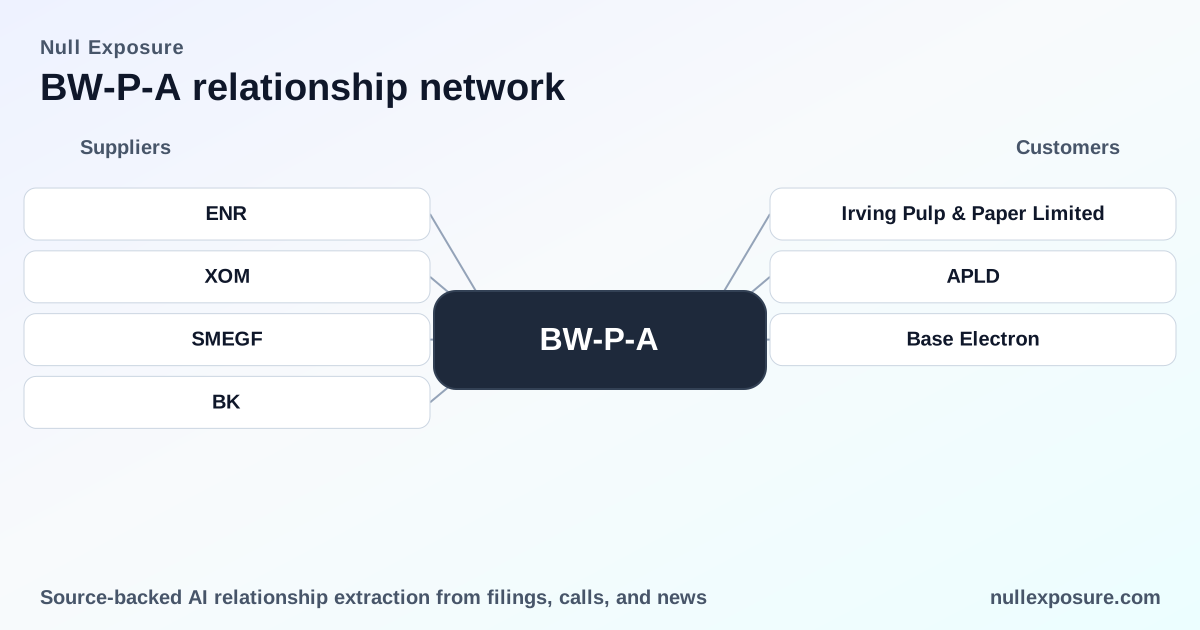
BW-P-A supplier relationships: what investors need to know
Babcock & Wilcox’s preferred share (BW‑P‑A) is tied to a business that monetizes heavy industrial engineering through project contracts, technology licensing and capital markets instruments: the company wins large, discrete engineering projects and technology licenses, supplies or integrates mission‑critical equipment, and funds and refinances that activity via public securities and debt structures. For investors and operators evaluating supplier counterparty risk, the headline is clear — the company runs a project‑centric procurement model that leans on a small set of industrial OEMs and institutional trustees for capital actions. Learn more at https://nullexposure.com/.
Quick take for decision makers
- Concentrated supplier footprint. Contracts and licensing disclosures point to a small number of high‑quality counterparties rather than broad commodity purchasing.
- Operational criticality is high. Suppliers provide long‑lead, mission‑critical assets (steam turbines, licensed process tech) that are essential to project delivery and revenue recognition.
- Capital governance is formal. Trustee and indenture activity indicates active management of notes and preference for structured capital actions.
Supplier relationships: who they are and why they matter
Siemens Energy — a strategic OEM for large power projects
Babcock & Wilcox selected Siemens Energy to supply steam turbine generator sets for a one‑gigawatt power project serving an Applied Digital AI Factory, a project announcement that was reported in March 2026 (FY2026). This is a high‑visibility, long‑lead equipment relationship that underpins B&W’s ability to deliver large power‑generation scopes. (Reported on Babcock.com and MarketScreener, March 2026.)
ExxonMobil — technology licensing for refinery applications
B&W is a licensee of ExxonMobil’s Wet Gas Scrubbing (WGS) technology; that licensing relationship is cited in contract awards and coverage of B&W’s refinery and process‑engineering work (FY2025). Licensing a proven refinery technology from ExxonMobil supports B&W’s service offerings in retrofit and process scopes for downstream customers. (Reported via StockTitan news, FY2025.)
The Bank of New York Mellon Trust Company, N.A. — trustee for indentures and note redemptions
Babcock & Wilcox engaged The Bank of New York Mellon Trust Company, N.A. as trustee under indentures relating to issued notes, and announced a full redemption pursuant to that indenture in FY2025. Use of BNY Mellon as trustee signals conventional capital‑markets governance for B&W’s funded instruments and formal execution of redemptions. (Reported via StockTitan and Barchart, FY2025.)
What these relationships collectively signal about the operating model
These supplier disclosures — turbine OEM, major technology licensor, and an institutional trustee — produce a coherent picture of how B&W contracts and executes.
- Contracting posture: Engagements are predominantly project‑driven and executed with large, specialized suppliers on equipment‑and‑technology scopes. Project awards (e.g., the Siemens Energy turbine supply) indicate negotiated OEM contracts rather than spot procurement.
- Concentration and counterparty reliance: The supplier list is focused and concentrated around established industrial players and financial trustees, which increases vendor dependency but reduces operational variability associated with broad commodity sourcing.
- Criticality of suppliers: Contracts supply core, non‑substitutable inputs (steam turbines, licensed process technology) that are central to revenue generation and project completion timetables.
- Maturity and governance: Relationships include long‑dated production/delivery horizons and formal capital‑markets arrangements (indentures and trustee administration), reflecting a mature, institutional approach to project delivery and financing.
These are company‑level signals for decision makers evaluating supplier resilience and negotiation leverage; they are not tied to an individual constraint excerpt because no formal constraints were provided in the source material.
Read more about how supplier concentration affects credit and operational risk at https://nullexposure.com/.
Implications for investors and operators
- Revenue timing risk: Long‑lead equipment and licensed technology create delivery and commissioning milestones that gate cash flows; monitor supplier delivery schedules (Siemens Energy) and license terms (ExxonMobil) for milestone slippage.
- Supplier negotiation leverage: Concentrated, specialized relationships reduce bargaining flexibility; however, established OEMs and licensors also bring credibility to bids and may shorten sales cycles with large end customers.
- Capital structure visibility: Trustee‑managed redemptions indicate the company actively manages its debt and note lifecycle — investors should monitor indenture covenants and redemption activity for balance‑sheet impacts.
Actionable next steps for diligence
- Request recent project schedules and supplier delivery timelines for major scopes to quantify timetable risk.
- Review licensing agreements and royalty or usage terms with ExxonMobil to understand margin sensitivity to licensed IP.
- Examine indenture documents and trustee notices associated with BNY Mellon for upcoming call or covenant events.
For a deeper supplier‑level risk assessment and continuous monitoring tools, visit https://nullexposure.com/.
Bottom line
Babcock & Wilcox’s supplier footprint for BW‑P‑A is concentrated, project‑oriented and anchored by reputable industrial counterparts and institutional trustees. That structure raises both upside (strong OEM credibility, scalable project wins) and concentrated operational risk (long‑lead items, few substitutes). Active monitoring of supplier delivery, license economics, and indenture activity is essential for investors and operators underwriting exposure to BW‑P‑A. Explore tailored monitoring and supplier coverage at https://nullexposure.com/ to convert these relationship signals into actionable portfolio decisions.