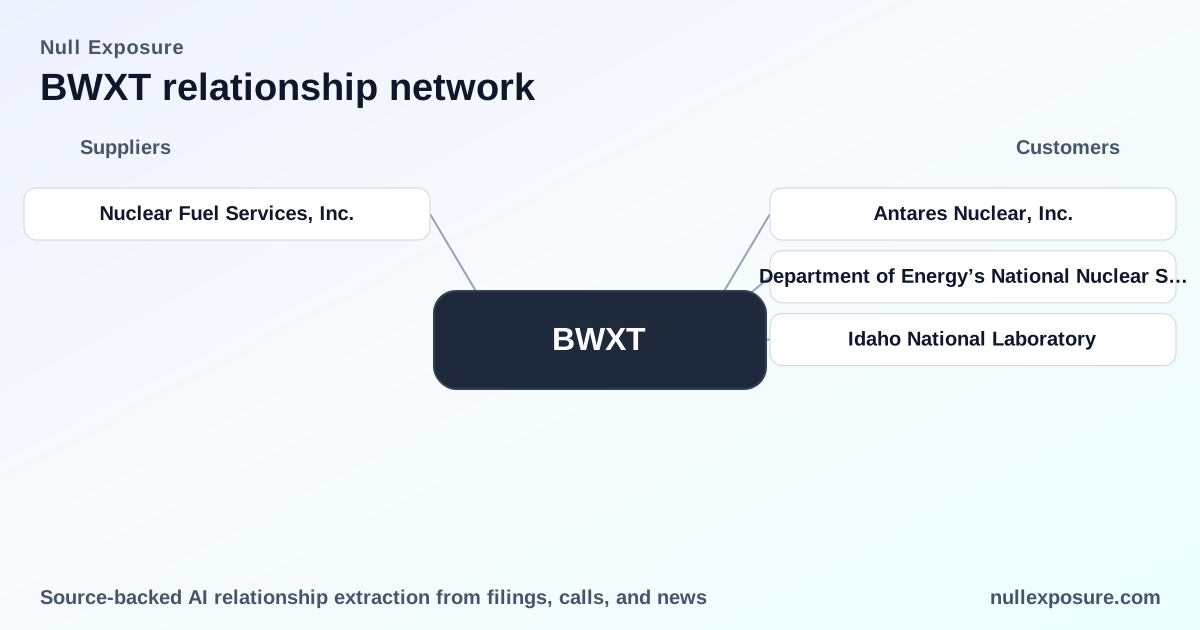
BWX Technologies (BWXT): Supplier Profile, Strategic Risks, and Investment Takeaways
BWX Technologies manufactures and sells nuclear components and services, monetizing through long-term government and commercial contracts for reactor components, fuel-cycle services, and nuclear services. Revenue comes primarily from defense and civil nuclear programs, with monetization driven by contract scope, program longevity, and specialized fabrication and service margins. The company’s premium valuation reflects the critical, constrained nature of its addressable market and its high exposure to government procurement cycles.
Learn more about supplier intelligence and supplier relationships at https://nullexposure.com/.
How BWXT’s business model converts specialization into cashflow
BWXT operates at the intersection of defense contracting and commercial nuclear supply. Contracts are long-duration and defense-oriented, which produces durable order backlogs and predictable revenue rhythms, but also concentrates earnings around a small number of strategic customers. The company captures value through specialized manufacturing, fuel services, and defense program execution where technical barriers to entry keep competitor pressure constrained.
Key financial signals:
- Revenue (TTM): $3.198 billion and Market Cap: $18.7 billion.
- Profit margin: 10.3%, Operating margin: 9.26%, EBITDA: $447.5 million (latest TTM).
- Trailing P/E: 57.2, Forward P/E: 48.8, EV/EBITDA: 36.7 — valuation is rich relative to earnings, pricing premium for strategic exposure.
- Quarterly revenue growth (YoY): +18.7%, Quarterly earnings growth (YoY): +31.1% — growth is above typical mature manufacturing peers.
These figures demonstrate a company that converts specialized capabilities into profitable growth, while commanding a valuation premium consistent with strategic criticality rather than commodity manufacturing.
What the filings show about BWXT’s supplier relationships
BWXT’s public filings document supplier links that reflect its position in the nuclear industrial base. Below I cover the relationships disclosed in the available results.
Nuclear Fuel Services, Inc.
BWXT’s FY2024 Form 10‑K identifies Nuclear Fuel Services, Inc. as an operating facility that manufactures fuel for naval nuclear reactors and downblends Cold War-era high‑enriched uranium. The filing states that NFS is the sole provider of nuclear fuel for the U.S. Navy, positioning this supplier as a pivotal node in the naval nuclear supply chain (BWXT Form 10‑K, FY2024).
Source: According to BWXT’s 2024 Form 10‑K filing (FY2024) which describes NFS’s operations and role as the sole provider of U.S. Navy nuclear fuel.
Operating-model signals and supplier concentration risks
BWXT’s operating model is defined by a set of structural characteristics that investors and operators must monitor:
- Contracting posture: government-centric and programmatic. A large share of BWXT’s revenue derives from defense and government customers where contract durability and compliance obligations drive revenue visibility and margin profiles.
- Supplier and customer concentration: structurally high. The nuclear supply chain contains single‑source providers and long qualification cycles; disclosures such as the NFS statement highlight single-supplier criticality that transfers operational risk into program risk.
- Criticality of output: mission‑essential components. BWXT produces components and services where failure or supply disruption has outsized operational and political consequences, elevating both contract stickiness and regulatory scrutiny.
- Maturity with growth tailwinds. Financials show mid‑teens revenue growth and improving earnings, indicating a mature industrial base benefiting from renewed nuclear investment and defense modernization.
- Valuation premium reflects strategic moat. Elevated P/E and EV multiples price in scarce capacity and strategic dependency rather than cyclic manufacturing upside.
These are company-level signals drawn from financials and filing disclosures; they frame how supplier relationships and supply‑chain constraints translate into investment and operational risk.
For proprietary analysis tools and deeper supplier mapping, visit https://nullexposure.com/.
Practical implications for investors and procurement operators
For portfolio managers and procurement leads, these points convert to actionable monitoring items:
- Watch single‑source dependencies: where suppliers are sole providers for government customers, a small operational hiccup can create outsized program risk.
- Track contract awards and program backlogs: earnings and valuation are sensitive to contract renewals, cancellations, or program delays.
- Monitor regulatory and non‑proliferation activity: changes in HEU handling, downblending programs, or export controls directly affect operations referenced in filings.
- Valuation risk: multiples are high, so growth disappointments or contract slippages will be magnified in equity performance.
- Operational resilience matters: capacity expansions, qualification of alternate suppliers, and inventory posture materially influence execution risk.
Bottom line and recommended next steps
BWXT is a strategically positioned provider in a constrained, high‑criticality market. The company’s cashflow profile and growth are driven by defense and civil nuclear contracts, while valuation assumes continued execution and uninterrupted supply‑chain performance. Investors should favor BWXT where strategic exposure and long-duration contracts are rewarded, but they must require active monitoring of supplier concentration and regulatory risk.
If you evaluate supplier networks or need a deeper supplier intelligence brief on BWXT and its counterparties, start here: https://nullexposure.com/.
Next steps for investors and operators:
- Review BWXT contract backlog and recent 10‑K disclosures for changes to single‑source suppliers such as Nuclear Fuel Services.
- Assess counterparty resilience and contingency plans for any sole‑source suppliers to quantify program continuity risk.
For tailored supplier reports and continuous monitoring, visit https://nullexposure.com/ and engage our team.