Boyd Gaming (BYD): Supplier relationships and operational constraints investors need to know
Boyd Gaming operates and monetizes a diversified portfolio of casinos, hotels, food & beverage concessions and retail sportsbooks across multiple U.S. jurisdictions. Revenue comes from casino gaming, hotel operations, F&B and third‑party sportsbook arrangements, while the company finances operations through a mix of secured credit facilities and public notes. For investors, the supplier picture is a mix of commercial service partners that are strategic to operating the gaming floor (e.g., sportsbook operators) and local retail vendors that are low‑criticality, high‑turnover concession relationships — each class implying a different monitoring priority for operating risk and margin volatility. For a broad supplier map and exposure tools, see Null Exposure.
Big picture: what the limited supplier signals tell investors
Boyd’s supplier footprint in the available reporting is not dominated by single‑vendor concentration in core gaming operations, but the company delegates important operating functions to third parties in certain channels. The evidence set shows three clear relationship types in FY2025: a national sportsbook operator running retail sportsbooks, and local F&B concession vendors inside a newly renovated food hall. At the company level, filings and disclosures also reveal material long‑term financing arrangements, usage‑based revenue share structures at certain properties, and the use of a major accounting firm as the principal service provider.
- Contracting posture: Company financial documents show long‑dated debt and credit arrangements, indicating commitments that constrain liquidity and refinancing choices.
- Commercial structure: A mix of usage‑based revenue share contracts at property level and operator service agreements means margins can be sensitive to win rates and third‑party fees.
- Criticality: Third‑party operators of revenue‑generating channels (retail sportsbooks) are operationally important; small concession vendors are operationally peripheral.
- Maturity and refinancing risk: Debt instruments cited in filings mature in 2027, creating a clear near‑term refinancing milestone investors must monitor.
For deeper supplier relationship analytics, consult Null Exposure.
The relationships disclosed in the reporting (FY2025)
Below are the relationships identified in the available reporting with concise, plain‑English descriptions and source references.
-
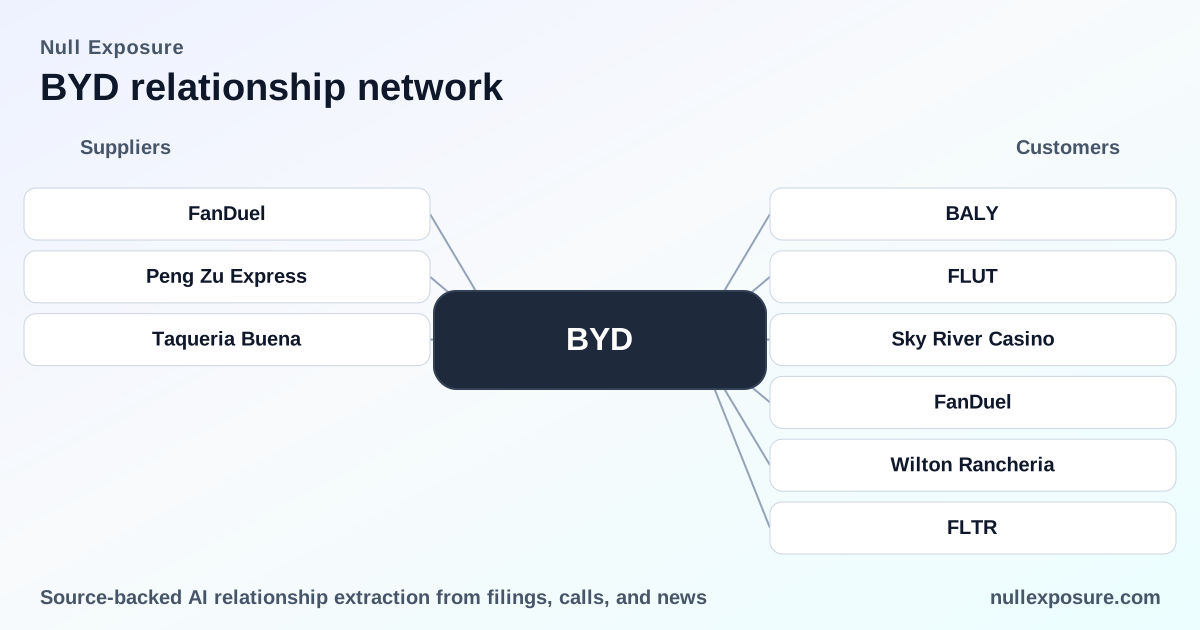
FanDuel — retail sportsbook operator (FY2025): FanDuel is operating Boyd Gaming’s retail sportsbooks outside Nevada through June of the following year, after which Boyd will assume full responsibility for those operations. This is a strategic operating relationship for Boyd’s non‑Nevada wagering footprint. According to ReadWrite reporting (March 9, 2026) summarizing the FY2025 transition, FanDuel will continue operating those retail sportsbooks until June next year. Source: ReadWrite (Mar 9, 2026) — https://readwrite.com/boyd-gaming-sale-fanduel-flutter/.
-
Peng Zu Express — food hall concession (FY2025): Peng Zu Express is one of the new food‑hall vendors at Boyd’s renovated Valley Forge property, providing Chinese food as part of the property’s culinary offering. The Philadelphia Inquirer coverage of the Valley Forge renovation lists Peng Zu Express as an open food‑hall tenant. Source: The Philadelphia Inquirer (May 23, 2025) — https://www.inquirer.com/real-estate/commercial/valley-forge-casino-gambling-tourism-20250523.html.
-
Taqueria Buena — food hall concession (FY2025): Taqueria Buena supplies Mexican food in the same Valley Forge food hall and is presented as part of the property’s tenant mix intended to increase non‑gaming foot traffic and F&B revenue. The Philadelphia Inquirer article on the Valley Forge renovation specifically calls out Taqueria Buena as an open vendor. Source: The Philadelphia Inquirer (May 23, 2025) — https://www.inquirer.com/real-estate/commercial/valley-forge-casino-gambling-tourism-20250523.html.
What the company constraints tell us about operating risk
Company‑level disclosures in the constraints evidence convey three core structural signals investors should treat as operating constraints rather than vendor‑level particulars:
-
Long‑term financial commitments: Company filings document a $1.45 billion senior secured revolving credit facility and an $880 million Term A loan that mature March 2, 2027, together with an indenture for 4.750% Senior Notes due 2027. These obligations create a concentrated refinancing timeline in 2027 that influences capital allocation and supplier negotiation leverage. Source: company credit agreement and indenture referenced in filings (credit agreement; indenture dated Dec 3, 2019).
-
Usage‑based commercial contracts at property level: Public excerpts show the company accepts revenue‑share booking mechanics at some properties (for example, Diamond Jo Dubuque and Diamond Jo Worth pay percentages on slot/table and sports wagering revenue). Usage‑based supplier economics shift cost structure with activity and can compress margin during weaker gaming cycles. Source: property‑level revenue share disclosure (FY context in filings).
-
Professional service provisioning: The company identifies Deloitte & Touche LLP as the principal accountant in proxy disclosures, signaling a standard large‑firm audit relationship rather than a boutique provider. This is a governance and controls signal rather than an operational supply risk, but it frames audit continuity and financial reporting reliability. Source: Definitive Proxy Statement references to audit and non‑audit fees (2025 proxy filing).
Investor implications and recommended monitoring
-
Monitor the FanDuel transition closely. The handback of retail sportsbook operations outside Nevada is an operational inflection; investors should track customer retention, cost to operate in‑house vs. partner economics, and any transitional fees or support obligations. FanDuel’s runout is explicitly time‑boxed in reporting and will affect near‑term operating expenses and revenue recognition. (Source: ReadWrite, Mar 2026).
-
F&B vendors are strategically useful but not mission‑critical. Vendors like Peng Zu Express and Taqueria Buena enhance non‑gaming sales and guest experience but are replaceable and unlikely to drive systemic supply disruption. Track revenue per square foot and concession lease economics at Valley Forge to quantify impact. (Source: The Philadelphia Inquirer, May 2025).
-
Refinancing in 2027 is the major balance‑sheet watch item. The combination of the revolver, Term A loan, and senior notes creates a concentrated maturity wall; follow covenant headroom, cash generation trends, and refinancing activity closely in quarterly filings and management commentary. (Source: company credit agreement and indenture).
-
Contract mix matters for margin sensitivity. Usage‑based agreements reduce fixed cost leverage and increase variable cost exposure; model scenarios should incorporate revenue‑share pressure under a softer gaming cycle. (Source: property‑level disclosures).
For a deeper look across suppliers and exposures, including mapped counterparty criticality and maturity timelines, visit Null Exposure.
Bottom line: what investors should act on now
- FanDuel’s transition is the operational headline — treat it as a near‑term execution risk and margin lever.
- Company financing matures in 2027, creating a concentrated refinancing and covenant monitoring timeline.
- Local food vendors improve guest economics but are low systemic risk; usage‑based contracts increase margin volatility.
For regular updates on supplier concentration, contract types and material counterparties shaping Boyd Gaming’s operating risk profile, return to Null Exposure. Monitor quarterly filings for covenant disclosures and management commentary tied to the 2027 maturities.