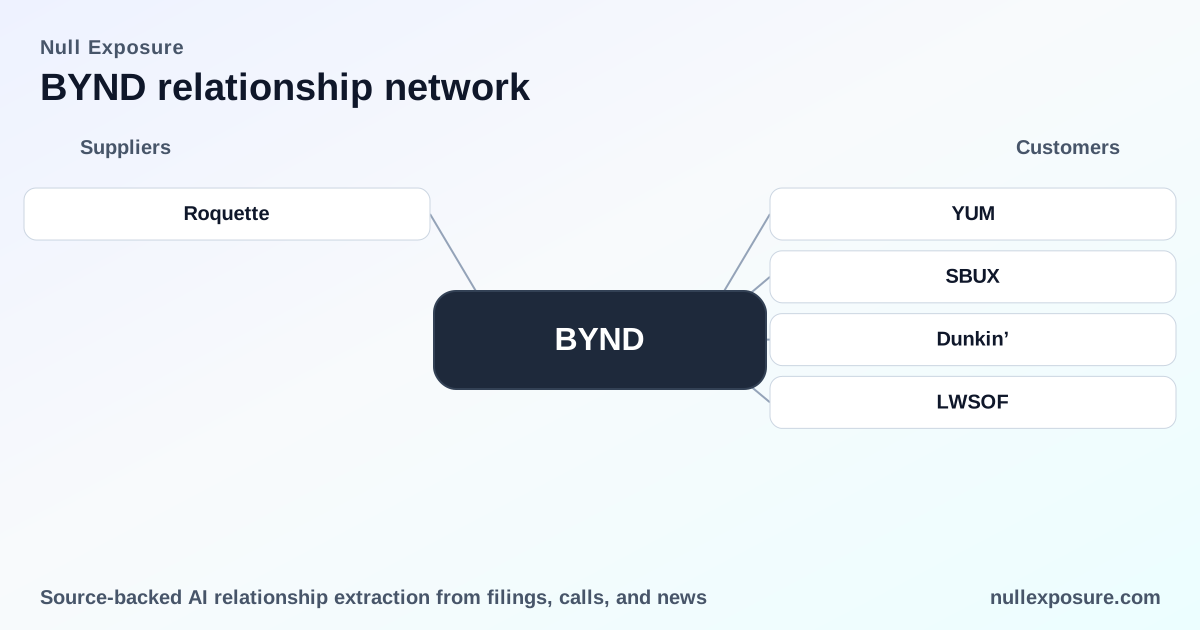
Beyond Meat (BYND) — Supplier Landscape and Contract Risk
Beyond Meat manufactures, markets and sells plant‑based meat products and monetizes primarily through retail and foodservice product sales, leveraging both company production and a network of co‑manufacturers. Revenue comes from packaged goods and bulk/foodservice channels, while margins and working capital are tightly linked to commodity input costs and multi‑year supplier and lease commitments. For investors assessing counterparty and procurement exposure, supplier contracts and purchase obligations are a first‑order driver of near‑term cash flow variability and operational flexibility.
Explore supply‑chain exposure tools at https://nullexposure.com/ for deeper supplier mapping and contract signal analysis.
Quick investor takeaway: procurement commitments shape near‑term cash and margin risk
Beyond Meat’s cost structure is driven by commodity ingredients (notably pea protein and vegetable oils), packaging inputs, and a mix of owned and outsourced manufacturing. The company carries explicit purchase commitments and sizable lease obligations that convert supply strategy into fixed near‑term cash flow requirements. These commitments amplify sensitivity to input price volatility and sales recovery.
Key operating model signals:
- Long‑term purchase commitments: The company has contractual obligations with suppliers that require minimum annual purchases; one supplier commitment is explicitly tied to 2025 volumes. (See Roquette section below and the FY2024 filing.)
- Ingredient cost materiality: Beyond Meat identifies ingredients and packaging as volatile and material to gross margins; procurement shocks feed directly into profitability. This is a company‑level signal rather than tied to any single supplier.
- Co‑manufacturing reliance: The company uses co‑manufacturers across the US, Canada, Germany, the Netherlands and China, which reduces capital intensity but increases third‑party operational risk and quality/control dependence.
- Multi‑million dollar spend bands: Commitments disclosed across rent, ingredient purchases and capital orders sit in the low‑millions to tens of millions range and therefore are financially meaningful relative to current revenues.
All disclosed supplier relationships (covered exhaustively)
Beyond Meat’s public FY2024 disclosures list a single named supplier relationship in the supplier scope returned here: Roquette.
Roquette — multi‑year pea protein supply agreement
Beyond Meat has a multi‑year sales agreement with Roquette for the supply of pea protein that expires on December 31, 2025, and includes minimum purchase obligations. Pursuant to a Second Amendment, Beyond Meat committed to purchase $17.0 million of pea protein inventory in 2025. This contract converts an essential raw material supply into a near‑term cash commitment and is documented in Beyond Meat’s FY2024 Form 10‑K. (Source: Beyond Meat FY2024 Form 10‑K, filed for period ended December 31, 2024.)
What Roquette and the contract language imply for BYND’s procurement risk
The Roquette agreement exemplifies how Beyond Meat converts input sourcing into fixed commitments. A supplier agreement that both supplies a core input (pea protein) and contains minimum purchase commitments through 2025 creates a short window of contract renewal or replacement risk as the expiry approaches. Because pea protein is a primary functional ingredient in Beyond Meat formulations, any disruption or price shock in that supply line has an outsized effect on COGS and margins. (Source: Beyond Meat FY2024 Form 10‑K.)
Company‑level constraints that matter for investors (signals, not single‑supplier claims)
Beyond Meat’s 10‑K and related disclosures provide several company‑level constraints that shape supplier risk and operational posture:
- Contracting posture and maturity: The firm uses multi‑year agreements with minimum purchase obligations, which lend predictability to sourcing but reduce flexibility to shift suppliers quickly. The Roquette agreement is an explicit example of this posture.
- Geographic sourcing footprint: Ingredients derive from European and North American crops (yellow peas, faba beans, sunflower seeds, rice) and packaging inputs are globally sourced; this creates exposure to regional crop cycles, tariffs and freight. (Source: FY2024 10‑K ingredients and packaging disclosure.)
- Materiality of inputs: The 10‑K highlights that ingredient and packaging prices are volatile and can materially affect cost of sales and profitability — a structural sensitivity for a consumer packaged food company with thin gross margins. (Source: FY2024 10‑K risk discussion.)
- Co‑manufacturing reliance: Use of third‑party manufacturers across multiple countries reduces fixed plant investment but raises operational and compliance risk (cGMP adherence, confidentiality of formulations). (Source: FY2024 10‑K.)
- Spend concentration bands: Disclosed commitments include a $17.0 million 2025 commitment to Roquette, approximately $2.9 million in committed flavor ingredient purchases for 2025, roughly $7.0 million in near‑term capital expenditure purchase orders, and aggregate future base rent exposure of approximately $79.6 million for undelivered lease phases. These items sit meaningfully against trailing revenue of ~$290 million and tight gross profit levels. (Source: FY2024 10‑K.)
If you want a mapped, investor‑grade visualization of these supplier commitments and how they layer onto cashflow, visit https://nullexposure.com/ for tailored exposure reports.
Investment implications and a practical monitoring checklist
Beyond Meat’s supplier disclosures translate directly into monitoring priorities for investors and operators:
- Watch the Roquette renewal window (end‑2025): Timing and terms of renewal — price, minimums and flexibility — will be a key determinant of 2026 cost base. (Source: FY2024 10‑K.)
- Track commodity and packaging price trends: Small percentage swings in key inputs like pea protein and oils materially change margins given the company’s current gross profit level.
- Assess counterparty concentration: Even one named, material supplier with purchase commitments increases procurement concentration risk; investors should look for diversification actions or alternative sourcing.
- Monitor working capital and inventory financing: Binding purchase commitments increase inventory funding needs; with negative operating margins and constrained EBITDA, financing terms matter.
- Evaluate co‑manufacturer footprint and control measures: Operational disruptions at third‑party plants (quality, capacity or compliance) propagate quickly when internal manufacturing is supplemented with external partners. (Source: FY2024 10‑K co‑manufacturer disclosures.)
Bottom line and next steps for investors
Beyond Meat operates with material supplier commitments and a hybrid manufacturing model that trades capital intensity for contractual purchase obligations. That posture reduces fixed factory capex but raises contractual and commodity exposure that will shape near‑term margins and liquidity. Investors should prioritize monitoring the Roquette contract expiry and renewal terms, commodity price trajectories, and the company’s actions to diversify or hedge supply risk.
For a deeper, investor‑oriented supplier and contract exposure analysis, see the platform homepage at https://nullexposure.com/ — and consider a supplier‑level report to quantify how these commitments map to cashflow and refinancing risk.
If you need a bespoke briefing on BYND’s supplier counterparty network or a timeline of contractual expirations and purchase obligations, start with https://nullexposure.com/ and we will prepare a focused exposure memo.