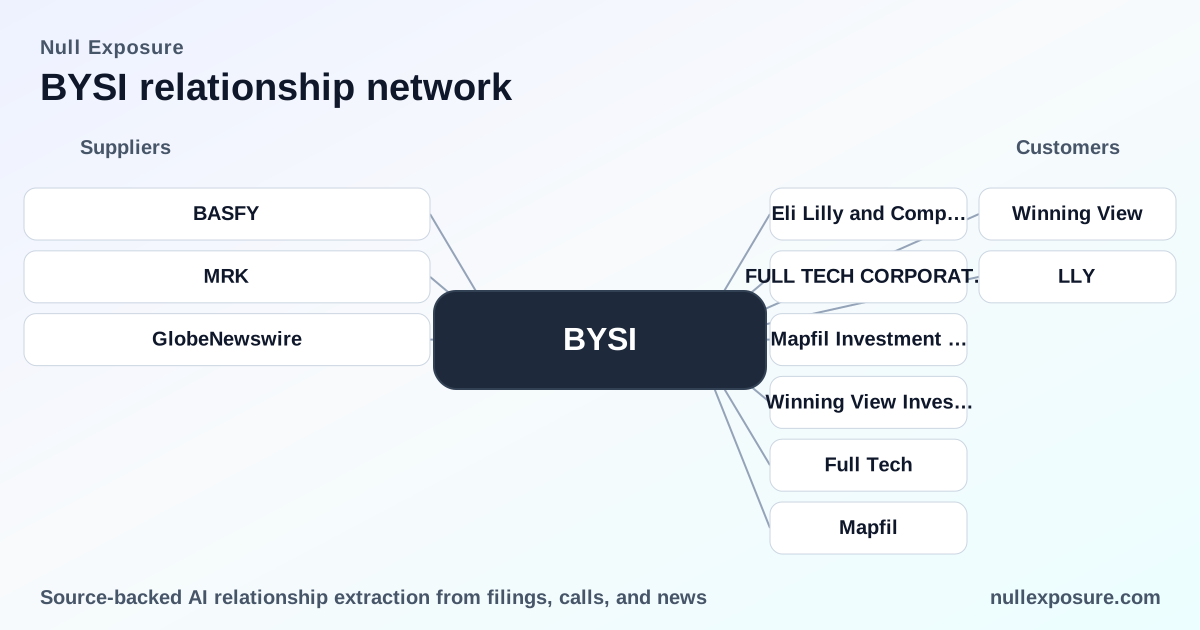
BeyondSpring (BYSI) — supplier relationships that shape Plinabulin's commercial pathway
BeyondSpring is a clinical-stage immuno-oncology company that develops and commercializes Plinabulin and related therapies. The company monetizes through licensing, investigator- and sponsor-backed clinical trials that support regulatory filings, and eventual product sales; at present revenue is modest and operations depend heavily on outsourced manufacturing and investigator collaborations. Investors should treat supplier relationships as a core operational lever: they drive trial continuity, formulation stability, and the timing of any commercial launch. For a consolidated view of supplier-risk exposure and contract posture, visit https://nullexposure.com/.
How BeyondSpring runs its supplier network and why that matters
BeyondSpring outsources critical manufacturing and clinical support functions rather than owning large in‑house production capacity. Its public filings describe framework agreements and short-term, project-by-project purchase orders as the standard contracting posture, supplemented by typical cancelable research and CRO arrangements. This structure reduces fixed overhead but increases reliance on a small number of external partners for continuity and quality.
- Contracting posture: Framework plus short-term and spot orders — the company orders on a purchase-order basis and does not typically hold long-term minimum supply contracts.
- Concentration and criticality: At least one input for Plinabulin is single-sourced, creating a clear single-point-of-failure for formulation supply.
- Maturity and stage: Relationships are operational and ongoing; BeyondSpring expects to continue outsourcing to contract manufacturers as development and potential commercialization proceed.
- Spend profile: Document excerpts indicate a mix of small-to-mid capital and operating spend (sub‑$100k to $1–10M bands) for facilities, equipment and lease obligations, consistent with a lean, outsourced biotech.
These characteristics mean operations are flexible and capital-efficient but exposed to supplier disruption risk that could materially affect development timelines and revenue prospects.
The supplier relationships that matter — one by one
BASF SE — sole source for a key formulation excipient
BeyondSpring discloses in its 2024 Form 10‑K that it relies on BASF SE as the sole supplier of the stabilizing agent Kolliphor HS15 used in Plinabulin’s current formulation. This is a classic concentration risk: interruption in that supply chain would directly threaten product stability and development continuity. (Source: BeyondSpring 2024 Form 10‑K filing.)
Merck & Co., Inc. — financial support and study drug provision for investigator trials
A news report covering ESMO 2024 (September 14, 2024) documents that Merck provided financial support through its Investigator Studies Program and supplied study drug for a Phase 2 303 Study presented by BeyondSpring, indicating strategic collaboration at the investigator-study level that helps underwrite development costs and broadens clinical data generation. (Source: StockTitan news coverage of ESMO 2024.)
GlobeNewswire (press release summarized) — public reporting on Phase 3 DUBLIN-3 results
A FY2025 press release distribution covered on QuiverQuant/GlobeNewswire described positive Phase 3 DUBLIN-3 results for Plinabulin and plans for a global DUBLIN-4 trial, although the QuiverQuant post carried a disclaimer noting the item was an AI-generated summary of a GlobeNewswire release. This disclosure signals late‑stage clinical progress that could materially change supplier demand patterns if commercialization plans accelerate. (Source: QuiverQuant summary of GlobeNewswire press release, FY2025.)
What these relationships imply for investors and operators
BeyondSpring’s supplier map creates a clear operational profile:
- High supplier concentration on a formulation input (Kolliphor HS15) increases operational risk. A sole-source excipient relationship elevates the probability that even short-term supplier issues could cause trial delays or force costly reformulation.
- Active outsourcing model (contract manufacturers, CROs, cancelable agreements) keeps fixed costs low and supports rapid pivoting across vendors, but it increases execution risk because suppliers provide capabilities that the company does not replicate internally.
- Strategic collaborations with large pharma (Merck) provide non‑dilutive support and clinical‑scale drug supply that reduce near-term cash burn and broaden clinical credibility, while leaving control of some elements in the hands of external partners.
- Spend concentration is mixed: routine operating leases and modest equipment purchases sit in sub-$1M bands, while some capital items and facility improvements fall into the $1M–$10M range; this pattern signals manageable incremental capital intensity unless a commercial launch forces rapid scale-up.
Taken together, the operating model is capital-efficient but fragile to supplier-specific interruptions. Any investor valuing BeyondSpring’s upside should price in potential single‑supplier events and the lead time required to qualify alternates for formulation and manufacturing.
If you need a consolidated supplier-risk scorecard for BeyondSpring or comparable clinical-stage biotech firms, explore our resources at https://nullexposure.com/ for standardized supplier intelligence.
Practical monitoring checklist for the next 12 months
- Track contract notices and supplier change announcements in SEC filings for signs of de‑risking the Kolliphor HS15 sole‑supplier exposure.
- Monitor clinical consortium disclosures (e.g., Merck Investigator Studies Program entries) that indicate continuing external funding or drug‑supply support.
- Watch for production‑scale contracting activity or CMOs announced ahead of regulatory submissions — that would indicate a shift from short‑term, spot purchasing to longer-term capacity commitments.
- Reconcile press releases about trial success with supplier demand profiles; positive Phase 3 news will drive urgent supplier needs that test the current PO‑based supply model.
Final takeaways and next steps
- Single-sourced excipient (BASF) is a material operational risk; investors should treat supplier continuity as a binary event with outsized impact on development timelines.
- Strategic pharma support (Merck) de-risks clinical funding and supply but does not eliminate manufacturing concentration risk.
- The company relies on short-term, framework and spot contracts, which keeps costs low but increases vendor dependence and transition risk during scale-up.
For investors and procurement teams evaluating BeyondSpring, the near-term focus should be on supplier diversification and formal long‑lead supplier agreements for any commercialization scenario. Continue monitoring filings and conference disclosures for supplier updates; for a concise supplier-risk profile and ongoing monitoring, visit https://nullexposure.com/.
If you want a bespoke supplier-risk briefing for BeyondSpring or a comparable peer set, check our platform at https://nullexposure.com/ and request a tailored review.