Citigroup (C) — Supplier Relationships and Operational Constraints Investors Should Know
Citigroup is a global banking franchise that monetizes through interest income on loans, institutional and consumer fees, and capital markets activities, while also increasingly capturing fee pools from wealth and digital-product distribution. The bank leverages a mix of long‑term and short‑term funding, extensive custody and market‑infrastructure relationships, and selective outsourcing to scale operations across 160+ markets. For a focused supplier-risk view and comparative supplier intelligence, visit https://nullexposure.com/ for the full supplier map and analysis.
Why suppliers and counterparties change the investment picture
For diversified banks, supplier and counterparty relationships are not peripheral — they are core to earnings, liquidity and resilience. Funding sources and market infrastructure providers determine balance-sheet flexibility and cost of capital; custodians and settlement platforms influence product distribution and fee capture; and outsourced vendors shape operational continuity and regulatory exposure.
From a contracting posture perspective, Citigroup combines long-term capital structures with active short-term funding programs (repos and commercial paper). That mix creates a dual focus for suppliers: negotiate for durable, large engagements where possible, but also accommodate short-dated liquidity and execution needs. For vendor concentration and criticality, Citigroup’s disclosures highlight both material spend and reliance on third-party infrastructure providers, so vendors that are essential to trade execution, custody, payments, or cloud operations become high‑value, high‑risk relationships for investors to monitor.
Notable supplier relationships uncovered in public reporting
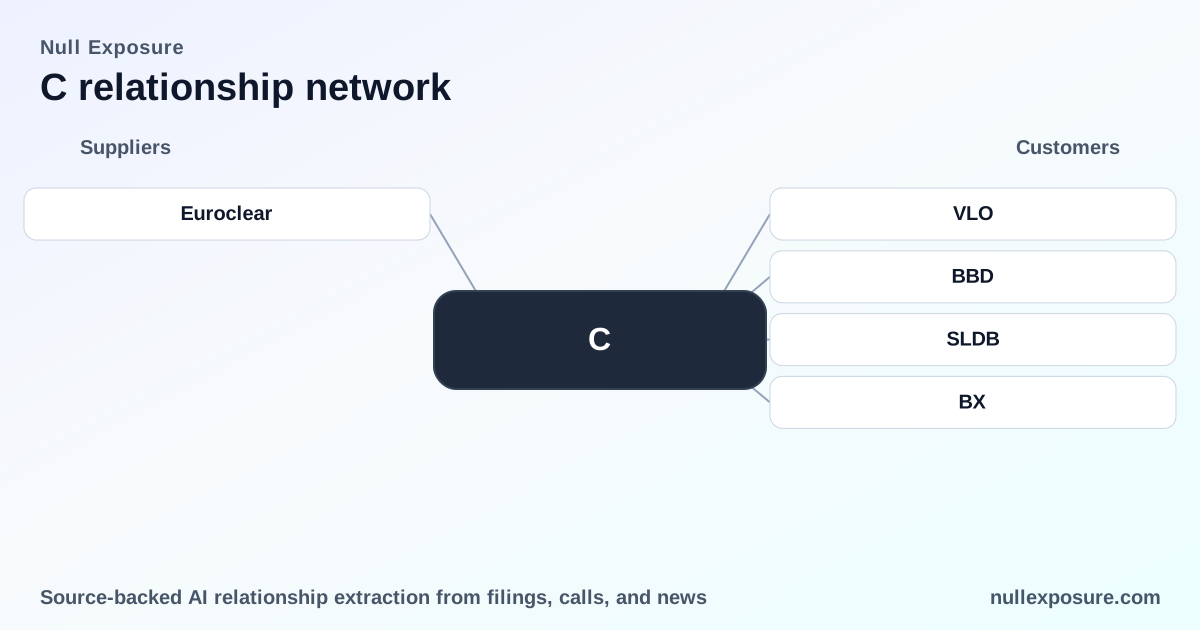
Euroclear — Citi’s first digitally native structured note issuance on D‑FMI DLT
Citi executed an inaugural digitally native structured note using Euroclear’s D‑FMI distributed ledger platform, demonstrating an operational move into tokenized issuance that can widen distribution and fee generation channels for wealth management products. According to a MarketBeat instant‑alert covering the announcement on March 9, 2026, the issuance represents a capability milestone for Citi in digital securities distribution (MarketBeat instant‑alert, March 9, 2026: https://www.marketbeat.com/instant-alerts/filing-sienna-gestion-takes-position-in-citigroup-inc-c-2026-03-09/).
Constraints and what they signal about Citigroup’s operating model
The company‑level constraints extracted from Citigroup’s disclosures reveal clear operating and contractual characteristics that investors and suppliers must factor into commercial negotiations and risk assessments.
-
Funding structure combines long‑term and short‑term instruments. Citigroup’s filings describe long‑term debt as the largest component of parent and non‑bank funding while also relying on secured short‑term financing such as repos and commercial paper. This creates dual contract horizons for suppliers: strategic long‑dated contracts for core services and flexible arrangements for liquidity and trading support (Citigroup Form 10‑K / company filings, FY2024–FY2025).
-
Significant government securities exposure. Citigroup reports large holdings of U.S. and foreign government securities (hundreds of billions outstanding as of Dec 31, 2024), which underpins liquidity management but also concentrates interest‑rate and sovereign risk on the balance sheet. Counterparty risk is therefore both large and institutionally embedded (Citigroup disclosures, December 31, 2024).
-
Buyer and cash‑market activity is material. Citigroup purchases commercial paper and supports administered conduits, reflecting an active role as a market participant and buyer in short‑term credit markets; this positions Citi as a recurring purchaser for money‑market sellers and structured‑product distributors (company filings, Dec 31, 2024).
-
Outsourcing and service provision are integral to operations. The bank outsources processing, card transaction flows, content management and software development in selected areas, creating operational dependency on third‑party vendors and increasing the importance of vendor oversight and cyber resilience (company filings, FY2024–FY2025).
-
Infrastructure reliance and criticality. Citigroup explicitly cites operational exposure to third‑party cloud and execution providers, which elevates the strategic importance of infrastructure vendors that support client‑facing systems and trading platforms.
-
Large absolute spend and secured funding scale. With secured funding reported at approximately $255 billion as of December 31, 2024, supplier relationships that support secured financing, custody, and collateral management operate at very high spend bands and can materially affect Citi’s cost of funds and liquidity profile.
What these constraints mean for investors and operators
-
For investors: Supplier exposure is a second‑order lever on earnings and resilience. Tokenized issuance experiments (e.g., Euroclear D‑FMI) are upside vectors for fee growth, while concentrated funding sources and outsourcing elevate tail risks in stressed markets. Monitor counterparty heterogeneity and vendor concentration metrics, particularly in custody, payment rails and cloud services.
-
For operators and suppliers negotiating with Citi: Prioritize strong SLAs, contingency arrangements, and clear escalation protocols for short‑term funding support and trade settlement. For technology and infrastructure vendors, expect rigorous operational and compliance requirements and the need to demonstrate survivability under liquidity or market stress.
If you want a deeper mapping of Citi’s supplier network and exposure profiles, start here: https://nullexposure.com/
Practical negotiation and risk steps for counterparties
- Contract for a mix of multi‑year retainers (for core custody, payments, and capital‑markets plumbing) and transactional flexibility (to support repo, CP and trading flows).
- Insist on explicit margin and collateral mechanics in agreements that support secured funding activities.
- Build redundancy and visibility into supply chains that feed Citi’s critical infrastructure (cloud, settlement, payment switches), and secure contractual commitments around data protection and continuity.
- Quantify the financial concentration your firm would face if Citi reduced business materially: treat Citi as a potential single‑counterparty materiality bucket given the bank’s global scale and high spend bands.
Final takeaways for investors
Citigroup’s supplier profile combines scale, operational complexity and increasing digital experimentation. The Euroclear deal signals a strategic push into tokenized products that can generate incremental fee revenue and broaden distribution, while the bank’s funding and outsourcing practices create both negotiating leverage and operational concentration that demand close monitoring. For any investor judging Citigroup’s risk‑adjusted upside, supplier relationships — and the contracts that govern them — are central to both growth and resilience.
Explore supplier intelligence and scenario modeling on the firm at https://nullexposure.com/ to convert these relationship signals into actionable investment and operational decisions.